THE ADVENTURE COLLECTIVE® · Independent discovery and booking for outdoor travel

A classic seven-day ascent via the Machame (Whisky) Route, this trek moves from rainforest to alpine desert with built-in acclimatization and a summit night from Barafu. Practical, scenic, and crew-supported — ideal for trekkers ready for high-altitude challenge.
A classic seven-day ascent via the Machame (Whisky) Route, this trek moves from rainforest to alpine desert with built-in acclimatization and a summit night from Barafu. Practical, scenic, and crew-supported — ideal for trekkers ready for high-altitude challenge.
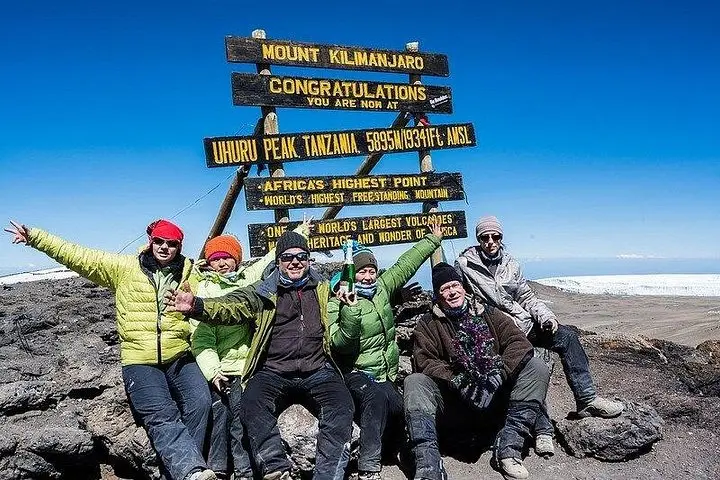
Dawn finds the group threading a narrow footpath through moss-dark rainforest, breath steaming as guides and porters move with calm purpose. The Machame route — the so-called Whisky Route — climbs from the green lowlands into moorland and an alpine desert that will test lungs and resolve before the final push to Uhuru Peak.
Verified experiences and guided adventures in the surrounding area.
Operated by MORAKA AFRICA SAFARIS · Moshi, Kilimanjaro Region
Dawn finds the group threading a narrow footpath through moss-dark rainforest, breath steaming as guides and porters move with calm purpose. The Machame route — the so-called Whisky Route — climbs from the green lowlands into moorland and an alpine desert that will test lungs and resolve before the final push to Uhuru Peak.
Geology here reads like a slow-motion volcanic story: ancient lava flanks give way to the Shira Plateau’s weathered basalt and the sharp, glaciated rim above Stella Point. The trail passes villages where Chagga culture meets mountain life; guides share local stories about cultivation and respect for the mountain that shaped community rhythms.
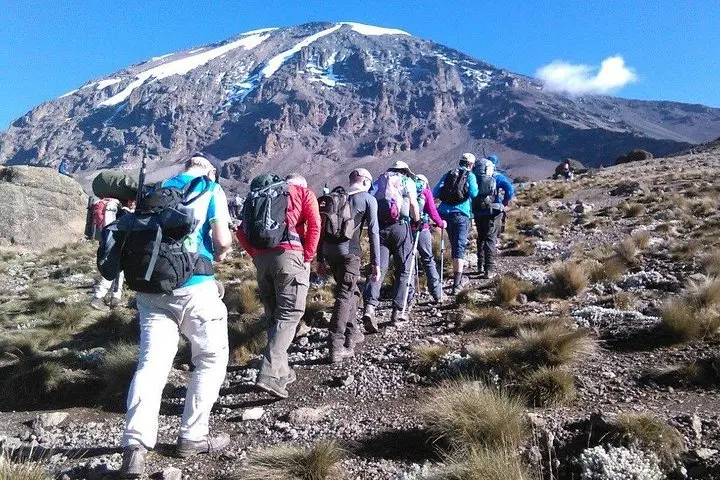
Expect a variety of terrain: slippery, root-strewn rainforest trails on day one; exposed, wind-scoured moorland on the plateau; steep scree and volcanic ash on summit night. Altitude is the defining factor — the itinerary builds acclimatization with a lava-tower day and a slow ascent to Barafu before the midnight summit bid. Camps are basic tent platforms; crews handle cooking, tents and logistics.
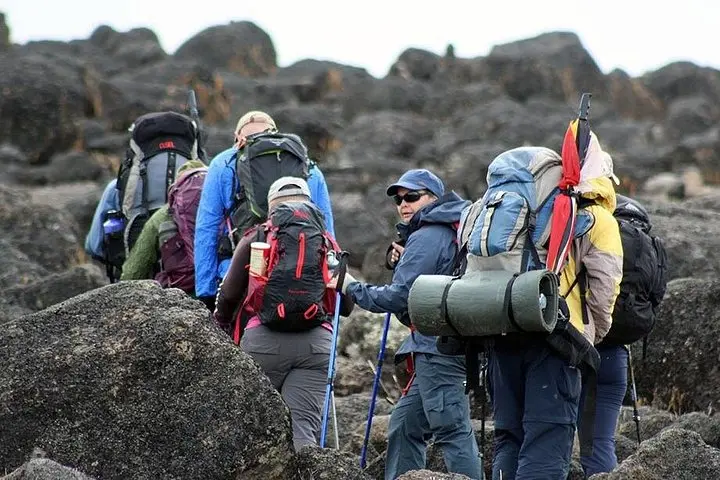
Practical notes: pace conservatively, drink frequently, and use trekking poles and gaiters on muddy or loose sections. Layers are essential — daytime can be mild, summit hours bitterly cold with wind and snow. Allow rest after descent; Moshi’s hot shower and meal feel earned.
For those prepared, the Machame route balances scenery and summit success, offering varied ecosystems, strong support teams, and a clear path to Africa’s highest point.
Machame is more scenic with steeper sections and greater variability in terrain; its 7-day itinerary improves acclimatization and gives a higher summit success rate than shorter routes.
No technical climbing experience is required, but prior multi-day trekking and good cardiovascular fitness improve comfort and success at high altitude.
Carry altitude-aware medications if prescribed, know symptoms of AMS, and ensure the operator provides trained guides and evacuation plans; travel insurance covering high-altitude rescue is advised.
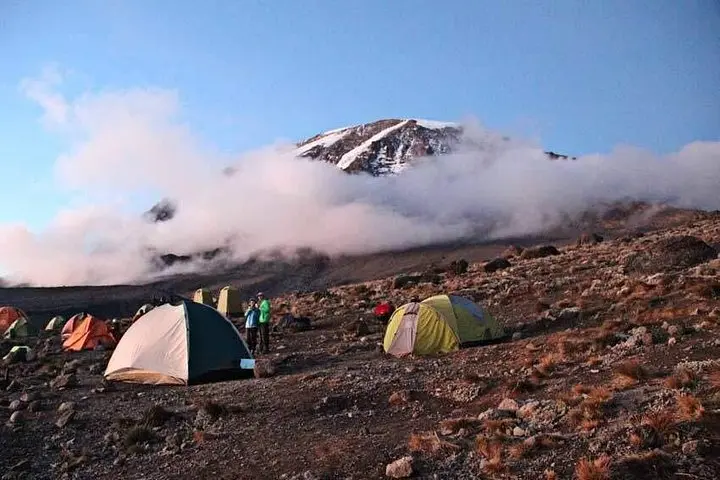
Camps are basic tent platforms managed by the crew; meals are communal and cooked by porters, with sleeping tents provided — not luxury but well-organized for multi-day climbs.
MORAKA AFRICA SAFARIS operates guided outdoor trips and adventures with an emphasis on safety, stewardship, and memorable experiences.
Dawn finds the group threading a narrow footpath through moss-dark rainforest, breath steaming as guides and porters move with calm purpose. The Machame route — the so-called Whisky Route — climbs from the green lowlands into moorland and an alpine desert that will test lungs and resolve before the final push to Uhuru Peak.
Dawn finds the group threading a narrow footpath through moss-dark rainforest, breath steaming as guides and porters move with calm purpose. The Machame route — the so-called Whisky Route — climbs from the green lowlands into moorland and an alpine desert that will test lungs and resolve before the final push to Uhuru Peak.
Geology here reads like a slow-motion volcanic story: ancient lava flanks give way to the Shira Plateau’s weathered basalt and the sharp, glaciated rim above Stella Point. The trail passes villages where Chagga culture meets mountain life; guides share local stories about cultivation and respect for the mountain that shaped community rhythms.
Expect a variety of terrain: slippery, root-strewn rainforest trails on day one; exposed, wind-scoured moorland on the plateau; steep scree and volcanic ash on summit night. Altitude is the defining factor — the itinerary builds acclimatization with a lava-tower day and a slow ascent to Barafu before the midnight summit bid. Camps are basic tent platforms; crews handle cooking, tents and logistics.
Practical notes: pace conservatively, drink frequently, and use trekking poles and gaiters on muddy or loose sections. Layers are essential — daytime can be mild, summit hours bitterly cold with wind and snow. Allow rest after descent; Moshi’s hot shower and meal feel earned.
For those prepared, the Machame route balances scenery and summit success, offering varied ecosystems, strong support teams, and a clear path to Africa’s highest point.