THE ADVENTURE COLLECTIVE® · Independent discovery and booking for outdoor travel

A three-hour, fully guided hop-on, hop-off tour that covers Whistler’s most photogenic lakes, Olympic venues, artisan neighborhoods and historical sites. Perfect for first-time visitors who want a fast, narrated orientation and options to explore further.
A three-hour, fully guided hop-on, hop-off tour that covers Whistler’s most photogenic lakes, Olympic venues, artisan neighborhoods and historical sites. Perfect for first-time visitors who want a fast, narrated orientation and options to explore further.
The bus eases away from the Whistler Gondola transit exchange and, within minutes, the valley opens — lakes flatten into glass, the Coast Mountains rake the sky with serrated ridgelines, and the first breath of cedar-scented air pushes through the windows. Guides work a practiced rhythm: stories of early ski pioneers, the 2010 Olympic athletes who raced along the Sliding Centre, and local tips about where the bread is best and the beer is cold. Cameras click; strangers suddenly trade itineraries.
Verified experiences and guided adventures in the surrounding area.
Operated by Whistler Valley Tours · Whistler, British Columbia
The bus eases away from the Whistler Gondola transit exchange and, within minutes, the valley opens — lakes flatten into glass, the Coast Mountains rake the sky with serrated ridgelines, and the first breath of cedar-scented air pushes through the windows. Guides work a practiced rhythm: stories of early ski pioneers, the 2010 Olympic athletes who raced along the Sliding Centre, and local tips about where the bread is best and the beer is cold. Cameras click; strangers suddenly trade itineraries.
This three-hour hop-on, hop-off loop stitches together Whistler’s highlights and lesser-seen corners. Green Lake’s aquamarine surface is a chapter in the local geology: glacially carved basins fed by alpine runoff that reflect the snowline on nearby Whistler and Blackcomb. Rainbow Park marks the town’s original homestead, where a stroll among old-growth firs and riverside benches gives context to the resort’s transformation from logging outpost to international destination.
Culture here is layered. The Squamish and Lil’wat Nations deepened the valley’s human story long before guided tours arrived; the Squamish Lil’wat Cultural Centre interprets that history and offers a chance to meet local artists and learn traditional perspectives. Interlaced with that are modern artisan neighborhoods: bakeries that turn out sourdough at dawn, microbreweries pulsing with après-ski warmth, and galleries showing work shaped by mountain light.
Wildlife moves on its own timetable — an eagle may quarter the lakeshore, a black bear might be glimpsed in spring and fall — and the guide’s binoculars and local knowledge increase the odds of a sighting without chasing animals from their habitat. Along the Cheakamus River, stone inukshuks and the Athlete’s Village anchor stories about the Olympics and ongoing community use.
Practical: the tour is accessible to nearly all visitors and departs from the Gondola Transit Exchange; allow ten minutes to arrive early. Stops include Lost Lake (seasonal), Green Lake viewpoints, Rainbow Park, Function Junction (artisan shops and breweries), the Sliding Centre, and Olympic Plaza. The pace is relaxed: several 10–30 minute stops give time for photos and short walks, with the option to disembark and rejoin later.
Plan for variable mountain weather: layers, a waterproof outer shell, and comfortable walking shoes are sensible. Bring cash or card for small purchases at local vendors, and a refillable bottle—the company provides bottled water, but refilling supports waste reduction. If you want to explore a specific stop in depth (the cultural centre or a brewery), factor extra time; the loop is best used as both orientation and a sampler of what’s nearby.
In three hours the valley reads like a compact field guide to Whistler: physical geography, Olympic history, and local culture all delivered with commentary that helps you decide where to linger next.
The tour meets at the Whistler Gondola Transit Exchange (near The Skiers Plaza/Dublin Gate Irish Pub); the route loops back to the same point.
Yes—this hop-on, hop-off style tour allows you to disembark at listed stops; confirm rejoin instructions with your guide.
Yes—strollers are accessible, infant seats are available, and the tour is rated easy for all fitness levels.
Several stops include admission and short guided segments; check the tour itinerary for specifics—some venues offer optional longer stays if you disembark.
Wildlife sightings are possible (eagles, black bears), but not guaranteed; guides know where to look while emphasizing safety and habitat respect.
Full refund if canceled at least 24 hours before departure; the operator may cancel for bad weather or insufficient travelers.
Whistler Valley Tours operates guided outdoor trips and adventures with an emphasis on safety, stewardship, and memorable experiences.
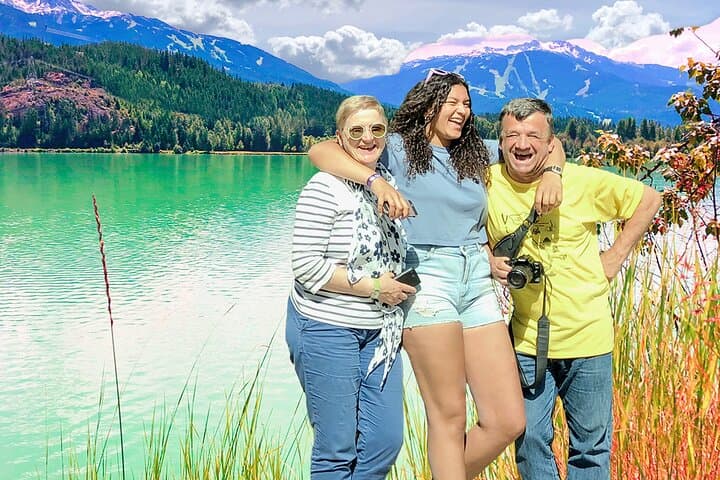


The bus eases away from the Whistler Gondola transit exchange and, within minutes, the valley opens — lakes flatten into glass, the Coast Mountains rake the sky with serrated ridgelines, and the first breath of cedar-scented air pushes through the windows. Guides work a practiced rhythm: stories of early ski pioneers, the 2010 Olympic athletes who raced along the Sliding Centre, and local tips about where the bread is best and the beer is cold. Cameras click; strangers suddenly trade itineraries.
The bus eases away from the Whistler Gondola transit exchange and, within minutes, the valley opens — lakes flatten into glass, the Coast Mountains rake the sky with serrated ridgelines, and the first breath of cedar-scented air pushes through the windows. Guides work a practiced rhythm: stories of early ski pioneers, the 2010 Olympic athletes who raced along the Sliding Centre, and local tips about where the bread is best and the beer is cold. Cameras click; strangers suddenly trade itineraries.
This three-hour hop-on, hop-off loop stitches together Whistler’s highlights and lesser-seen corners. Green Lake’s aquamarine surface is a chapter in the local geology: glacially carved basins fed by alpine runoff that reflect the snowline on nearby Whistler and Blackcomb. Rainbow Park marks the town’s original homestead, where a stroll among old-growth firs and riverside benches gives context to the resort’s transformation from logging outpost to international destination.
Culture here is layered. The Squamish and Lil’wat Nations deepened the valley’s human story long before guided tours arrived; the Squamish Lil’wat Cultural Centre interprets that history and offers a chance to meet local artists and learn traditional perspectives. Interlaced with that are modern artisan neighborhoods: bakeries that turn out sourdough at dawn, microbreweries pulsing with après-ski warmth, and galleries showing work shaped by mountain light.
Wildlife moves on its own timetable — an eagle may quarter the lakeshore, a black bear might be glimpsed in spring and fall — and the guide’s binoculars and local knowledge increase the odds of a sighting without chasing animals from their habitat. Along the Cheakamus River, stone inukshuks and the Athlete’s Village anchor stories about the Olympics and ongoing community use.
Practical: the tour is accessible to nearly all visitors and departs from the Gondola Transit Exchange; allow ten minutes to arrive early. Stops include Lost Lake (seasonal), Green Lake viewpoints, Rainbow Park, Function Junction (artisan shops and breweries), the Sliding Centre, and Olympic Plaza. The pace is relaxed: several 10–30 minute stops give time for photos and short walks, with the option to disembark and rejoin later.
Plan for variable mountain weather: layers, a waterproof outer shell, and comfortable walking shoes are sensible. Bring cash or card for small purchases at local vendors, and a refillable bottle—the company provides bottled water, but refilling supports waste reduction. If you want to explore a specific stop in depth (the cultural centre or a brewery), factor extra time; the loop is best used as both orientation and a sampler of what’s nearby.
In three hours the valley reads like a compact field guide to Whistler: physical geography, Olympic history, and local culture all delivered with commentary that helps you decide where to linger next.