THE ADVENTURE COLLECTIVE® · Independent discovery and booking for outdoor travel

A two-day 4x4 safari from Cairo to Bahariya Oasis that pairs the basalt mounds of the Black Desert with the chalk towers of the White Desert. Expect bumpy tracks, dramatic golden-hour photography and one night camping beneath an enormous desert sky.
A two-day 4x4 safari from Cairo to Bahariya Oasis that pairs the basalt mounds of the Black Desert with the chalk towers of the White Desert. Expect bumpy tracks, dramatic golden-hour photography and one night camping beneath an enormous desert sky.
A low sun slices across the Sahara as a convoy of 4x4 Land Cruisers kicks up ochre dust, carrying travelers out of the sullen sprawl of Cairo toward an open, wind-sculpted world. By late afternoon the white chalk towers of the White Desert begin to read like a different planet — mushroom and pyramid shapes bleached by millennia of wind, their edges sharp against a cobalt sky.
Verified experiences and guided adventures in the surrounding area.
Operated by Tamer Safari · Bahariya Oasis (Al-Bawiti), Giza Governorate
A low sun slices across the Sahara as a convoy of 4x4 Land Cruisers kicks up ochre dust, carrying travelers out of the sullen sprawl of Cairo toward an open, wind-sculpted world. By late afternoon the white chalk towers of the White Desert begin to read like a different planet — mushroom and pyramid shapes bleached by millennia of wind, their edges sharp against a cobalt sky.
The route threads through Bahariya Oasis, a long-inhabited palm-ringed basin whose springs sustained caravan routes and Pharaonic expeditions. Geologically the region is split: the Black Desert’s dark basalt and iron-rich volcanic mounds contrast with the White Desert’s chalky limestone and gypsum forms, while isolated outcrops such as Crystal Mountain glint with quartz and calcite. Bedouin guides still lead excursions here, sharing local legends and practical know-how passed down across generations.
Practically, the tour is a rolling mix of driving, short hikes, photography stops and overnight camping in American-style tents beneath a desert dome. Expect bumpy tracks, dramatic golden-hour light, and quiet so absolute it alters perception. Bring sun protection, layered clothing for cold nights, and at least 3 liters of water per person. Sunrise and sunset are the photographic highlights; guides arrange simple meals and a campsite briefing on safety and Leave No Trace practices. Showers are usually available back at the oasis; toilets are basic in the field. For travelers who want stark landscapes, geological curiosities, and a culturally grounded overnight in the Sahara, this two-day safari delivers an efficient, immersive desert experience.
The drive is roughly 360 km and typically takes 4–5 hours each way, depending on traffic and stops.
Camps use American-style tents and sleeping bags provided by operators; expect basic but clean accommodations and communal dining around a campfire.
Facilities are basic in the field; showers are usually available at oasis accommodations before or after the desert night.
Yes — the tour is designed for a broad range of fitness levels, but consider long vehicle legs and uneven surfaces when deciding.
Tamer Safari operates guided outdoor trips and adventures with an emphasis on safety, stewardship, and memorable experiences.
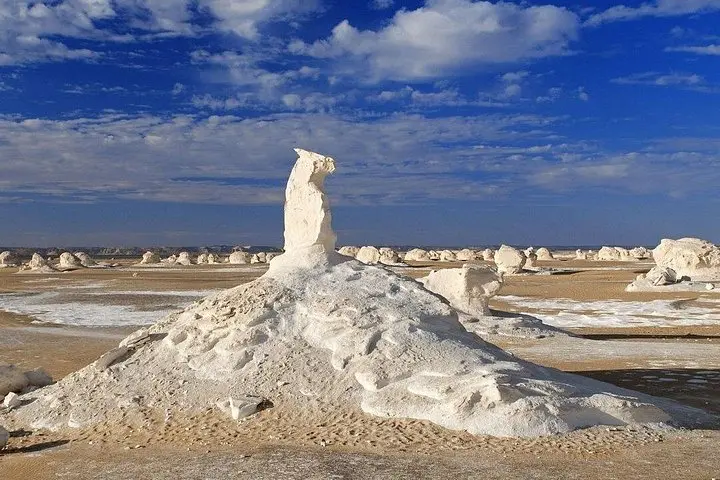
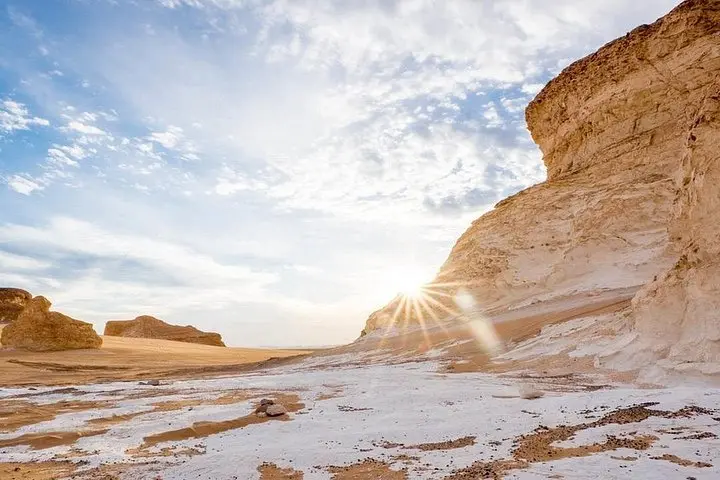
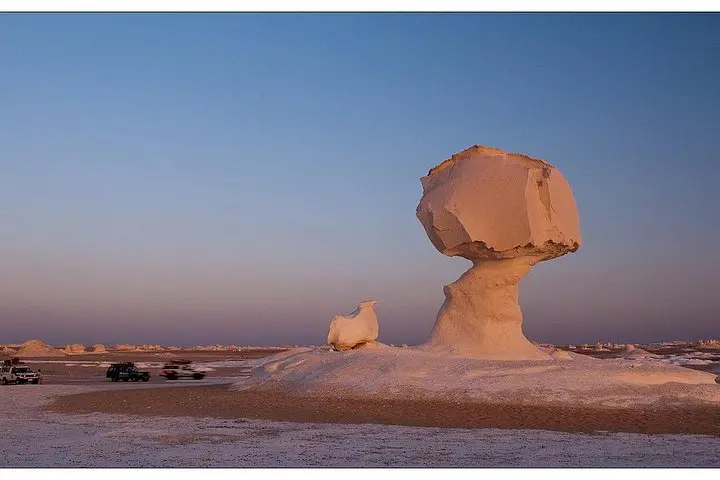
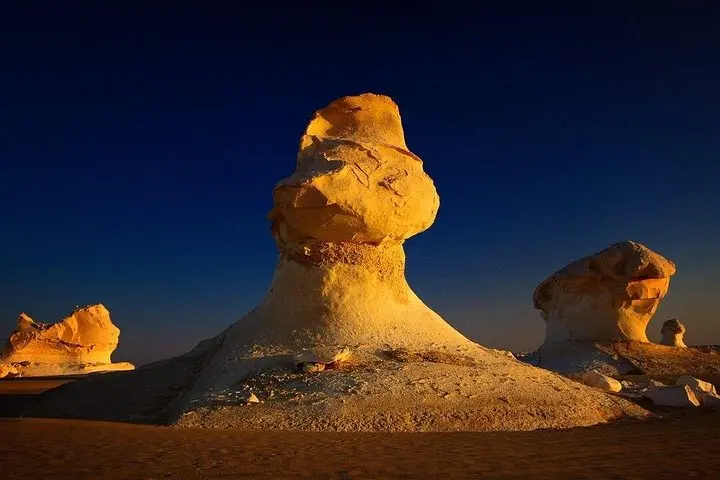
A low sun slices across the Sahara as a convoy of 4x4 Land Cruisers kicks up ochre dust, carrying travelers out of the sullen sprawl of Cairo toward an open, wind-sculpted world. By late afternoon the white chalk towers of the White Desert begin to read like a different planet — mushroom and pyramid shapes bleached by millennia of wind, their edges sharp against a cobalt sky.
A low sun slices across the Sahara as a convoy of 4x4 Land Cruisers kicks up ochre dust, carrying travelers out of the sullen sprawl of Cairo toward an open, wind-sculpted world. By late afternoon the white chalk towers of the White Desert begin to read like a different planet — mushroom and pyramid shapes bleached by millennia of wind, their edges sharp against a cobalt sky.
The route threads through Bahariya Oasis, a long-inhabited palm-ringed basin whose springs sustained caravan routes and Pharaonic expeditions. Geologically the region is split: the Black Desert’s dark basalt and iron-rich volcanic mounds contrast with the White Desert’s chalky limestone and gypsum forms, while isolated outcrops such as Crystal Mountain glint with quartz and calcite. Bedouin guides still lead excursions here, sharing local legends and practical know-how passed down across generations.
Practically, the tour is a rolling mix of driving, short hikes, photography stops and overnight camping in American-style tents beneath a desert dome. Expect bumpy tracks, dramatic golden-hour light, and quiet so absolute it alters perception. Bring sun protection, layered clothing for cold nights, and at least 3 liters of water per person. Sunrise and sunset are the photographic highlights; guides arrange simple meals and a campsite briefing on safety and Leave No Trace practices. Showers are usually available back at the oasis; toilets are basic in the field. For travelers who want stark landscapes, geological curiosities, and a culturally grounded overnight in the Sahara, this two-day safari delivers an efficient, immersive desert experience.