THE ADVENTURE COLLECTIVE® · Independent discovery and booking for outdoor travel

Launch from Quito before dawn and descend into the Pastaza canyon for Class III+ whitewater, waterfall hikes and cable-car crossings near Baños. This full-day adventure pairs energetic paddling with short rainforest walks and dramatic canyon views.
Launch from Quito before dawn and descend into the Pastaza canyon for Class III+ whitewater, waterfall hikes and cable-car crossings near Baños. This full-day adventure pairs energetic paddling with short rainforest walks and dramatic canyon views.
At first light a van eases out of Quito and the Andes unfold: sweaters of cloud lift from volcanic summits while road and river trade altitude. By mid-morning travellers descend from the chilly highlands into green relief—Antisana, the Ilinizas and Cotopaxi pass in silhouette—until the air grows humid and the Pastaza River begins to roar. The raft pounds through Class III+ rapids, the current daring you forward as the valley opens toward the Amazon basin.
Verified experiences and guided adventures in the surrounding area.
Operated by Ecuador Best Tours · Baños de Agua Santa, Tungurahua
At first light a van eases out of Quito and the Andes unfold: sweaters of cloud lift from volcanic summits while road and river trade altitude. By mid-morning travellers descend from the chilly highlands into green relief—Antisana, the Ilinizas and Cotopaxi pass in silhouette—until the air grows humid and the Pastaza River begins to roar. The raft pounds through Class III+ rapids, the current daring you forward as the valley opens toward the Amazon basin.
This route sits between Sangay and Llanganates National Parks; the Pastaza is a major Amazon tributary and the run exposes a rapid transition of ecosystems—paramo, subtropical forest, then lowland rainforest as the group drops from Baños (1,820 m) to roughly 1,050 m. Cultural notes: Baños de Agua Santa developed as a gateway to both volcano trekking and Amazon excursions, and local communities draw income from guiding, thermal baths and the cascade trail known as the “Avenue of the Waterfalls.” Geology here is young and active—Tungurahua’s presence has shaped canyons and sediments that feed fast, turbulent rivers.
Practical guidance: expect a long day (about 11–12 hours, pickup ~5:30 a.m.). Guides provide safety gear; swimmers should be comfortable in moving water and able to follow commands. After rafting, the itinerary typically includes lunch and short hikes to Pailón del Diablo, a 500 m cable-car crossing to Manto de la Novia, and views of the Agoyán fall. Bring a waterproof layer, quick-dry clothing, sturdy shoes for wet trails, sun protection and small cash for snacks. Timing matters—start early to avoid afternoon storms and to make the most of the canyon light.
The run listed is Class III+—it includes strong waves and technical maneuvering but is suitable for paddlers with moderate fitness under experienced guides.
No prior experience is required, but participants should be comfortable following guide commands, swimming and handling occasional waves.
Typical pickup from Quito hotels is early (around 5:30 a.m.) to allow for the ~3-hour drive to Baños and the rafting put-in.
Yes—this tour generally includes private transport, lunch, entrance fees, safety equipment and local guides.
Ecuador Best Tours operates guided outdoor trips and adventures with an emphasis on safety, stewardship, and memorable experiences.
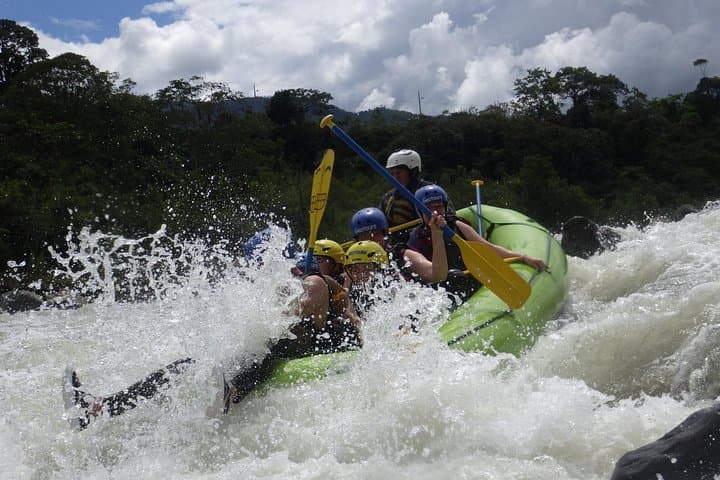


At first light a van eases out of Quito and the Andes unfold: sweaters of cloud lift from volcanic summits while road and river trade altitude. By mid-morning travellers descend from the chilly highlands into green relief—Antisana, the Ilinizas and Cotopaxi pass in silhouette—until the air grows humid and the Pastaza River begins to roar. The raft pounds through Class III+ rapids, the current daring you forward as the valley opens toward the Amazon basin.
At first light a van eases out of Quito and the Andes unfold: sweaters of cloud lift from volcanic summits while road and river trade altitude. By mid-morning travellers descend from the chilly highlands into green relief—Antisana, the Ilinizas and Cotopaxi pass in silhouette—until the air grows humid and the Pastaza River begins to roar. The raft pounds through Class III+ rapids, the current daring you forward as the valley opens toward the Amazon basin.
This route sits between Sangay and Llanganates National Parks; the Pastaza is a major Amazon tributary and the run exposes a rapid transition of ecosystems—paramo, subtropical forest, then lowland rainforest as the group drops from Baños (1,820 m) to roughly 1,050 m. Cultural notes: Baños de Agua Santa developed as a gateway to both volcano trekking and Amazon excursions, and local communities draw income from guiding, thermal baths and the cascade trail known as the “Avenue of the Waterfalls.” Geology here is young and active—Tungurahua’s presence has shaped canyons and sediments that feed fast, turbulent rivers.
Practical guidance: expect a long day (about 11–12 hours, pickup ~5:30 a.m.). Guides provide safety gear; swimmers should be comfortable in moving water and able to follow commands. After rafting, the itinerary typically includes lunch and short hikes to Pailón del Diablo, a 500 m cable-car crossing to Manto de la Novia, and views of the Agoyán fall. Bring a waterproof layer, quick-dry clothing, sturdy shoes for wet trails, sun protection and small cash for snacks. Timing matters—start early to avoid afternoon storms and to make the most of the canyon light.