THE ADVENTURE COLLECTIVE® · Independent discovery and booking for outdoor travel

Take on the Pastaza’s punchy rapids outside Baños de Agua Santa for a half-day of splash, speed, and volcanic scenery. This guided rafting trip pairs technical Class II–IV sections with private transport, safety gear, and a local lunch.
Take on the Pastaza’s punchy rapids outside Baños de Agua Santa for a half-day of splash, speed, and volcanic scenery. This guided rafting trip pairs technical Class II–IV sections with private transport, safety gear, and a local lunch.
The raft noses into a channel where the Pastaza narrows and the current starts to make decisions for you. Spray pinches your cheeks, the jungle hems the river in green walls, and somewhere upriver a waterfall hurls itself sideways off the Andean flank. Guides call commands in quick, practiced bursts and the raft answers with a collective heave — oars dip, bodies brace, laughter and a sharper intake of breath fill the gaps between rapids.
Verified experiences and guided adventures in the surrounding area.
Operated by Waterfire Adventure Baños · Baños de Agua Santa, Tungurahua
The raft noses into a channel where the Pastaza narrows and the current starts to make decisions for you. Spray pinches your cheeks, the jungle hems the river in green walls, and somewhere upriver a waterfall hurls itself sideways off the Andean flank. Guides call commands in quick, practiced bursts and the raft answers with a collective heave — oars dip, bodies brace, laughter and a sharper intake of breath fill the gaps between rapids.
Baños de Agua Santa sits at roughly 1,820 meters on the eastern slopes of the Ecuadorian Andes. The river here is an argument between mountain runoff and volcanic geology; Tungurahua’s eruptions have shaped steeper valleys and fed the deep channels the Pastaza now uses to race east toward the Amazon. Rafting sections around Baños typically run Class II–IV depending on water levels, offering technical riffles and punchy drops framed by high cliffs, waterfalls, and the lush, humid vegetation of the upper Amazon basin.
The town of Baños has long been a crossroads for nature seekers and pilgrims — thermal springs and the sanctuary of the Virgen de Agua Santa draw travelers who then branch into canyoning, mountain biking, and rafting. Local guides pair ancestral knowledge of the river with modern safety protocols; many operations provide transport from central meeting points, full rafting kits, and a post-run lunch featuring hearty Andean fare.
Practicalities are straightforward. The advertised experience runs about five hours from meeting to finish, with roughly 2–3 hours on the water. Expect private transport to launch sites, helmets, life jackets, paddles, and a boxed or local-style lunch included. The put-in and pick-up point is in central Baños (near the Hostel Plants & White corner), making logistics easy for travelers staying in town.
Know before you go: the river can be temperamental. Dry-season flows make technical rapids stand out; the rainy season raises water and the rapid category. This trip is not recommended for pregnant travelers or those with serious heart issues, but providers generally state it’s suitable for a wide range of fitness levels thanks to expert guide support.
Tips for planning: bring quick-dry clothing, sun protection, secure footwear, and a small waterproof camera or dry bag. Hydrate at altitude before you paddle, listen closely to the safety briefing, and let the current dare you forward — the Pastaza rewards respect and teamwork with stretches of wild, fast-moving river framed by some of Ecuador’s most striking volcanic-and-river scenery.
Expect roughly 2–3 hours on the water; the total experience including transport, briefing, and lunch is about five hours.
Sections are commonly rated Class II–IV depending on seasonal water levels; guides choose lines to match group experience while still delivering adrenaline.
No — trips are guided and suitable for beginners with basic fitness, though following the guide’s commands is essential.
Private transport from the meeting point, rafting equipment (helmet, PFD, paddle), a professional guide, and lunch are included.
Policies vary, but many operators allow older children with guardians; infants typically must remain off the raft — check the provider’s age restrictions when booking.
Guides carry rescue gear and radio contact; all participants get a safety briefing, flotation devices, and helmets before launch.
Waterfire Adventure Baños operates guided outdoor trips and adventures with an emphasis on safety, stewardship, and memorable experiences.

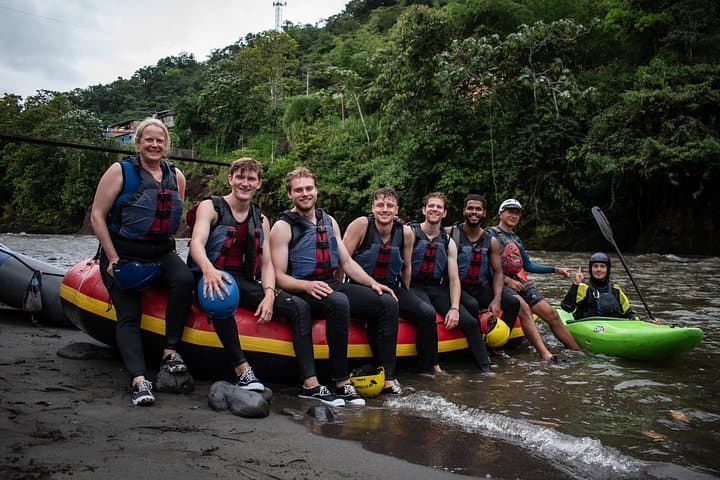
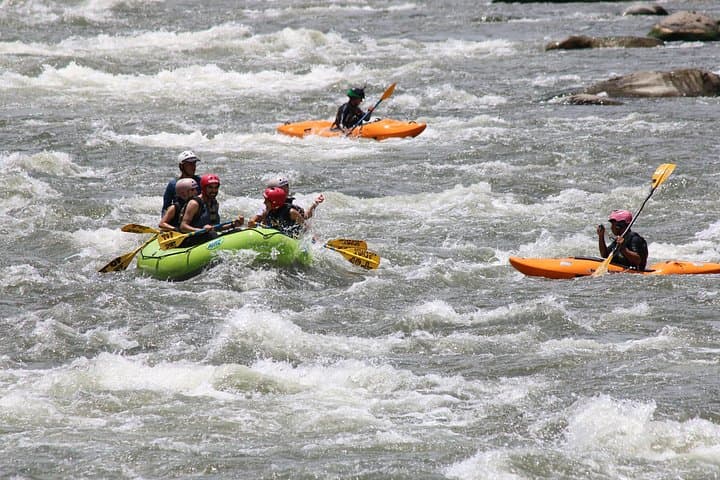
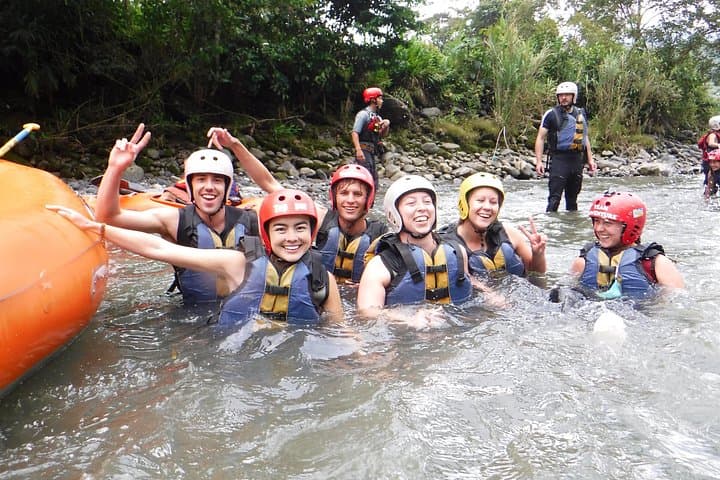
The raft noses into a channel where the Pastaza narrows and the current starts to make decisions for you. Spray pinches your cheeks, the jungle hems the river in green walls, and somewhere upriver a waterfall hurls itself sideways off the Andean flank. Guides call commands in quick, practiced bursts and the raft answers with a collective heave — oars dip, bodies brace, laughter and a sharper intake of breath fill the gaps between rapids.
The raft noses into a channel where the Pastaza narrows and the current starts to make decisions for you. Spray pinches your cheeks, the jungle hems the river in green walls, and somewhere upriver a waterfall hurls itself sideways off the Andean flank. Guides call commands in quick, practiced bursts and the raft answers with a collective heave — oars dip, bodies brace, laughter and a sharper intake of breath fill the gaps between rapids.
Baños de Agua Santa sits at roughly 1,820 meters on the eastern slopes of the Ecuadorian Andes. The river here is an argument between mountain runoff and volcanic geology; Tungurahua’s eruptions have shaped steeper valleys and fed the deep channels the Pastaza now uses to race east toward the Amazon. Rafting sections around Baños typically run Class II–IV depending on water levels, offering technical riffles and punchy drops framed by high cliffs, waterfalls, and the lush, humid vegetation of the upper Amazon basin.
The town of Baños has long been a crossroads for nature seekers and pilgrims — thermal springs and the sanctuary of the Virgen de Agua Santa draw travelers who then branch into canyoning, mountain biking, and rafting. Local guides pair ancestral knowledge of the river with modern safety protocols; many operations provide transport from central meeting points, full rafting kits, and a post-run lunch featuring hearty Andean fare.
Practicalities are straightforward. The advertised experience runs about five hours from meeting to finish, with roughly 2–3 hours on the water. Expect private transport to launch sites, helmets, life jackets, paddles, and a boxed or local-style lunch included. The put-in and pick-up point is in central Baños (near the Hostel Plants & White corner), making logistics easy for travelers staying in town.
Know before you go: the river can be temperamental. Dry-season flows make technical rapids stand out; the rainy season raises water and the rapid category. This trip is not recommended for pregnant travelers or those with serious heart issues, but providers generally state it’s suitable for a wide range of fitness levels thanks to expert guide support.
Tips for planning: bring quick-dry clothing, sun protection, secure footwear, and a small waterproof camera or dry bag. Hydrate at altitude before you paddle, listen closely to the safety briefing, and let the current dare you forward — the Pastaza rewards respect and teamwork with stretches of wild, fast-moving river framed by some of Ecuador’s most striking volcanic-and-river scenery.