THE ADVENTURE COLLECTIVE® · Independent discovery and booking for outdoor travel

Descend 64–135 meters into one of Europe's oldest salt mines and walk past salt-carved chapels, sculptures and underground lakes. This guided half-day tour from Krakow mixes geology, medieval mining history and practical logistics for a straightforward subterranean adventure.
Descend 64–135 meters into one of Europe's oldest salt mines and walk past salt-carved chapels, sculptures and underground lakes. This guided half-day tour from Krakow mixes geology, medieval mining history and practical logistics for a straightforward subterranean adventure.
You step off an air-conditioned minibus into a cool, dim corridor where centuries of salt work the light into a pale glow. The salt walls seem to breathe history: ladders once hauled blocks here, and the carved figures watch as visitors move through narrow galleries. The descent begins with a 380-step staircase to Level 1 (about 64 m below ground), the rhythm of your footsteps answering the distant drip of saline water.
Verified experiences and guided adventures in the surrounding area.
Operated by Intercrac Sp. z o.o. · Wieliczka, Lesser Poland Voivodeship
You step off an air-conditioned minibus into a cool, dim corridor where centuries of salt work the light into a pale glow. The salt walls seem to breathe history: ladders once hauled blocks here, and the carved figures watch as visitors move through narrow galleries. The descent begins with a 380-step staircase to Level 1 (about 64 m below ground), the rhythm of your footsteps answering the distant drip of saline water.
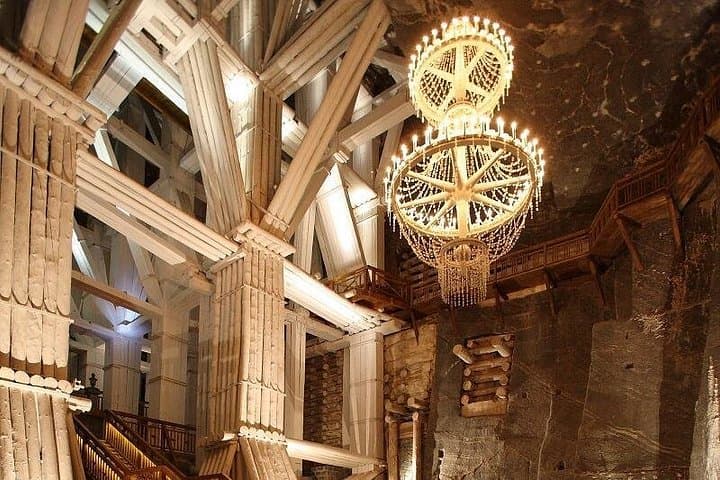
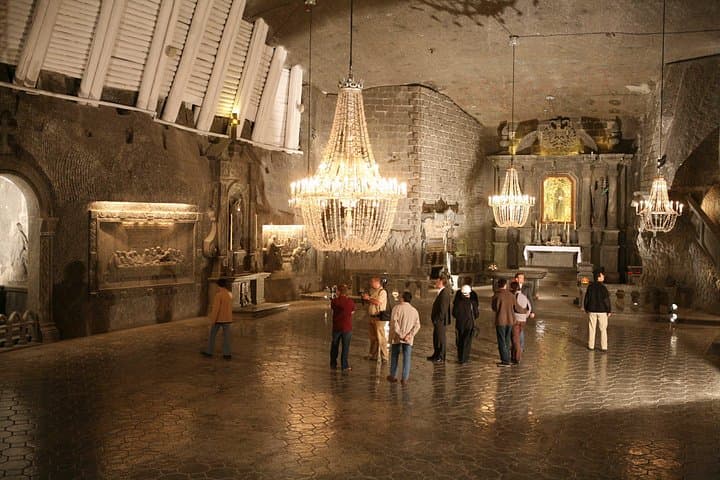
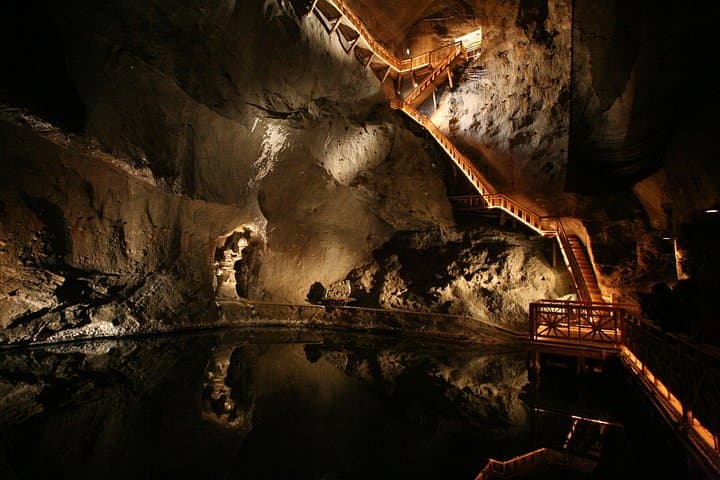
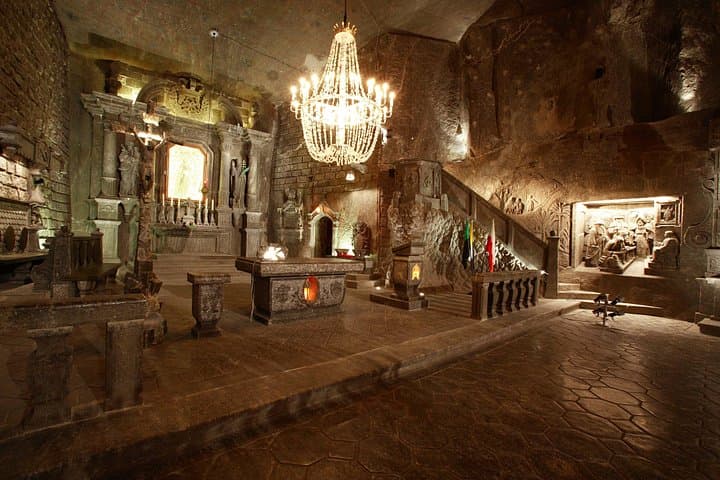
Wieliczka is one of Europe's oldest salt mines, producing salt from the Middle Ages until the 20th century. Its geology is straightforward—thick Permian salt beds—yet the miners' art transforms raw halite into altarpieces, statues, and a vaulted Chapel of St. Kinga carved entirely from rock salt. UNESCO listed the site for its cultural and industrial heritage; the Tourist Route runs roughly 2.5 km through 20 monumental chambers and several underground saline lakes, reaching depths near 135 m.
Practicalities: the walking route includes hundreds of steps (some steep) and takes about 2–3 hours underground within a typical 4-hour tour. Temperature is constant near 14°C (57°F), so a light jacket is useful year-round. Backpacks are restricted (max 35x20x20 cm). The exit is by lift (Danilowicz Shaft) from Level 3, but the downward ride is by stairs, so expect stair-climbing both ways on the way in.
Plan for firm shoes, steady pacing, and respect for fragile salt carvings—touching accelerates erosion. With a knowledgeable guide and a headset, the story of mining, faith, and geology comes alive in the cool hush beneath Krakow.
Yes if they can manage stairs—children must be accompanied by an adult; those with limited mobility should note the descent is by stairs and the return uses a lift from Level 3.
No—the main tourist route includes many stairs and is not wheelchair accessible; parts of the site may have accessibility options but this standard tour is not suitable.
The tour does not include the descent lift; visitors descend via the staircase and return to the surface by lift (Danilowicz Shaft) from Level 3.
Temperature averages about 14°C (57°F) year-round; the tourist route is roughly 2.5 km and the underground portion typically lasts 2–3 hours within a 4-hour tour window.
Intercrac Sp. z o.o. operates guided outdoor trips and adventures with an emphasis on safety, stewardship, and memorable experiences.
You step off an air-conditioned minibus into a cool, dim corridor where centuries of salt work the light into a pale glow. The salt walls seem to breathe history: ladders once hauled blocks here, and the carved figures watch as visitors move through narrow galleries. The descent begins with a 380-step staircase to Level 1 (about 64 m below ground), the rhythm of your footsteps answering the distant drip of saline water.
You step off an air-conditioned minibus into a cool, dim corridor where centuries of salt work the light into a pale glow. The salt walls seem to breathe history: ladders once hauled blocks here, and the carved figures watch as visitors move through narrow galleries. The descent begins with a 380-step staircase to Level 1 (about 64 m below ground), the rhythm of your footsteps answering the distant drip of saline water.
Wieliczka is one of Europe's oldest salt mines, producing salt from the Middle Ages until the 20th century. Its geology is straightforward—thick Permian salt beds—yet the miners' art transforms raw halite into altarpieces, statues, and a vaulted Chapel of St. Kinga carved entirely from rock salt. UNESCO listed the site for its cultural and industrial heritage; the Tourist Route runs roughly 2.5 km through 20 monumental chambers and several underground saline lakes, reaching depths near 135 m.
Practicalities: the walking route includes hundreds of steps (some steep) and takes about 2–3 hours underground within a typical 4-hour tour. Temperature is constant near 14°C (57°F), so a light jacket is useful year-round. Backpacks are restricted (max 35x20x20 cm). The exit is by lift (Danilowicz Shaft) from Level 3, but the downward ride is by stairs, so expect stair-climbing both ways on the way in.
Plan for firm shoes, steady pacing, and respect for fragile salt carvings—touching accelerates erosion. With a knowledgeable guide and a headset, the story of mining, faith, and geology comes alive in the cool hush beneath Krakow.