THE ADVENTURE COLLECTIVE® · Independent discovery and booking for outdoor travel

Descend into a 700-year-old underground world where salt becomes sculpture and chapels glow from within. This guided tour from Kraków includes hotel pick-up, licensed guides, and access to the mine's three public levels—expect stairs, cool air, and striking salt-carved chambers.
Descend into a 700-year-old underground world where salt becomes sculpture and chapels glow from within. This guided tour from Kraków includes hotel pick-up, licensed guides, and access to the mine's three public levels—expect stairs, cool air, and striking salt-carved chambers.
You step down a tight stairwell and the warm air of Kraków slips away—cool, mineral-scented air takes its place as light from chandeliers carved of salt picks out figures in the dim. The guide's voice becomes the map: directions, stories, pauses to let salt-carved altars and grottoes claim a quiet moment.
Verified experiences and guided adventures in the surrounding area.
Operated by DISCOVER CRACOW · Wieliczka, Lesser Poland Voivodeship
You step down a tight stairwell and the warm air of Kraków slips away—cool, mineral-scented air takes its place as light from chandeliers carved of salt picks out figures in the dim. The guide's voice becomes the map: directions, stories, pauses to let salt-carved altars and grottoes claim a quiet moment.
The Wieliczka Salt Mine has been worked since the Middle Ages; its public galleries date back centuries and the site is a UNESCO World Heritage landmark. Geology here is literal architecture: halite beds sculpted by miners into tunnels, chapels and lakes at depths between roughly 64 and 135 meters. The most famous chamber, the Chapel of St. Kinga, required decades and hundreds of thousands of tons of rock salt to complete—its chandeliers and altar all hewn and polished from the same crystalline material.
Culturally the mine shaped the region: salt trade built Kraków's wealth and local folklore still honors miners' patron saints. Underground, water hums in small lakes and the cool air seems to push you forward as you move between chambers.
Practically: the full guided program accessed here covers three upper levels and is about 4–5 hours including transport from Kraków. Expect roughly 800 steps (about 380 at the start), a constant temperature near 14°C (57°F), and narrow passages—this tour requires moderate fitness and is not recommended for those with serious claustrophobia. Wear sturdy shoes and a warm layer, keep hands free for railings, and plan for limited mobility access. Photography for personal use is generally permitted; follow the guide and respect conservation rules to help preserve the salt-carved features for the next visitors.
The full experience runs about 4–5 hours door-to-door from Kraków, with roughly 45 minutes each way by coach and ~150 minutes underground.
Children must be accompanied by an adult; the route includes many stairs and tight passages, so it’s not suitable for most wheelchair users or those unable to manage staircases.
Photography for personal use is generally allowed in public chambers—follow your guide’s instructions about flash and tripods to protect delicate salt features.
The mine holds a steady temperature around 14°C (57°F); a warm layer is recommended even in summer.
DISCOVER CRACOW operates guided outdoor trips and adventures with an emphasis on safety, stewardship, and memorable experiences.

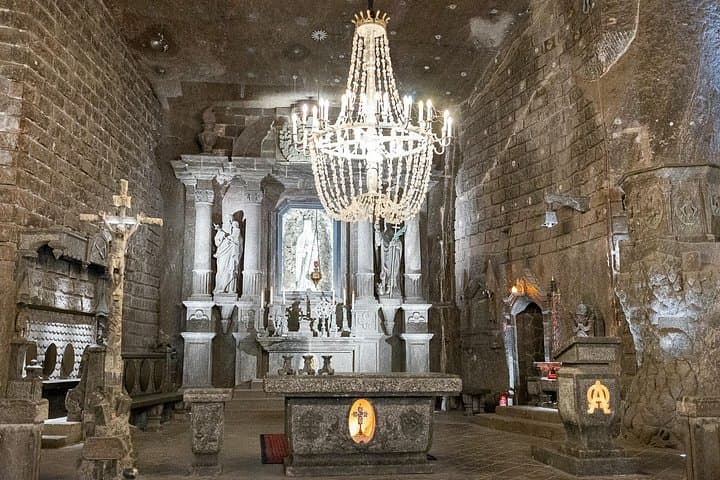


You step down a tight stairwell and the warm air of Kraków slips away—cool, mineral-scented air takes its place as light from chandeliers carved of salt picks out figures in the dim. The guide's voice becomes the map: directions, stories, pauses to let salt-carved altars and grottoes claim a quiet moment.
You step down a tight stairwell and the warm air of Kraków slips away—cool, mineral-scented air takes its place as light from chandeliers carved of salt picks out figures in the dim. The guide's voice becomes the map: directions, stories, pauses to let salt-carved altars and grottoes claim a quiet moment.
The Wieliczka Salt Mine has been worked since the Middle Ages; its public galleries date back centuries and the site is a UNESCO World Heritage landmark. Geology here is literal architecture: halite beds sculpted by miners into tunnels, chapels and lakes at depths between roughly 64 and 135 meters. The most famous chamber, the Chapel of St. Kinga, required decades and hundreds of thousands of tons of rock salt to complete—its chandeliers and altar all hewn and polished from the same crystalline material.
Culturally the mine shaped the region: salt trade built Kraków's wealth and local folklore still honors miners' patron saints. Underground, water hums in small lakes and the cool air seems to push you forward as you move between chambers.
Practically: the full guided program accessed here covers three upper levels and is about 4–5 hours including transport from Kraków. Expect roughly 800 steps (about 380 at the start), a constant temperature near 14°C (57°F), and narrow passages—this tour requires moderate fitness and is not recommended for those with serious claustrophobia. Wear sturdy shoes and a warm layer, keep hands free for railings, and plan for limited mobility access. Photography for personal use is generally permitted; follow the guide and respect conservation rules to help preserve the salt-carved features for the next visitors.