THE ADVENTURE COLLECTIVE® · Independent discovery and booking for outdoor travel

Descend into centuries of salt-mining history on a skip-the-line guided tour of Wieliczka, with hotel pickup from Kraków. Expect carved salt chapels, underground lakes, and a steady cool microclimate on a roughly 2.5-hour visit.
Descend into centuries of salt-mining history on a skip-the-line guided tour of Wieliczka, with hotel pickup from Kraków. Expect carved salt chapels, underground lakes, and a steady cool microclimate on a roughly 2.5-hour visit.
You step off the minivan at a brick courtyard and the air cools immediately — the world above shrinks to a steady 16–18°C that seems to slow the city’s rush. Light reflects off crystalline salt walls as a guide leads the group down carved stone steps; the descent feels deliberate, the mine drawing you inward with long, echoing corridors and vaulted chambers.
Verified experiences and guided adventures in the surrounding area.
Operated by My Krakow Driver · Wieliczka, Lesser Poland Voivodeship
You step off the minivan at a brick courtyard and the air cools immediately — the world above shrinks to a steady 16–18°C that seems to slow the city’s rush. Light reflects off crystalline salt walls as a guide leads the group down carved stone steps; the descent feels deliberate, the mine drawing you inward with long, echoing corridors and vaulted chambers.
Wieliczka has been worked since the Middle Ages and became a UNESCO World Heritage Site in 1978. The salt removed here built economies and shaped local culture: chapels, sculptures and chandeliers all carved from halite speak to centuries of craftsmanship. Geologically, the mine exposes thick evaporite layers deposited in an ancient inland sea — salt beds compressed and preserved beneath the Carpathian foreland.
Visitors should expect monumental salt chambers like St. Kinga’s Chapel, underground lakes, a network of narrow passageways and dozens of carved reliefs. The microclimate is stable and used for therapeutic visits, but the route still includes about 800 steps down and many steps back up, so pacing matters.
Practical guidance: arrive with good shoes and light layers, bring a small backpack and water, and plan for ~2.5 hours on-site plus transfer time. Tours are guided in multiple languages with headphones and operate as shared groups of up to ~30. Hotel pickup and skip-the-line entry streamline logistics, but remember this is an underground cultural site—respect barriers, avoid touching carvings and follow your guide’s directions. Timing your visit earlier in the day reduces crowding and keeps your return to Kraków flexible.
The guided visit on-site is about 2–3 hours and includes approximately 800 steps during the route; total transfer time from Kraków varies by pickup location.
Children who can manage stairs may join, but the mine is not recommended for people with serious mobility limitations due to long staircases and narrow corridors.
The mine stays around 16–18°C year-round; bring a light jacket or layers to stay comfortable during the visit.
Guided tours offer live commentary in multiple languages and provide headphones so guests can hear the guide clearly.
My Krakow Driver operates guided outdoor trips and adventures with an emphasis on safety, stewardship, and memorable experiences.
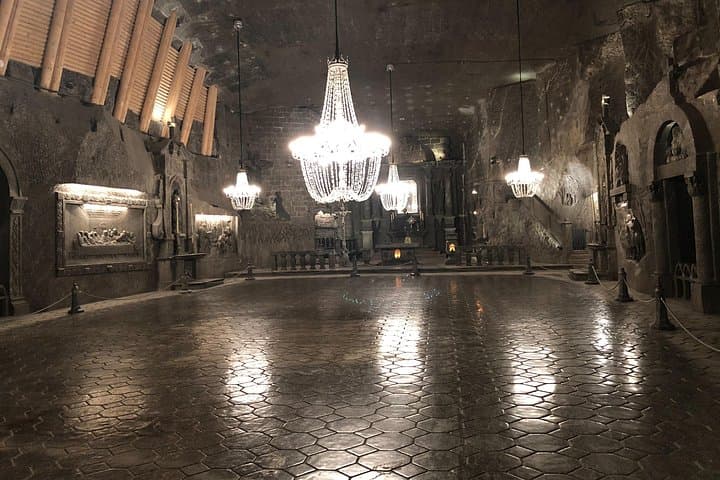

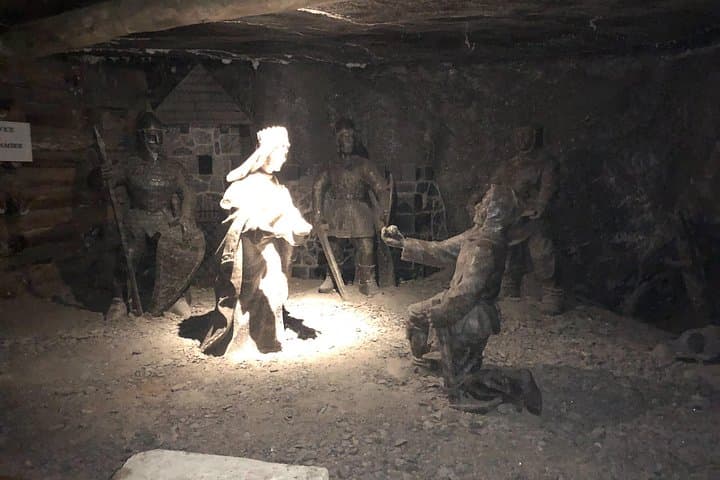

You step off the minivan at a brick courtyard and the air cools immediately — the world above shrinks to a steady 16–18°C that seems to slow the city’s rush. Light reflects off crystalline salt walls as a guide leads the group down carved stone steps; the descent feels deliberate, the mine drawing you inward with long, echoing corridors and vaulted chambers.
You step off the minivan at a brick courtyard and the air cools immediately — the world above shrinks to a steady 16–18°C that seems to slow the city’s rush. Light reflects off crystalline salt walls as a guide leads the group down carved stone steps; the descent feels deliberate, the mine drawing you inward with long, echoing corridors and vaulted chambers.
Wieliczka has been worked since the Middle Ages and became a UNESCO World Heritage Site in 1978. The salt removed here built economies and shaped local culture: chapels, sculptures and chandeliers all carved from halite speak to centuries of craftsmanship. Geologically, the mine exposes thick evaporite layers deposited in an ancient inland sea — salt beds compressed and preserved beneath the Carpathian foreland.
Visitors should expect monumental salt chambers like St. Kinga’s Chapel, underground lakes, a network of narrow passageways and dozens of carved reliefs. The microclimate is stable and used for therapeutic visits, but the route still includes about 800 steps down and many steps back up, so pacing matters.
Practical guidance: arrive with good shoes and light layers, bring a small backpack and water, and plan for ~2.5 hours on-site plus transfer time. Tours are guided in multiple languages with headphones and operate as shared groups of up to ~30. Hotel pickup and skip-the-line entry streamline logistics, but remember this is an underground cultural site—respect barriers, avoid touching carvings and follow your guide’s directions. Timing your visit earlier in the day reduces crowding and keeps your return to Kraków flexible.