THE ADVENTURE COLLECTIVE® · Independent discovery and booking for outdoor travel

Ride camels into Erg Chebbi, help set a wild bivouac, and sleep beneath a wide Saharan sky. This hands-on overnight blends Berber hospitality, dune-climbing sunsets and a sunrise camel return.
Ride camels into Erg Chebbi, help set a wild bivouac, and sleep beneath a wide Saharan sky. This hands-on overnight blends Berber hospitality, dune-climbing sunsets and a sunrise camel return.
The first step off the camel sinks you into sand that moves like a slow sea; Erg Chebbi’s rust-colored ridges roll away to the horizon and the sky opens so wide the stars feel within reach. In the late afternoon you meet your camel handler, load the sparse kit, and walk—swaying with the camel’s rhythm—45–60 minutes into a quiet pocket of dunes where a simple bivouac is raised by hand.
Verified experiences and guided adventures in the surrounding area.
Operated by Visit Merzouga Morocco · Merzouga, Drâa-Tafilalet
The first step off the camel sinks you into sand that moves like a slow sea; Erg Chebbi’s rust-colored ridges roll away to the horizon and the sky opens so wide the stars feel within reach. In the late afternoon you meet your camel handler, load the sparse kit, and walk—swaying with the camel’s rhythm—45–60 minutes into a quiet pocket of dunes where a simple bivouac is raised by hand.
This is Sahara country shaped by wind: aeolian dunes built over millennia from Atlas-sourced sediments, with a human history of Berber camps, caravan routes and salt-trade echoes. Local hosts share tea, stories and a dinner cooked on coals, keeping an unhurried culture alive in a fragile landscape.
Expect an overnight under canvas or open sky, an orange sunset climb to watch shadows race across the crests, and a cool, still predawn when the dunes reveal delicate ripples. Sunrise returns the sand to gold and provides the clearest light for photos; afterward you remount for the camel trek back and a hotel breakfast plus showers.
Practically: bring layered clothing for hot days and cold nights, a headlamp and water-carrying system, and closed-toe shoes for walking on shifting sand. Physical demand is moderate—camel riding reduces strain but luggage handling and sand walking require balance. Respect local customs, minimize plastic, and follow your handler’s guidance around animals and campfires. This trip balances hands-on cultural exchange with simple, elemental desert travel.
The camel ride into the dunes is typically 45–60 minutes depending on the group and exact camp location.
This is a wild bivouac—simple tents or sleeping mats, communal campfire, with hotel facilities (showers/pool) available after return.
Expect basic, often pit-style or portable options at the bivouac; full showers are provided at the hotel after the experience.
Not recommended for pregnant travelers or those with serious spinal or cardiovascular conditions; children can participate but should be steady mounting camels and supervised.
Visit Merzouga Morocco operates guided outdoor trips and adventures with an emphasis on safety, stewardship, and memorable experiences.
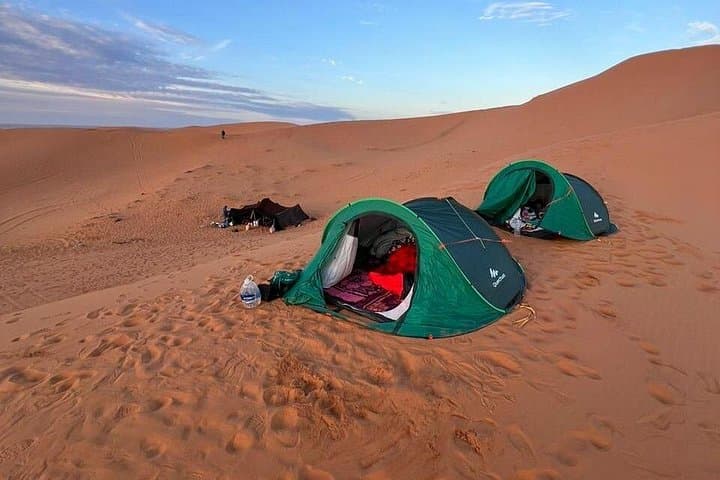
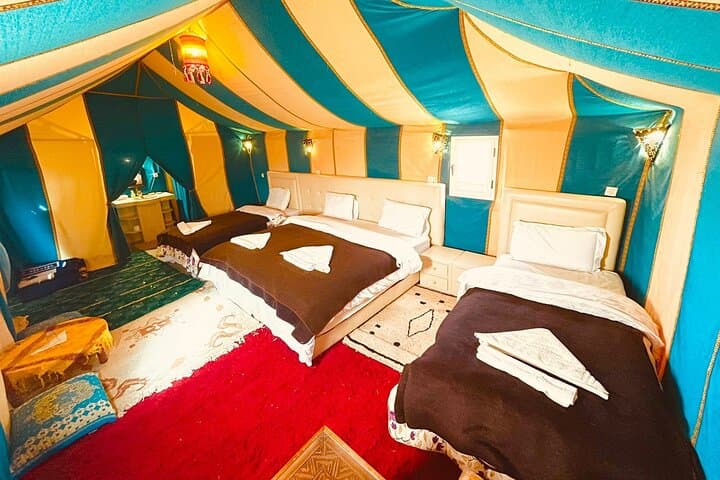

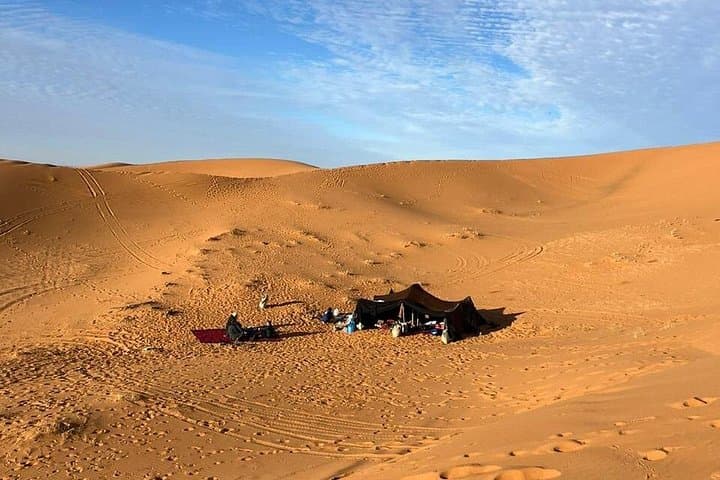
The first step off the camel sinks you into sand that moves like a slow sea; Erg Chebbi’s rust-colored ridges roll away to the horizon and the sky opens so wide the stars feel within reach. In the late afternoon you meet your camel handler, load the sparse kit, and walk—swaying with the camel’s rhythm—45–60 minutes into a quiet pocket of dunes where a simple bivouac is raised by hand.
The first step off the camel sinks you into sand that moves like a slow sea; Erg Chebbi’s rust-colored ridges roll away to the horizon and the sky opens so wide the stars feel within reach. In the late afternoon you meet your camel handler, load the sparse kit, and walk—swaying with the camel’s rhythm—45–60 minutes into a quiet pocket of dunes where a simple bivouac is raised by hand.
This is Sahara country shaped by wind: aeolian dunes built over millennia from Atlas-sourced sediments, with a human history of Berber camps, caravan routes and salt-trade echoes. Local hosts share tea, stories and a dinner cooked on coals, keeping an unhurried culture alive in a fragile landscape.
Expect an overnight under canvas or open sky, an orange sunset climb to watch shadows race across the crests, and a cool, still predawn when the dunes reveal delicate ripples. Sunrise returns the sand to gold and provides the clearest light for photos; afterward you remount for the camel trek back and a hotel breakfast plus showers.
Practically: bring layered clothing for hot days and cold nights, a headlamp and water-carrying system, and closed-toe shoes for walking on shifting sand. Physical demand is moderate—camel riding reduces strain but luggage handling and sand walking require balance. Respect local customs, minimize plastic, and follow your handler’s guidance around animals and campfires. This trip balances hands-on cultural exchange with simple, elemental desert travel.