THE ADVENTURE COLLECTIVE® · Independent discovery and booking for outdoor travel

Pair a dusk wildlife sortie through Jasper National Park with an indoor planetarium show and outdoor telescope session—an efficient, family‑friendly evening that blends animal watching with some of the darkest skies in Canada.
Pair a dusk wildlife sortie through Jasper National Park with an indoor planetarium show and outdoor telescope session—an efficient, family‑friendly evening that blends animal watching with some of the darkest skies in Canada.
The bus idles beneath a cold, high sky as guides check scopes and binoculars. At dusk, the park’s edges stir—elk step out along the highway shoulder, ravens argue over a roadside spruce, and the mountains press close enough to feel like features of a living map. This is where the Wild Skies combo begins: two hours of patient, expert-led wildlife searching across Jasper National Park, followed by a planetarium program and a chance at telescope viewing under one of the darkest skies in Canada.
Verified experiences and guided adventures in the surrounding area.
Operated by SunDog Tour Co · Jasper, Alberta
The bus idles beneath a cold, high sky as guides check scopes and binoculars. At dusk, the park’s edges stir—elk step out along the highway shoulder, ravens argue over a roadside spruce, and the mountains press close enough to feel like features of a living map. This is where the Wild Skies combo begins: two hours of patient, expert-led wildlife searching across Jasper National Park, followed by a planetarium program and a chance at telescope viewing under one of the darkest skies in Canada.
Jasper has been a magnet for stargazers since the early 20th century, but its protections are newer. In 2011, the town and surrounding national park earned International Dark Sky Preserve status, a deliberate conservation move that keeps the Milky Way sharp and meteors unforgettable. Geologically, the Rockies here are young and rugged—pillow‑stacked beds of limestone and shale carved by glaciers; those same glaciers sculpted the bowls and valleys that concentrate wildlife along riparian corridors and roadside clearings.
Culturally, this landscape sits on the traditional territories of the Cree, Stoney, and Métis peoples, whose knowledge of animal behavior and seasonal movement patterns informs modern guides. Local guides blend that long familiarity with modern optics and an interpretive approach that emphasizes safety and respect: animals are observed at a distance, and visitors are coached on how to be quiet and still so the mountains do the observing back.
Practically, the experience is designed for accessibility. Meet at the bus parking across from Jasper Park Lodge; the wildlife segment runs roughly two hours and involves short, low‑effort stops rather than long hikes. Expect roadside viewing and brief walks to vantage points like Disappearing Lake. The planetarium portion is indoors and runs regardless of cloud cover; telescope viewing outside is weather‑dependent. Bring layered clothing (temperatures drop fast after sunset), a steady pair of binoculars, and a small tripod if you plan to photograph the stars. Guides will point out seasonal targets—calving elk in spring, migratory birds late summer, and bull moose in early fall—while the planetarium show orients you to planets, aurora, and how to frame the Milky Way for photos.
Timing matters: tours run nightly during the May–October window with adjusted start times through the season. Keep expectations realistic—wildlife sightings are never guaranteed—but the combined format maximizes the odds: day‑to‑dusk animal behavior combined with some of the best sky watching in the Rockies makes for an evening that keeps you rooted in place and reaching for the heavens.
If you go, move quietly, leave no trace, and let the guide manage distance and safety; in a place like Jasper, patience is the shortest route to a memorable encounter.
Meet your guide at the bus parking across from Jasper Park Lodge’s main entrance at the scheduled start time; guides will check tickets and provide a short briefing.
Yes—children are welcome but must be accompanied by an adult; infants are required to sit on an adult’s lap during portions where seating is limited.
The indoor planetarium program runs rain‑or‑shine; outdoor telescope viewing depends on clear skies and may be limited or replaced with indoor demonstrations if conditions are poor.
Guides target areas with recent sightings, but wildlife sightings can’t be guaranteed; moose and bears are possible at certain times of year—guides prioritize safety and distance.
The program involves minimal hiking and mostly uses roadside pullouts; contact the operator in advance for specific accessibility needs so staff can assist where possible.
Guides will advise on telescope photography—some sessions allow smartphone adapters or explain how to capture projected images; long‑exposure astrophotography requires your own tripod and camera.
SunDog Tour Co operates guided outdoor trips and adventures with an emphasis on safety, stewardship, and memorable experiences.
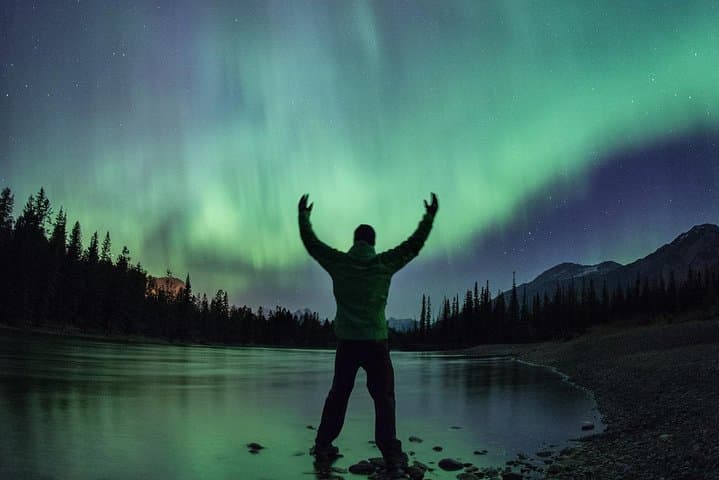


The bus idles beneath a cold, high sky as guides check scopes and binoculars. At dusk, the park’s edges stir—elk step out along the highway shoulder, ravens argue over a roadside spruce, and the mountains press close enough to feel like features of a living map. This is where the Wild Skies combo begins: two hours of patient, expert-led wildlife searching across Jasper National Park, followed by a planetarium program and a chance at telescope viewing under one of the darkest skies in Canada.
The bus idles beneath a cold, high sky as guides check scopes and binoculars. At dusk, the park’s edges stir—elk step out along the highway shoulder, ravens argue over a roadside spruce, and the mountains press close enough to feel like features of a living map. This is where the Wild Skies combo begins: two hours of patient, expert-led wildlife searching across Jasper National Park, followed by a planetarium program and a chance at telescope viewing under one of the darkest skies in Canada.
Jasper has been a magnet for stargazers since the early 20th century, but its protections are newer. In 2011, the town and surrounding national park earned International Dark Sky Preserve status, a deliberate conservation move that keeps the Milky Way sharp and meteors unforgettable. Geologically, the Rockies here are young and rugged—pillow‑stacked beds of limestone and shale carved by glaciers; those same glaciers sculpted the bowls and valleys that concentrate wildlife along riparian corridors and roadside clearings.
Culturally, this landscape sits on the traditional territories of the Cree, Stoney, and Métis peoples, whose knowledge of animal behavior and seasonal movement patterns informs modern guides. Local guides blend that long familiarity with modern optics and an interpretive approach that emphasizes safety and respect: animals are observed at a distance, and visitors are coached on how to be quiet and still so the mountains do the observing back.
Practically, the experience is designed for accessibility. Meet at the bus parking across from Jasper Park Lodge; the wildlife segment runs roughly two hours and involves short, low‑effort stops rather than long hikes. Expect roadside viewing and brief walks to vantage points like Disappearing Lake. The planetarium portion is indoors and runs regardless of cloud cover; telescope viewing outside is weather‑dependent. Bring layered clothing (temperatures drop fast after sunset), a steady pair of binoculars, and a small tripod if you plan to photograph the stars. Guides will point out seasonal targets—calving elk in spring, migratory birds late summer, and bull moose in early fall—while the planetarium show orients you to planets, aurora, and how to frame the Milky Way for photos.
Timing matters: tours run nightly during the May–October window with adjusted start times through the season. Keep expectations realistic—wildlife sightings are never guaranteed—but the combined format maximizes the odds: day‑to‑dusk animal behavior combined with some of the best sky watching in the Rockies makes for an evening that keeps you rooted in place and reaching for the heavens.
If you go, move quietly, leave no trace, and let the guide manage distance and safety; in a place like Jasper, patience is the shortest route to a memorable encounter.