THE ADVENTURE COLLECTIVE® · Independent discovery and booking for outdoor travel

A three-hour guided walk through Carara National Park highlights a rare Pacific–wet forest transition packed with birds, reptiles and mammals. Ideal as a day trip from Jaco, the tour balances easy trails with top wildlife-viewing opportunities.
A three-hour guided walk through Carara National Park highlights a rare Pacific–wet forest transition packed with birds, reptiles and mammals. Ideal as a day trip from Jaco, the tour balances easy trails with top wildlife-viewing opportunities.
You step out beneath a heavy, humid sky and the forest answers: leaves click like shutters, a distant macaw scolds the edge of the canopy, and a narrow trail threads between towering ceibas and curtain-like epiphytes.
Verified experiences and guided adventures in the surrounding area.
Operated by GoNat · Tárcoles, Puntarenas
You step out beneath a heavy, humid sky and the forest answers: leaves click like shutters, a distant macaw scolds the edge of the canopy, and a narrow trail threads between towering ceibas and curtain-like epiphytes.
Carara sits where the Pacific dry forest meets wetter lowland jungle, an ecological seam that concentrates species. The park protects extraordinary diversity — hundreds of bird species (including the showy scarlet macaw), abundant reptiles and amphibians, and mammals that move quietly through the understory. Geology here is low-elevation alluvial plain with pockets of older volcanic soils; that mix creates a patchwork of habitats from mangrove-influenced river edges to denser forest stands.
Human presence is modest: small fishing villages and the Tarcoles estuary sit nearby, and the park has been an important reserve for regional conservation efforts to protect rare birds and fragmented forest corridors.
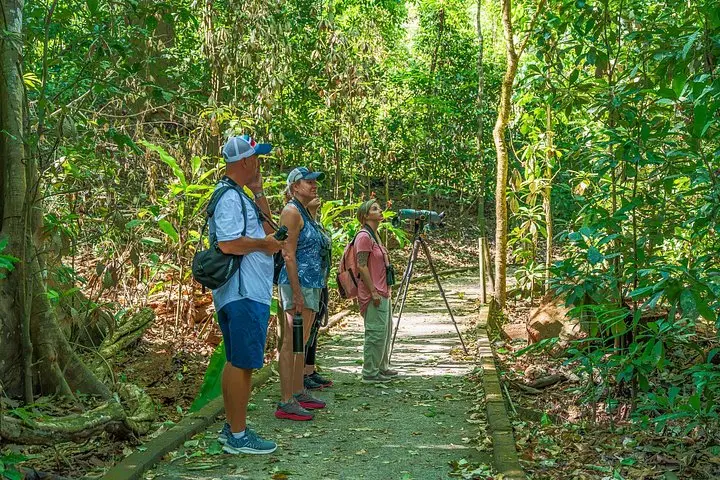
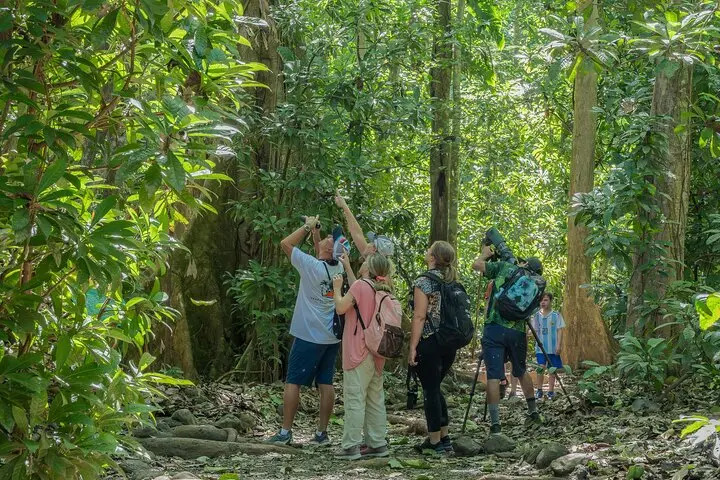
On a guided, three-hour circuit you’ll follow marked routes such as the Universal Nature Access Trail and Quebrada Bonita viewpoints. Trails alternate packed earth, raised boardwalks and muddy stretches in the rainy season. Guides point out bird species, reptiles sunning on trunks, and plants from cedars to orchids.
Practical edge: go early for cooler temperatures and the best bird activity, wear sturdy, water-resistant shoes and expect insects. Bring binoculars, a compact rain jacket, and water; keep voices low and stay on trails to reduce disturbance. The park’s compact size makes it ideal for a focused wildlife day-trip from Jaco or Puntarenas, delivering concentrated biodiversity without a multi-day trek.
The tour runs about three hours and focuses on the park’s main trails and viewpoints; timing can vary slightly with group size and wildlife encounters.
Yes — the ecological transition concentrates species and guides help locate birds, reptiles and mammals, making it accessible for beginners.
Some sections, like the Universal Nature Access Trail, are designed for easier access, but terrain elsewhere can be uneven and slippery — check with the operator about specific needs.
Early morning during the dry season (roughly December–April) often yields the most active birdlife, though rainy months can be productive for amphibians and fewer visitors.
GoNat operates guided outdoor trips and adventures with an emphasis on safety, stewardship, and memorable experiences.
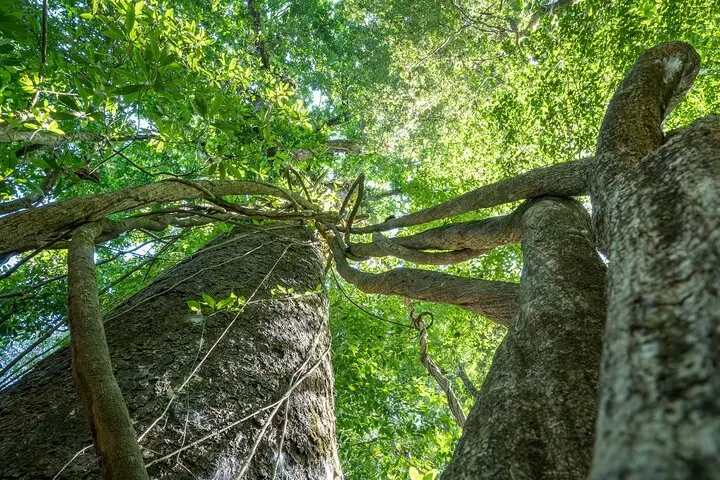
You step out beneath a heavy, humid sky and the forest answers: leaves click like shutters, a distant macaw scolds the edge of the canopy, and a narrow trail threads between towering ceibas and curtain-like epiphytes.
You step out beneath a heavy, humid sky and the forest answers: leaves click like shutters, a distant macaw scolds the edge of the canopy, and a narrow trail threads between towering ceibas and curtain-like epiphytes.
Carara sits where the Pacific dry forest meets wetter lowland jungle, an ecological seam that concentrates species. The park protects extraordinary diversity — hundreds of bird species (including the showy scarlet macaw), abundant reptiles and amphibians, and mammals that move quietly through the understory. Geology here is low-elevation alluvial plain with pockets of older volcanic soils; that mix creates a patchwork of habitats from mangrove-influenced river edges to denser forest stands.
Human presence is modest: small fishing villages and the Tarcoles estuary sit nearby, and the park has been an important reserve for regional conservation efforts to protect rare birds and fragmented forest corridors.
On a guided, three-hour circuit you’ll follow marked routes such as the Universal Nature Access Trail and Quebrada Bonita viewpoints. Trails alternate packed earth, raised boardwalks and muddy stretches in the rainy season. Guides point out bird species, reptiles sunning on trunks, and plants from cedars to orchids.
Practical edge: go early for cooler temperatures and the best bird activity, wear sturdy, water-resistant shoes and expect insects. Bring binoculars, a compact rain jacket, and water; keep voices low and stay on trails to reduce disturbance. The park’s compact size makes it ideal for a focused wildlife day-trip from Jaco or Puntarenas, delivering concentrated biodiversity without a multi-day trek.