THE ADVENTURE COLLECTIVE® · Independent discovery and booking for outdoor travel

Step into a quiet Wiltshire beechwood and learn to climb on ancient sarsen stone—the same rock used for Stonehenge. This four-hour coached bouldering workshop blends skill-building with a walk through living history, where friction, footwork, and forest light set the pace.
Step into a quiet Wiltshire beechwood and learn to climb on ancient sarsen stone—the same rock used for Stonehenge. This four-hour coached bouldering workshop blends skill-building with a walk through living history, where friction, footwork, and forest light set the pace.
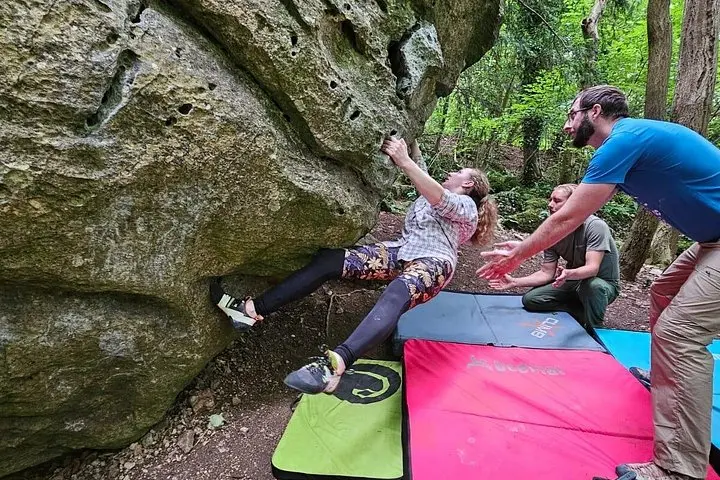
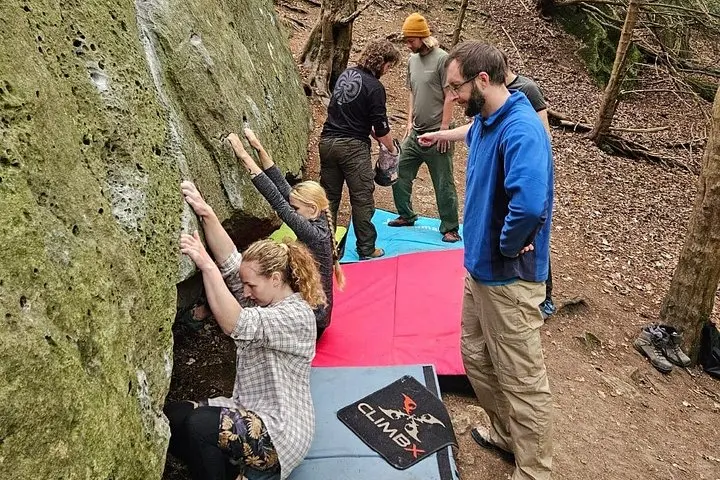
The forest hushes as you shoulder a crash pad and follow your instructor off the gravel car park and into the beechwood. Light sifts through high crowns, dappling moss, flint, and pale blocks of sarsen—stones that seem to watch you arrive. Chalk dust hangs in the cool air. A quick safety brief, a check on pads and shoes, and the group drifts toward the first problems. The rock keeps its secrets at arm’s length, asking for body tension and balance before it gives anything back.
Verified experiences and guided adventures in the surrounding area.
Operated by Up & Under Adventures · Marlborough, England
The forest hushes as you shoulder a crash pad and follow your instructor off the gravel car park and into the beechwood. Light sifts through high crowns, dappling moss, flint, and pale blocks of sarsen—stones that seem to watch you arrive. Chalk dust hangs in the cool air. A quick safety brief, a check on pads and shoes, and the group drifts toward the first problems. The rock keeps its secrets at arm’s length, asking for body tension and balance before it gives anything back.
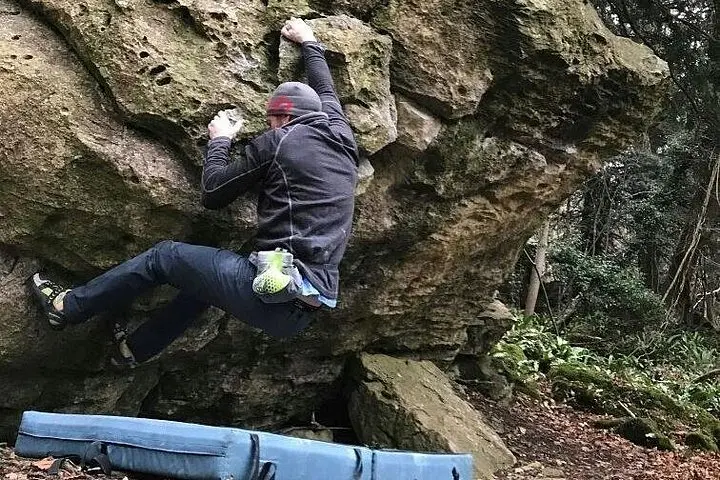
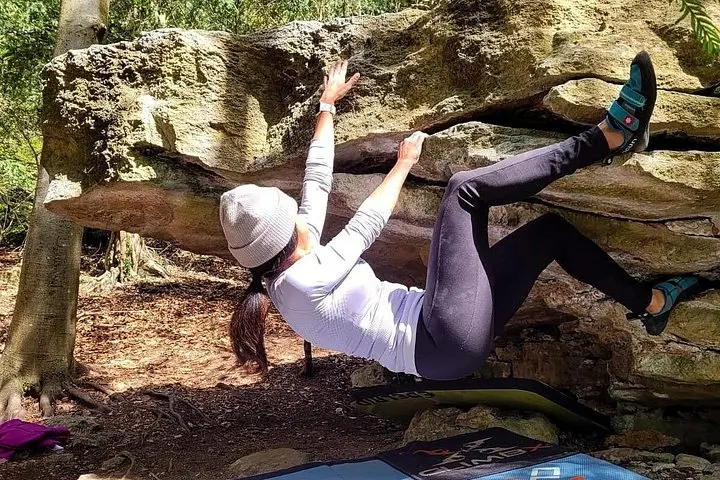
Bouldering in Wiltshire is defined by sarsen stone—hard, fine-grained silcrete formed in ancient river terraces and later exposed by erosion. These are the same stones hauled to build Stonehenge and Avebury from nearby valleys and woods. On these rounded blocs, slopers rule, micro-edges matter, and subtle footwork outsmarts brute force. Instructors coach efficient movement, spotting, and pad placement, steering you through a circuit that can range from friendly V0 warm-ups to stiff V6–V9 testpieces for those who want them.
This is a practical, hands-on, four-hour workshop. Expect a short forest approach (10–20 minutes), then multiple blocs with varied height and landings. The stone climbs best in cool, dry conditions; humidity slicks the slopers, while a breeze can turn marginal friction into magic. You’ll learn how to read landings, manage pads, and communicate clearly with spotters—a quiet choreography that makes every top-out cleaner and safer. Bring water and a snack; breaks are part of the rhythm, letting skin recover while beta percolates through the group.
Beyond the movement, the place pulls you in. Red kites circle above the canopy. Roe deer step through bracken and pause to measure you before melting into the trees. In spring, bluebells flood the understory in saturated color—beautiful, fragile, and easy to damage with a careless shortcut. Stay on durable ground, avoid brushing away lichen, and use chalk sparingly; these stones carry cultural weight far beyond the climb.
If you’re arriving from Marlborough, parking is straightforward and public transport options put you within a short taxi ride of the meet point. Weather can call the shots here—rain seeps into cracks and lingers—so flexibility helps. Wear sturdy approach shoes for the woodland paths, layer up for shade, and pack a light waterproof just in case. The workshop supplies climbing equipment, and the coaching is tailored to your level, whether you’re learning your first mantle or refining a dynamic throw on rounded holds that insist you commit.
You’ll leave with new skills, tired arms, and a clearer sense of how to move with this rock—the forest nudging you forward, one precise step at a time.
No. The workshop is suitable for beginners through experienced climbers, with coaching and problem selection tailored to your level.
Use of climbing equipment and expert instruction on safety, spotting, pad placement, and technique. Personal shoes are recommended if you have them.
Expect a spread from V0 to V9. You’ll choose problems that fit your ability, with guidance to progress safely.
Wet sarsen can be unsafe and easily damaged; the operator may reschedule or cancel with a refund option according to the weather policy.
Yes. Buses serve Marlborough; from there, a short taxi ride reaches the meeting point at the forest car park.
Facilities are limited or absent at the forest parking; use services in town before arrival and pack out all waste.
Up & Under Adventures operates guided outdoor trips and adventures with an emphasis on safety, stewardship, and memorable experiences.
The forest hushes as you shoulder a crash pad and follow your instructor off the gravel car park and into the beechwood. Light sifts through high crowns, dappling moss, flint, and pale blocks of sarsen—stones that seem to watch you arrive. Chalk dust hangs in the cool air. A quick safety brief, a check on pads and shoes, and the group drifts toward the first problems. The rock keeps its secrets at arm’s length, asking for body tension and balance before it gives anything back.
The forest hushes as you shoulder a crash pad and follow your instructor off the gravel car park and into the beechwood. Light sifts through high crowns, dappling moss, flint, and pale blocks of sarsen—stones that seem to watch you arrive. Chalk dust hangs in the cool air. A quick safety brief, a check on pads and shoes, and the group drifts toward the first problems. The rock keeps its secrets at arm’s length, asking for body tension and balance before it gives anything back.
Bouldering in Wiltshire is defined by sarsen stone—hard, fine-grained silcrete formed in ancient river terraces and later exposed by erosion. These are the same stones hauled to build Stonehenge and Avebury from nearby valleys and woods. On these rounded blocs, slopers rule, micro-edges matter, and subtle footwork outsmarts brute force. Instructors coach efficient movement, spotting, and pad placement, steering you through a circuit that can range from friendly V0 warm-ups to stiff V6–V9 testpieces for those who want them.
This is a practical, hands-on, four-hour workshop. Expect a short forest approach (10–20 minutes), then multiple blocs with varied height and landings. The stone climbs best in cool, dry conditions; humidity slicks the slopers, while a breeze can turn marginal friction into magic. You’ll learn how to read landings, manage pads, and communicate clearly with spotters—a quiet choreography that makes every top-out cleaner and safer. Bring water and a snack; breaks are part of the rhythm, letting skin recover while beta percolates through the group.
Beyond the movement, the place pulls you in. Red kites circle above the canopy. Roe deer step through bracken and pause to measure you before melting into the trees. In spring, bluebells flood the understory in saturated color—beautiful, fragile, and easy to damage with a careless shortcut. Stay on durable ground, avoid brushing away lichen, and use chalk sparingly; these stones carry cultural weight far beyond the climb.
If you’re arriving from Marlborough, parking is straightforward and public transport options put you within a short taxi ride of the meet point. Weather can call the shots here—rain seeps into cracks and lingers—so flexibility helps. Wear sturdy approach shoes for the woodland paths, layer up for shade, and pack a light waterproof just in case. The workshop supplies climbing equipment, and the coaching is tailored to your level, whether you’re learning your first mantle or refining a dynamic throw on rounded holds that insist you commit.
You’ll leave with new skills, tired arms, and a clearer sense of how to move with this rock—the forest nudging you forward, one precise step at a time.