THE ADVENTURE COLLECTIVE® · Independent discovery and booking for outdoor travel

Explore Windhoek’s compact capital with a half-day tour that moves from German-era landmarks to the bustling Katutura market. Expect short walks, historic context, and chances to buy locally made crafts.
Explore Windhoek’s compact capital with a half-day tour that moves from German-era landmarks to the bustling Katutura market. Expect short walks, historic context, and chances to buy locally made crafts.
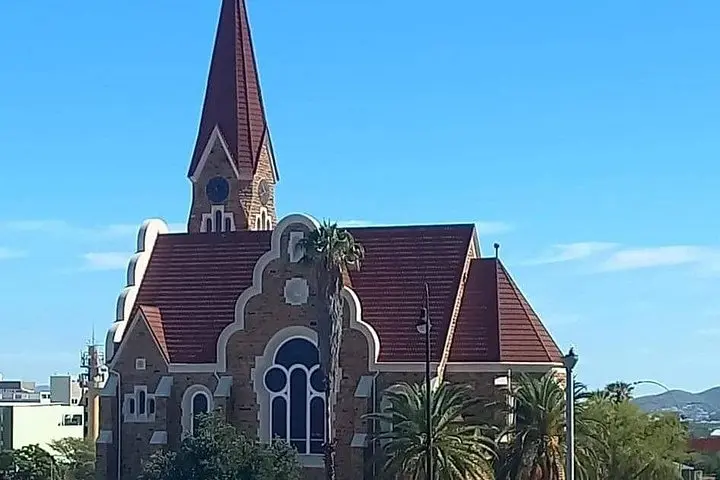
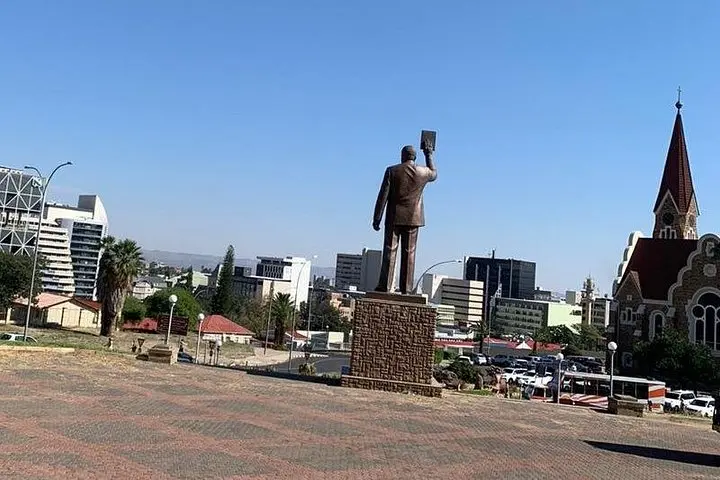
You step from the vehicle and the wind takes the city’s dust and pushes it down the wide avenue toward the hills—Windhoek’s high desert air feels open and direct. In two to three hours the tour moves from the carved stone face of Christ Church to the green lawn at the Tintenpalast, through residential lanes and into the open rhythm of Katutura’s market stalls.
Verified experiences and guided adventures in the surrounding area.
Operated by Blue Berry Travel · Windhoek, Khomas Region
You step from the vehicle and the wind takes the city’s dust and pushes it down the wide avenue toward the hills—Windhoek’s high desert air feels open and direct. In two to three hours the tour moves from the carved stone face of Christ Church to the green lawn at the Tintenpalast, through residential lanes and into the open rhythm of Katutura’s market stalls.
Windhoek sits on a high central plateau where granite koppies and sandy soils shape a compact urban footprint. The city’s German colonial era left clear lines in the architecture—Heinitzburg Castle and Alte Feste—while the 20th-century history of apartheid and the creation of Katutura inform present-day culture and community life. Local markets and Penduka’s craft project reveal modern Namibia: entrepreneurship braided with resilience.
Expect a mix of short walks and vehicle transfers, punctuated by market browsing and photo stops. Guides typically explain parliamentary history at Tintenpalast gardens, show the Christuskirche’s interior if time allows, and lead a respectful visit through Katutura with an emphasis on local vendors and social context.
Practical notes: plan for sun and wind—bring a hat, sunscreen and a refillable water bottle. Comfortable walking shoes suit the mix of paved streets and uneven market surfaces. Mornings are cooler and better for market crowds; late afternoon can be hot and dustier. The tour is family-friendly but not recommended for guests with spinal injuries or pregnant travelers. Finish with some Penduka shopping to support local artisans and carry away stories as much as souvenirs.
The tour runs about 2–3 hours, depending on traffic and time spent at each stop.
Hotel pickup and drop-off are offered when that option is selected at booking; confirm your pickup point in advance.
Yes—children are welcome but must be accompanied by an adult; note that some stops involve busy market areas.
Yes; the itinerary includes stops where restrooms are available, such as at major sights and market facilities.
Blue Berry Travel operates guided outdoor trips and adventures with an emphasis on safety, stewardship, and memorable experiences.


You step from the vehicle and the wind takes the city’s dust and pushes it down the wide avenue toward the hills—Windhoek’s high desert air feels open and direct. In two to three hours the tour moves from the carved stone face of Christ Church to the green lawn at the Tintenpalast, through residential lanes and into the open rhythm of Katutura’s market stalls.
You step from the vehicle and the wind takes the city’s dust and pushes it down the wide avenue toward the hills—Windhoek’s high desert air feels open and direct. In two to three hours the tour moves from the carved stone face of Christ Church to the green lawn at the Tintenpalast, through residential lanes and into the open rhythm of Katutura’s market stalls.
Windhoek sits on a high central plateau where granite koppies and sandy soils shape a compact urban footprint. The city’s German colonial era left clear lines in the architecture—Heinitzburg Castle and Alte Feste—while the 20th-century history of apartheid and the creation of Katutura inform present-day culture and community life. Local markets and Penduka’s craft project reveal modern Namibia: entrepreneurship braided with resilience.
Expect a mix of short walks and vehicle transfers, punctuated by market browsing and photo stops. Guides typically explain parliamentary history at Tintenpalast gardens, show the Christuskirche’s interior if time allows, and lead a respectful visit through Katutura with an emphasis on local vendors and social context.
Practical notes: plan for sun and wind—bring a hat, sunscreen and a refillable water bottle. Comfortable walking shoes suit the mix of paved streets and uneven market surfaces. Mornings are cooler and better for market crowds; late afternoon can be hot and dustier. The tour is family-friendly but not recommended for guests with spinal injuries or pregnant travelers. Finish with some Penduka shopping to support local artisans and carry away stories as much as souvenirs.