THE ADVENTURE COLLECTIVE® · Independent discovery and booking for outdoor travel

Swap Seoul’s skyline for a day of snow-carved peaks, tree-lined island lanes and frozen alpine cascades. This full-day winter tour pairs Seoraksan’s cable-car vistas with Nami Island’s quiet paths and the crystalline forms of Eobi Ice Valley.
Swap Seoul’s skyline for a day of snow-carved peaks, tree-lined island lanes and frozen alpine cascades. This full-day winter tour pairs Seoraksan’s cable-car vistas with Nami Island’s quiet paths and the crystalline forms of Eobi Ice Valley.
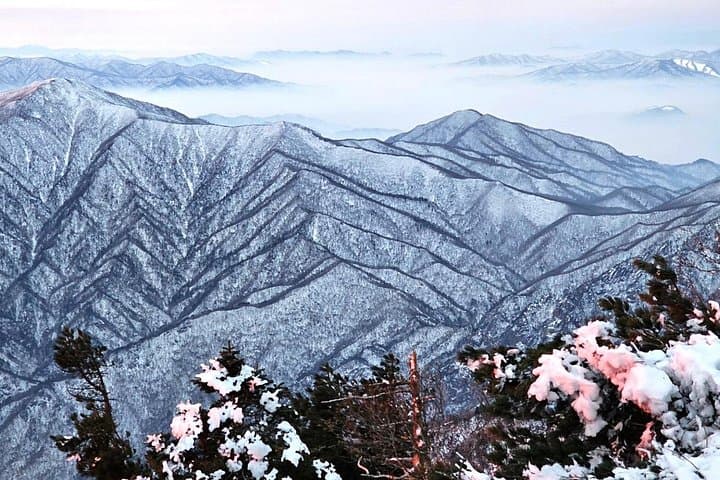
A morning departure from Seoul unfurls like a map being opened: city lights fade, the bus eases onto the highway and, by late morning, Seoraksan’s serrated ridgelines appear, capped in snow. Riders take the cable car for a crisp panorama where granite spires and frosted pines hold court; lower trails thread through rock-carved temples and frozen waterfalls that glitter in weak winter sun.
Verified experiences and guided adventures in the surrounding area.
Operated by Lecirt · Sokcho, Gangwon-do
A morning departure from Seoul unfurls like a map being opened: city lights fade, the bus eases onto the highway and, by late morning, Seoraksan’s serrated ridgelines appear, capped in snow. Riders take the cable car for a crisp panorama where granite spires and frosted pines hold court; lower trails thread through rock-carved temples and frozen waterfalls that glitter in weak winter sun.
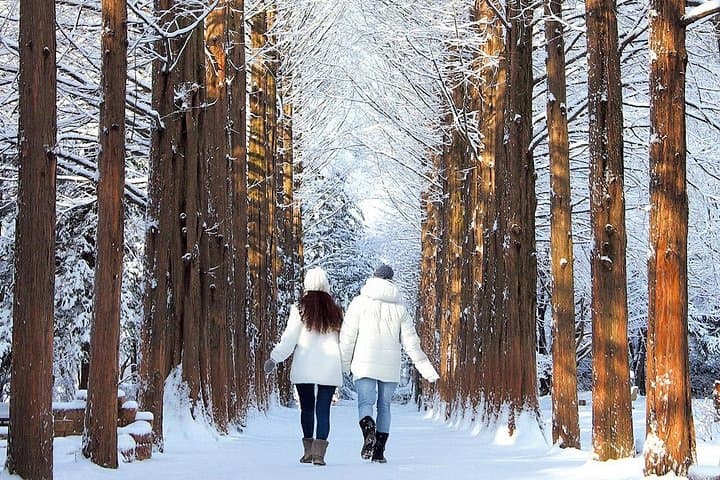
Seoraksan’s geology is primarily Precambrian gneiss and granite—ancient stone that has been sheared and uplifted into narrow valleys and steep ridges. The park’s cultural layer includes Sinheungsa Temple and its long history as a pilgrimage and preservation site. The trip then moves south to Nami Island, a former river ferry stop turned cultivated park; its straight avenues of poplars and metasequoia read differently under snow, quieter than the summer crowds and instantly recognizable to fans of Korean drama.
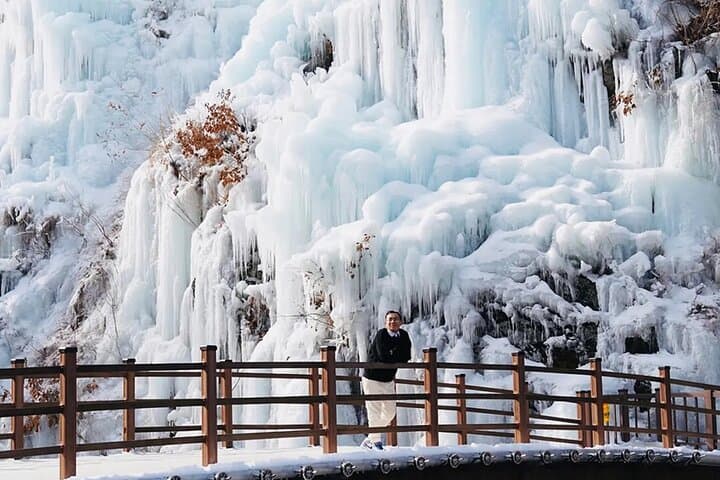
Eobi Ice Valley is the day’s concluding mood piece: an alpine hollow where meltwater sculpts ice into curtains and columns, offering close-up study of winter’s slow architecture.
Practical guidance: expect a full 12–13 hour day with short walks, some uneven packed-snow terrain and steps at viewpoints. Dress in layers, waterproof boots and a warm hat; carry traction aids if you plan steeper paths. Bring a compact tripod for low-light shots, snacks and a portable charger—the days are short and photo opportunities frequent. The tour suits travelers who want a single-day sampler of Korea’s high-country winter landscapes without overnight logistics.
The tour runs about 12–13 hours with early morning pick-up in Seoul and return the same evening—exact times vary by pick-up location.
Short walks are required and some sites have steps or uneven terrain; infants may sit on laps but those with limited mobility may find parts difficult.
The operator will notify you at least two days prior and may cancel or reschedule; full refunds are generally issued for cancellations more than 24 hours before departure.
Yes; round-trip transportation, a professional guide and admissions to included attractions are part of the tour price.
Lecirt operates guided outdoor trips and adventures with an emphasis on safety, stewardship, and memorable experiences.

A morning departure from Seoul unfurls like a map being opened: city lights fade, the bus eases onto the highway and, by late morning, Seoraksan’s serrated ridgelines appear, capped in snow. Riders take the cable car for a crisp panorama where granite spires and frosted pines hold court; lower trails thread through rock-carved temples and frozen waterfalls that glitter in weak winter sun.
A morning departure from Seoul unfurls like a map being opened: city lights fade, the bus eases onto the highway and, by late morning, Seoraksan’s serrated ridgelines appear, capped in snow. Riders take the cable car for a crisp panorama where granite spires and frosted pines hold court; lower trails thread through rock-carved temples and frozen waterfalls that glitter in weak winter sun.
Seoraksan’s geology is primarily Precambrian gneiss and granite—ancient stone that has been sheared and uplifted into narrow valleys and steep ridges. The park’s cultural layer includes Sinheungsa Temple and its long history as a pilgrimage and preservation site. The trip then moves south to Nami Island, a former river ferry stop turned cultivated park; its straight avenues of poplars and metasequoia read differently under snow, quieter than the summer crowds and instantly recognizable to fans of Korean drama.
Eobi Ice Valley is the day’s concluding mood piece: an alpine hollow where meltwater sculpts ice into curtains and columns, offering close-up study of winter’s slow architecture.
Practical guidance: expect a full 12–13 hour day with short walks, some uneven packed-snow terrain and steps at viewpoints. Dress in layers, waterproof boots and a warm hat; carry traction aids if you plan steeper paths. Bring a compact tripod for low-light shots, snacks and a portable charger—the days are short and photo opportunities frequent. The tour suits travelers who want a single-day sampler of Korea’s high-country winter landscapes without overnight logistics.