THE ADVENTURE COLLECTIVE® · Independent discovery and booking for outdoor travel

Face frozen corries and airy ridges on a private guided winter mountaineering day in the Cairngorms. Learn ice-axe and crampon techniques while your guide leads classic winter lines suited to your ability.
Face frozen corries and airy ridges on a private guided winter mountaineering day in the Cairngorms. Learn ice-axe and crampon techniques while your guide leads classic winter lines suited to your ability.
The morning opens cold and bright in Aviemore, wind carving the air off the Cairngorm plateau. Guides meet you outside the Tiso store, kit piled in the back of a van, breath visible as they run through the day’s plan. Within an hour you’re walking uphill on a frozen approach, crampons whispering on compacted snow, the corries above folding into a high, white theatre. The cliffs loom—flat-faced, brittle with rime—and the mountain seems to nudge you forward: steady, inevitable.
Verified experiences and guided adventures in the surrounding area.
Operated by EverydayClimbing · Aviemore, Scotland
The morning opens cold and bright in Aviemore, wind carving the air off the Cairngorm plateau. Guides meet you outside the Tiso store, kit piled in the back of a van, breath visible as they run through the day’s plan. Within an hour you’re walking uphill on a frozen approach, crampons whispering on compacted snow, the corries above folding into a high, white theatre. The cliffs loom—flat-faced, brittle with rime—and the mountain seems to nudge you forward: steady, inevitable.
This is Scottish winter mountaineering: route-finding, movement on steep snow, and short sections of technical climbing delivered in a remote, high-alpine setting. The Cairngorms are an ancient landscape carved by ice—broad plateaus, steep corries and granite tors that retain snow well into the spring. The area’s mountaineering history dates back to the Victorian era when early alpinists and local hillmen started testing lines on these north-facing gullies; today the same gullies offer compacted ice and mixed snow that reward careful technique as much as courage.
Culturally the Highlands are a working landscape. Estate tracks, bothies and old military access roads remind you this is not playground terrain but a place shaped by skiing, deer stalking and mountain rescue traditions. Guides here carry that respect forward: route choice balances challenge with safety, and instruction is hands-on—learning to kick steps, front-point with crampons, and use an ice axe for arrest and belay.
Practically, the day is deliberate. Expect a firm one- to two-hour approach, crag-based climbing or ridge travel of varied exposure, and a steady descent. Guides provide helmets, harnesses, ice axes and crampons and will rope clients in for exposed steps while teaching anchor management and rope handling. Hydration and calories matter: cold slows you and burns energy, so frequent short breaks and salty snacks keep you moving. Weather drives the plan—whiteouts, high winds or unstable avalanche conditions will change objectives or cancel the activity.
For your part, arrive with stiff, crampon-compatible boots, waterproof outer layers and a sense of patience. The guides tailor the route for ability, so novices come away with a lasting set of skills while experienced climbers can push the technical sections. Mountain rescue coverage is good in the Park, but the best safety is local knowledge: follow your guide’s pace, ask questions, and treat the Cairngorms with the directness it requires.
At the end of the day you’ll have photos, bruised confidence replaced by competence, and a clearer sense of why the Cairngorms are central to Scotland’s winter climbing scene. The mountains haven’t been tamed; they’ve been learned.
No — guides teach cramponing, ice-axe use and basic rope techniques during the day, but you should be comfortable walking uphill for an hour on uneven snow.
The operator may change objectives, choose a less-exposed route or cancel; safety decisions follow avalanche and wind assessments.
Yes — helmets, harnesses, crampons, ice axes and basic climbing equipment are supplied as part of the day.
Most operators accept teens and adults; booking questions require age bands and the guide will assess capability on the day.
Yes — pickup is offered for small groups from selected Aviemore hotels; larger groups can arrange transport assistance.
Yes — guides typically provide photos of your day as part of the inclusions.
EverydayClimbing operates guided outdoor trips and adventures with an emphasis on safety, stewardship, and memorable experiences.
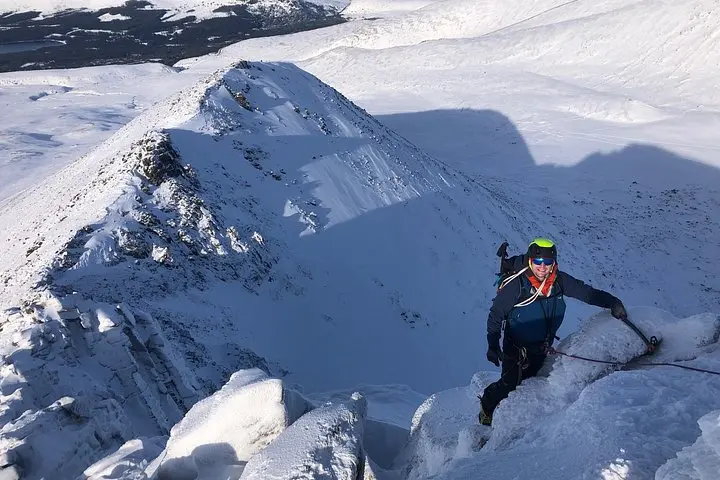
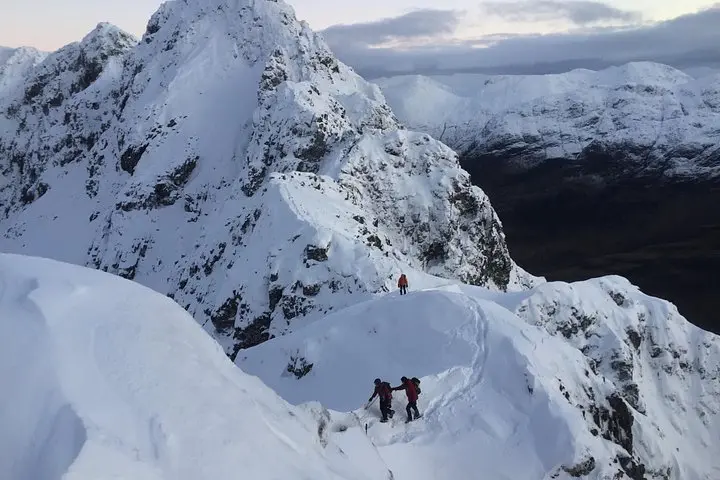
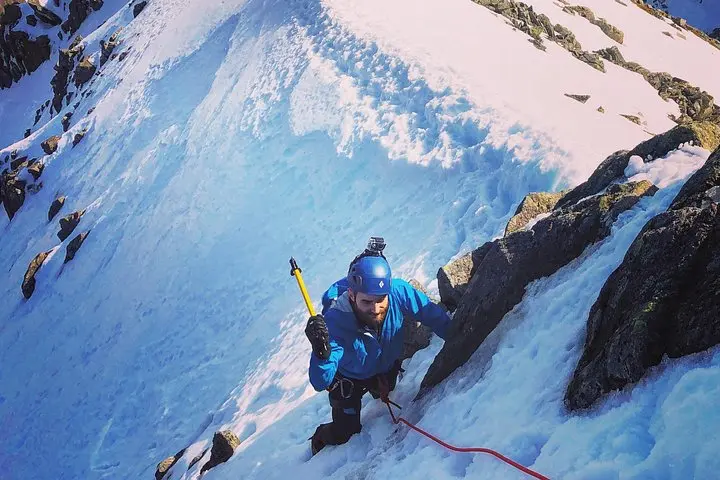
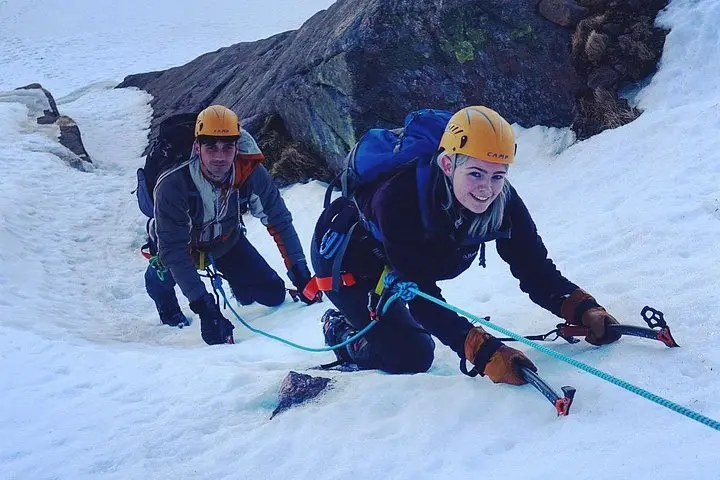
The morning opens cold and bright in Aviemore, wind carving the air off the Cairngorm plateau. Guides meet you outside the Tiso store, kit piled in the back of a van, breath visible as they run through the day’s plan. Within an hour you’re walking uphill on a frozen approach, crampons whispering on compacted snow, the corries above folding into a high, white theatre. The cliffs loom—flat-faced, brittle with rime—and the mountain seems to nudge you forward: steady, inevitable.
The morning opens cold and bright in Aviemore, wind carving the air off the Cairngorm plateau. Guides meet you outside the Tiso store, kit piled in the back of a van, breath visible as they run through the day’s plan. Within an hour you’re walking uphill on a frozen approach, crampons whispering on compacted snow, the corries above folding into a high, white theatre. The cliffs loom—flat-faced, brittle with rime—and the mountain seems to nudge you forward: steady, inevitable.
This is Scottish winter mountaineering: route-finding, movement on steep snow, and short sections of technical climbing delivered in a remote, high-alpine setting. The Cairngorms are an ancient landscape carved by ice—broad plateaus, steep corries and granite tors that retain snow well into the spring. The area’s mountaineering history dates back to the Victorian era when early alpinists and local hillmen started testing lines on these north-facing gullies; today the same gullies offer compacted ice and mixed snow that reward careful technique as much as courage.
Culturally the Highlands are a working landscape. Estate tracks, bothies and old military access roads remind you this is not playground terrain but a place shaped by skiing, deer stalking and mountain rescue traditions. Guides here carry that respect forward: route choice balances challenge with safety, and instruction is hands-on—learning to kick steps, front-point with crampons, and use an ice axe for arrest and belay.
Practically, the day is deliberate. Expect a firm one- to two-hour approach, crag-based climbing or ridge travel of varied exposure, and a steady descent. Guides provide helmets, harnesses, ice axes and crampons and will rope clients in for exposed steps while teaching anchor management and rope handling. Hydration and calories matter: cold slows you and burns energy, so frequent short breaks and salty snacks keep you moving. Weather drives the plan—whiteouts, high winds or unstable avalanche conditions will change objectives or cancel the activity.
For your part, arrive with stiff, crampon-compatible boots, waterproof outer layers and a sense of patience. The guides tailor the route for ability, so novices come away with a lasting set of skills while experienced climbers can push the technical sections. Mountain rescue coverage is good in the Park, but the best safety is local knowledge: follow your guide’s pace, ask questions, and treat the Cairngorms with the directness it requires.
At the end of the day you’ll have photos, bruised confidence replaced by competence, and a clearer sense of why the Cairngorms are central to Scotland’s winter climbing scene. The mountains haven’t been tamed; they’ve been learned.