THE ADVENTURE COLLECTIVE® · Independent discovery and booking for outdoor travel

Head into the quieter winter slopes above Bariloche on a private, guide-led snowshoe trek to ~1,600 m. This six-hour outing pairs glacial geology, native lenga forest and summit tea with practical guidance and full gear provided.
Head into the quieter winter slopes above Bariloche on a private, guide-led snowshoe trek to ~1,600 m. This six-hour outing pairs glacial geology, native lenga forest and summit tea with practical guidance and full gear provided.
The air bites crisp above Nahuel Huapi as you step from the vehicle and into a white silence. Pine trunks throw long shadows across firmed snow; the trail first eases through planted pines, then opens to a native lenga forest that pushes you upward. The summit at roughly 1,600 meters rewards the climb with wide Patagonian sky and the dark sweep of lakes below.
Verified experiences and guided adventures in the surrounding area.
Operated by Andes Outdoors · San Carlos de Bariloche, Río Negro
The air bites crisp above Nahuel Huapi as you step from the vehicle and into a white silence. Pine trunks throw long shadows across firmed snow; the trail first eases through planted pines, then opens to a native lenga forest that pushes you upward. The summit at roughly 1,600 meters rewards the climb with wide Patagonian sky and the dark sweep of lakes below.
This slope is part of the glacially carved terrain around San Carlos de Bariloche—granite outcrops and moraine ridges left by the last ice age. The region carries both Mapuche heritage and European alpine influence dating from early 20th-century settlers; trails and shelters reflect that mixed history. The lenga stands are ecologically important here, acting like slow-moving guardians of snowmelt and habitat for local wildlife.
Practically speaking, this is a private, guide-led snowshoe route about 6 km one-way with a net ascent to 1,600 m and moderate technical exposure on steeper upper slopes. Guides provide snowshoes, gaiters, crampons, poles and a lunch—typically a hearty sandwich, fruit and local alfajor, and a red-fruit tea at the summit to warm fingers.
Expect 6 hours round-trip including breaks; walking on snow is slower and more tiring than summer hiking. Dress in insulated layers, bring waterproof boots, high-SPF sun protection and at least 1–1.5 L of water in insulated bottles. Timing matters—later morning departures reduce frost but can increase wind exposure at the top.
If you want solitude, ask for routes that avoid main ski areas; the private format lets guides tailor pace and ascent. Respect fragile lenga understory and pack out waste—this high-mountain winter landscape recovers slowly.
The trip is about 6 hours round-trip, roughly 6 km one-way with a steady ascent to 1,600 m; it's rated moderate—expect steeper, more tiring sections near the summit.
No—guides provide instruction and snowshoes; however, being comfortable walking on uneven terrain and having moderate fitness helps.
Private transport from your accommodation, snowshoes, gaiters, poles, crampons if needed, and a packed lunch with tea at the summit are included.
Operators may cancel or reschedule for heavy snowfall, high winds, or avalanche risk—always follow the guide's safety decision.
Andes Outdoors operates guided outdoor trips and adventures with an emphasis on safety, stewardship, and memorable experiences.
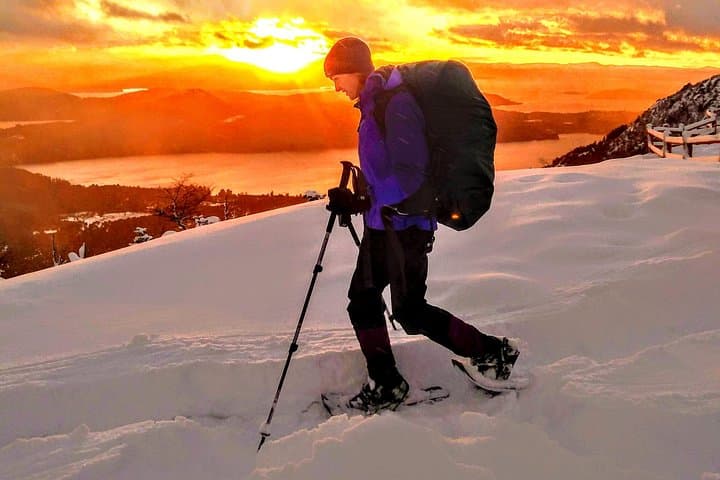
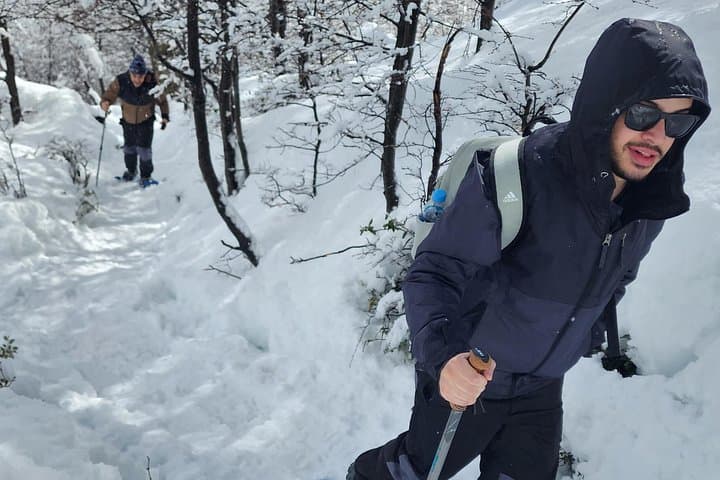
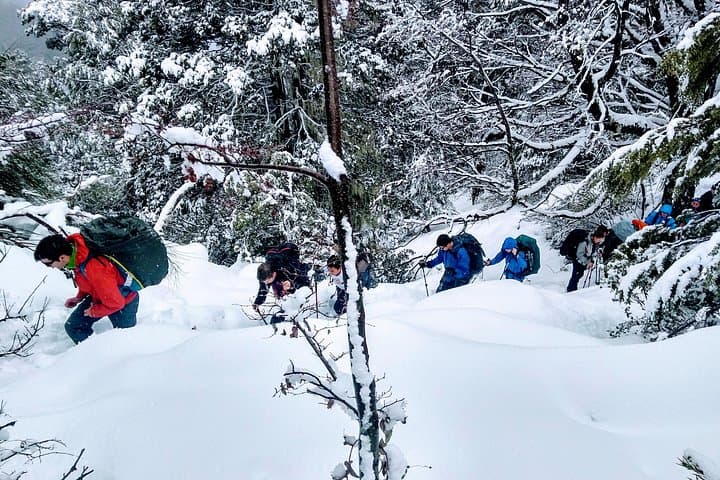
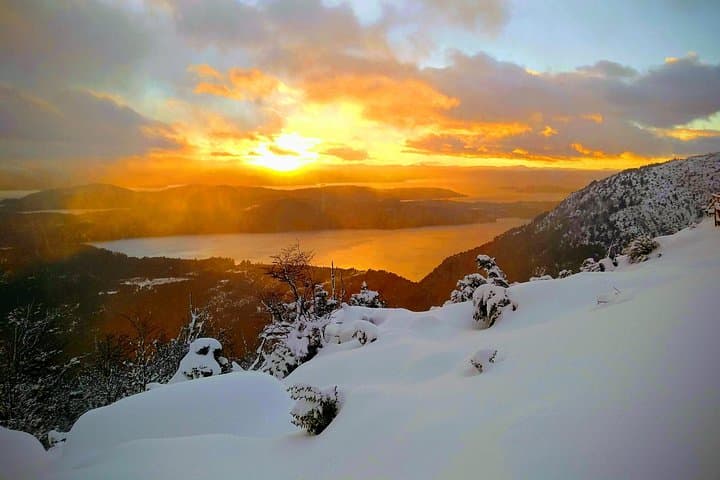
The air bites crisp above Nahuel Huapi as you step from the vehicle and into a white silence. Pine trunks throw long shadows across firmed snow; the trail first eases through planted pines, then opens to a native lenga forest that pushes you upward. The summit at roughly 1,600 meters rewards the climb with wide Patagonian sky and the dark sweep of lakes below.
The air bites crisp above Nahuel Huapi as you step from the vehicle and into a white silence. Pine trunks throw long shadows across firmed snow; the trail first eases through planted pines, then opens to a native lenga forest that pushes you upward. The summit at roughly 1,600 meters rewards the climb with wide Patagonian sky and the dark sweep of lakes below.
This slope is part of the glacially carved terrain around San Carlos de Bariloche—granite outcrops and moraine ridges left by the last ice age. The region carries both Mapuche heritage and European alpine influence dating from early 20th-century settlers; trails and shelters reflect that mixed history. The lenga stands are ecologically important here, acting like slow-moving guardians of snowmelt and habitat for local wildlife.
Practically speaking, this is a private, guide-led snowshoe route about 6 km one-way with a net ascent to 1,600 m and moderate technical exposure on steeper upper slopes. Guides provide snowshoes, gaiters, crampons, poles and a lunch—typically a hearty sandwich, fruit and local alfajor, and a red-fruit tea at the summit to warm fingers.
Expect 6 hours round-trip including breaks; walking on snow is slower and more tiring than summer hiking. Dress in insulated layers, bring waterproof boots, high-SPF sun protection and at least 1–1.5 L of water in insulated bottles. Timing matters—later morning departures reduce frost but can increase wind exposure at the top.
If you want solitude, ask for routes that avoid main ski areas; the private format lets guides tailor pace and ascent. Respect fragile lenga understory and pack out waste—this high-mountain winter landscape recovers slowly.