THE ADVENTURE COLLECTIVE® · Independent discovery and booking for outdoor travel

Drive 110 km from Ulaanbaatar into a winter steppe where Przewalski’s horses graze on frosted grass. This private day tour blends wildlife viewing with a nomad family visit and funds park conservation.
Drive 110 km from Ulaanbaatar into a winter steppe where Przewalski’s horses graze on frosted grass. This private day tour blends wildlife viewing with a nomad family visit and funds park conservation.
A cold wind cuts across the steppe as the van peels away from Ulaanbaatar and the city noise becomes a thin memory. Snow plains unspool either side of the road — low, folded hills dusted with hoarfrost and tufts of dry grass bowed by the weather. By the time the visitor center at Khustai Nuruu National Park comes into view, the landscape has taken on the stillness of a place that measures time by herds and weather.
Verified experiences and guided adventures in the surrounding area.
Operated by Meet Mongolia Join Tours LLC · Ulaanbaatar, Töv Province
A cold wind cuts across the steppe as the van peels away from Ulaanbaatar and the city noise becomes a thin memory. Snow plains unspool either side of the road — low, folded hills dusted with hoarfrost and tufts of dry grass bowed by the weather. By the time the visitor center at Khustai Nuruu National Park comes into view, the landscape has taken on the stillness of a place that measures time by herds and weather.
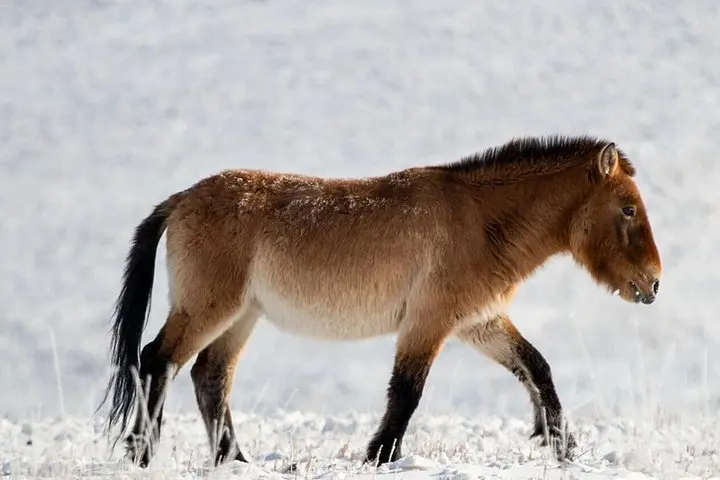
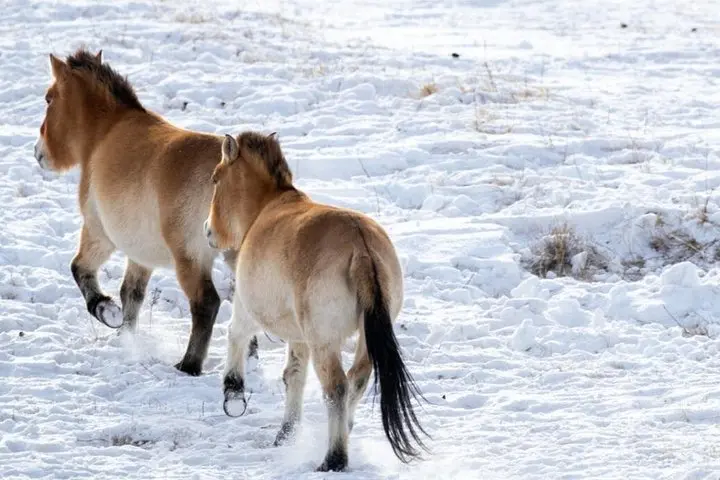
Khustai (sometimes spelled Khustain) is where Mongolia reclaimed one of its lost species. The takhi — Przewalski’s horse — vanished from the wild in the mid-20th century, then returned here after international breeding and reintroduction programs between 1992 and 2004. Walk the same slopes where scientists and local custodians staged the species’ rebirth, and you feel the deliberate patience of conservation: fence lines, monitoring posts, and local families who have become partners in stewardship.
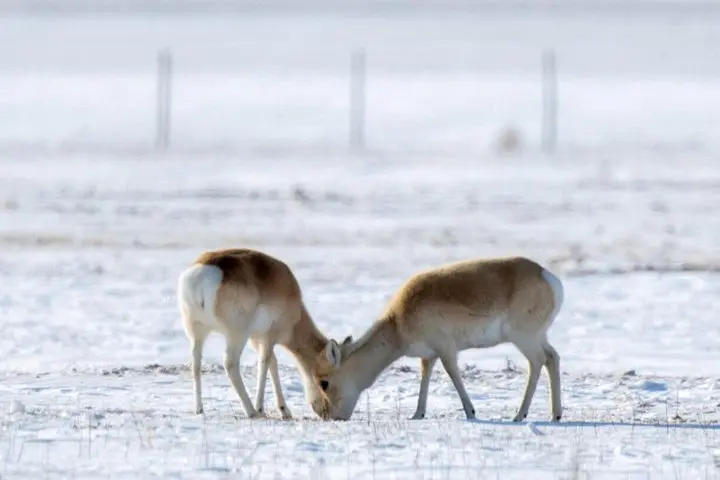
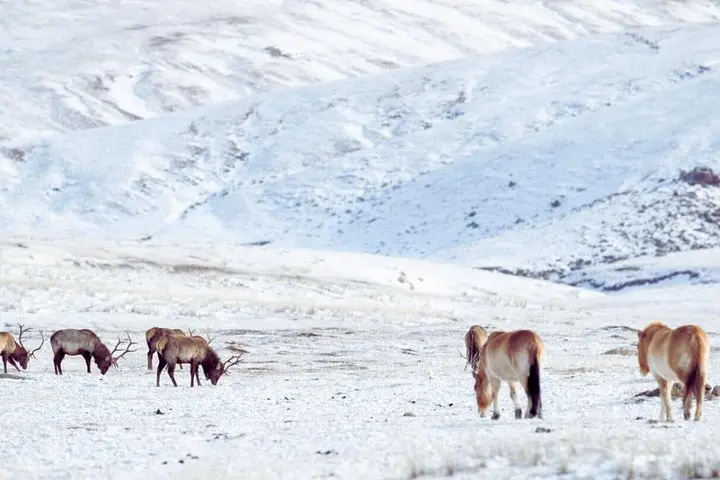
Geologically the park is simple and honest: rolling basalt and loess hills carved by wind, punctuated by seasonal streams that dare you to follow them. In winter the fauna becomes easier to read at a distance. Marmots hibernate; red deer move into sheltered gullies; flocks of hardy larks and raptors slice the pale sky. The tour folds cultural contact into the day — a visit with a nomadic family, a bowl of broth and salty tea, and a practical look at how herding rhythms continue under a white sky.
This private winter day trip is designed for travelers who want close observation with low impact. The itinerary includes pickup in Ulaanbaatar, a drive of roughly 110 km (about 2–3 hours each way depending on road and weather), an information-center briefing, a family visit and lunch, then guided wildlife viewing in the park before returning to the city. Expect periods of minimal movement punctuated by sudden, quiet sightings of takhi grazing on frozen grass.
Practicalities matter here: winter temperatures can drop sharply and winds can strip heat quickly. Layering and sturdy insulated boots are the difference between an outing you remember and one you regret. Bring binoculars and a telephoto lens for respectful distance viewing; follow your guide’s instructions on approach and photography so the horses stay wild. Most of the tour fee goes directly to conservation work in the park, so your visit supports ongoing monitoring and local livelihoods.
Timing your visit for morning or late afternoon increases the chance of animal activity and better light. Above all, come patient, come prepared, and let the landscape — deliberate, resilient, and occasionally curious — set the rhythm of the day.
Khustai National Park is roughly 110 km southwest of Ulaanbaatar; the drive typically takes about 2–3 hours each way depending on road and weather.
Yes — takhi are resident in the park year-round. Winter sightings are common, though they may be farther from roads and require patient, quiet viewing.
The tour is family-friendly and rated suitable for most fitness levels, but long drives and cold conditions may be difficult for very young children or those with mobility limits.
Yes — the itinerary includes lunch with a nomadic family inside the park.
One hundred percent of tourism contributions are used for nature conservation in the park, funding monitoring, reintroduction work, and local partnerships.
Standard cancellation policy allows a full refund if you cancel at least 24 hours prior; the supplier may adjust timing based on severe weather but does not automatically cancel for typical winter conditions.
Meet Mongolia Join Tours LLC operates guided outdoor trips and adventures with an emphasis on safety, stewardship, and memorable experiences.
A cold wind cuts across the steppe as the van peels away from Ulaanbaatar and the city noise becomes a thin memory. Snow plains unspool either side of the road — low, folded hills dusted with hoarfrost and tufts of dry grass bowed by the weather. By the time the visitor center at Khustai Nuruu National Park comes into view, the landscape has taken on the stillness of a place that measures time by herds and weather.
A cold wind cuts across the steppe as the van peels away from Ulaanbaatar and the city noise becomes a thin memory. Snow plains unspool either side of the road — low, folded hills dusted with hoarfrost and tufts of dry grass bowed by the weather. By the time the visitor center at Khustai Nuruu National Park comes into view, the landscape has taken on the stillness of a place that measures time by herds and weather.
Khustai (sometimes spelled Khustain) is where Mongolia reclaimed one of its lost species. The takhi — Przewalski’s horse — vanished from the wild in the mid-20th century, then returned here after international breeding and reintroduction programs between 1992 and 2004. Walk the same slopes where scientists and local custodians staged the species’ rebirth, and you feel the deliberate patience of conservation: fence lines, monitoring posts, and local families who have become partners in stewardship.
Geologically the park is simple and honest: rolling basalt and loess hills carved by wind, punctuated by seasonal streams that dare you to follow them. In winter the fauna becomes easier to read at a distance. Marmots hibernate; red deer move into sheltered gullies; flocks of hardy larks and raptors slice the pale sky. The tour folds cultural contact into the day — a visit with a nomadic family, a bowl of broth and salty tea, and a practical look at how herding rhythms continue under a white sky.
This private winter day trip is designed for travelers who want close observation with low impact. The itinerary includes pickup in Ulaanbaatar, a drive of roughly 110 km (about 2–3 hours each way depending on road and weather), an information-center briefing, a family visit and lunch, then guided wildlife viewing in the park before returning to the city. Expect periods of minimal movement punctuated by sudden, quiet sightings of takhi grazing on frozen grass.
Practicalities matter here: winter temperatures can drop sharply and winds can strip heat quickly. Layering and sturdy insulated boots are the difference between an outing you remember and one you regret. Bring binoculars and a telephoto lens for respectful distance viewing; follow your guide’s instructions on approach and photography so the horses stay wild. Most of the tour fee goes directly to conservation work in the park, so your visit supports ongoing monitoring and local livelihoods.
Timing your visit for morning or late afternoon increases the chance of animal activity and better light. Above all, come patient, come prepared, and let the landscape — deliberate, resilient, and occasionally curious — set the rhythm of the day.