THE ADVENTURE COLLECTIVE® · Independent discovery and booking for outdoor travel

A full-day winter tour that concentrates Yellowstone’s wildlife into viewable scenes: wolves in Lamar Valley, bison along roadway corridors and steaming terraces at Mammoth Hot Springs. Expect long days, close viewing through scopes, and essential cold-weather prep.
A full-day winter tour that concentrates Yellowstone’s wildlife into viewable scenes: wolves in Lamar Valley, bison along roadway corridors and steaming terraces at Mammoth Hot Springs. Expect long days, close viewing through scopes, and essential cold-weather prep.
Before dawn the shuttle's heater hums and steam curls from paper cups as the road to Yellowstone brightens with a hard, white light. The guide points to a smear of movement against the horizon and the bus slips into a roadside pullout. Through binoculars a wolf pauses, ears pricked, the pack's breath fogging the air — a fragment of behavior that in winter becomes readable from a distance. On this full-day route, the park's geothermal smoke and the animals that visit its lower elevations take center stage.
Verified experiences and guided adventures in the surrounding area.
Operated by Yellowstone Hiking Guides · West Yellowstone, Montana
Before dawn the shuttle's heater hums and steam curls from paper cups as the road to Yellowstone brightens with a hard, white light. The guide points to a smear of movement against the horizon and the bus slips into a roadside pullout. Through binoculars a wolf pauses, ears pricked, the pack's breath fogging the air — a fragment of behavior that in winter becomes readable from a distance. On this full-day route, the park's geothermal smoke and the animals that visit its lower elevations take center stage.
Yellowstone in winter is shaped by a hard geography and older stories: the caldera beneath the park heats travertine terraces at Mammoth Hot Springs while the Lamar Valley — often called the Serengeti of North America — concentrates elk, bison, and wolves where the landscape offers food and wind-swept shelter. The Roosevelt Arch at Gardiner marks the park’s original north entrance, a small human punctuation amid an ecosystem that long predates federal protection and the Indigenous nations who have inhabited these lands for millennia.
Geology writes the itinerary. Steam vents and mineral-coated terraces contrast with wide river valleys where visibility is long and wildlife becomes watchable rather than hidden. In winter, animals descend to lower elevations and roads cleared of heavy snow create a mobile theater: roadside stops at Lamar Valley, a slow walk along the mammoth boardwalks, a pause at the Petrified Tree — each scene offers different species at predictable times.
Practically, the day is long — expect 8–12 hours from Bozeman or West Yellowstone — and weather dictates decisions. Guides supply spotting scopes and binoculars; you bring layers, a charged camera, and patience. Footwear with grip matters: boardwalks and pullouts can be icy, and the cold draws breath out of you faster at 6,000–7,000 feet.
On the etiquette side, the rules are simple and firm: remain in the vehicle or designated viewing areas unless directed otherwise, keep distance from wildlife, and let the guide set the pace. The tour includes hot drinks, bottled water, lunch and light snacks, and returns by evening to Bozeman, Big Sky, or West Yellowstone depending on your pickup. If weather closes roads the operator may cancel — and when the world is white and quiet, the payoff is close-up glimpses of species few places still allow to be seen in winter.
This is a day for steady eyes and warm layers: Yellowstone’s winter compresses the wild into scenes that feel intimate because the landscape leaves nothing to hide.
The full-day tour runs approximately 8–12 hours depending on pickup location and wildlife activity.
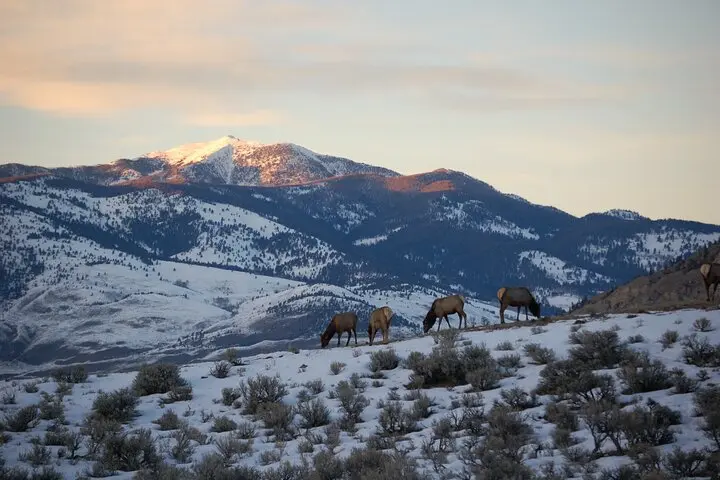
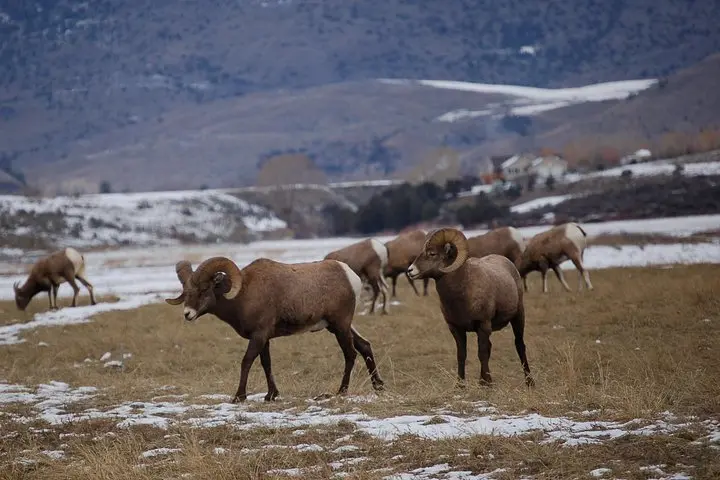
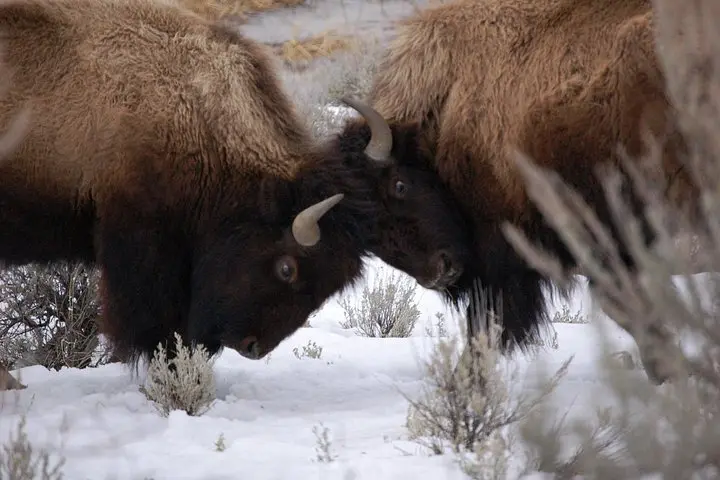
Common winter sightings include bison, elk, coyotes, and often wolves and raptors in Lamar Valley.
Yes — the tour includes a light breakfast snack, bottled water, hot drinks, and a boxed lunch with dietary options if notified in advance.
Layered clothing, an insulated jacket, hat, gloves, and traction devices for footwear are recommended for winter conditions.
Park entry ($20 per vehicle or covered by an America the Beautiful pass) is not included; the tour will collect or advise accordingly.
Children can join but must be able to sit for long periods and stay with the group; check age requirements when booking.
Yellowstone Hiking Guides operates guided outdoor trips and adventures with an emphasis on safety, stewardship, and memorable experiences.
Before dawn the shuttle's heater hums and steam curls from paper cups as the road to Yellowstone brightens with a hard, white light. The guide points to a smear of movement against the horizon and the bus slips into a roadside pullout. Through binoculars a wolf pauses, ears pricked, the pack's breath fogging the air — a fragment of behavior that in winter becomes readable from a distance. On this full-day route, the park's geothermal smoke and the animals that visit its lower elevations take center stage.
Before dawn the shuttle's heater hums and steam curls from paper cups as the road to Yellowstone brightens with a hard, white light. The guide points to a smear of movement against the horizon and the bus slips into a roadside pullout. Through binoculars a wolf pauses, ears pricked, the pack's breath fogging the air — a fragment of behavior that in winter becomes readable from a distance. On this full-day route, the park's geothermal smoke and the animals that visit its lower elevations take center stage.
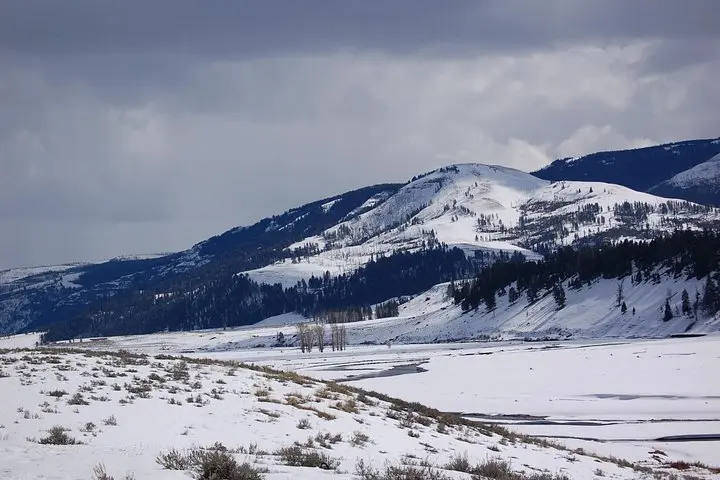
Yellowstone in winter is shaped by a hard geography and older stories: the caldera beneath the park heats travertine terraces at Mammoth Hot Springs while the Lamar Valley — often called the Serengeti of North America — concentrates elk, bison, and wolves where the landscape offers food and wind-swept shelter. The Roosevelt Arch at Gardiner marks the park’s original north entrance, a small human punctuation amid an ecosystem that long predates federal protection and the Indigenous nations who have inhabited these lands for millennia.
Geology writes the itinerary. Steam vents and mineral-coated terraces contrast with wide river valleys where visibility is long and wildlife becomes watchable rather than hidden. In winter, animals descend to lower elevations and roads cleared of heavy snow create a mobile theater: roadside stops at Lamar Valley, a slow walk along the mammoth boardwalks, a pause at the Petrified Tree — each scene offers different species at predictable times.
Practically, the day is long — expect 8–12 hours from Bozeman or West Yellowstone — and weather dictates decisions. Guides supply spotting scopes and binoculars; you bring layers, a charged camera, and patience. Footwear with grip matters: boardwalks and pullouts can be icy, and the cold draws breath out of you faster at 6,000–7,000 feet.
On the etiquette side, the rules are simple and firm: remain in the vehicle or designated viewing areas unless directed otherwise, keep distance from wildlife, and let the guide set the pace. The tour includes hot drinks, bottled water, lunch and light snacks, and returns by evening to Bozeman, Big Sky, or West Yellowstone depending on your pickup. If weather closes roads the operator may cancel — and when the world is white and quiet, the payoff is close-up glimpses of species few places still allow to be seen in winter.
This is a day for steady eyes and warm layers: Yellowstone’s winter compresses the wild into scenes that feel intimate because the landscape leaves nothing to hide.