THE ADVENTURE COLLECTIVE® · Independent discovery and booking for outdoor travel

A short, rewarding hike to Pokhara’s World Peace Pagoda that serves panoramic views of Annapurna, Fewa Lake, and Machhapuchare. Perfect for early-morning photographers and hikers seeking big mountain scenes with minimal technical demand.
A short, rewarding hike to Pokhara’s World Peace Pagoda that serves panoramic views of Annapurna, Fewa Lake, and Machhapuchare. Perfect for early-morning photographers and hikers seeking big mountain scenes with minimal technical demand.
You emerge from the mango and litchi gardens onto a narrow track; the hill pulls you upward and the city below begins to shrink into the mirror of Fewa Lake. Early light paints Machhapuchare’s sharp flanks in pale gold as the Pagoda’s white dome sits quiet on the rim of the ridge, a calm point against a row of snow peaks.
Verified experiences and guided adventures in the surrounding area.
Operated by Transport Hub Nepal · Pokhara, Gandaki Province
You emerge from the mango and litchi gardens onto a narrow track; the hill pulls you upward and the city below begins to shrink into the mirror of Fewa Lake. Early light paints Machhapuchare’s sharp flanks in pale gold as the Pagoda’s white dome sits quiet on the rim of the ridge, a calm point against a row of snow peaks.
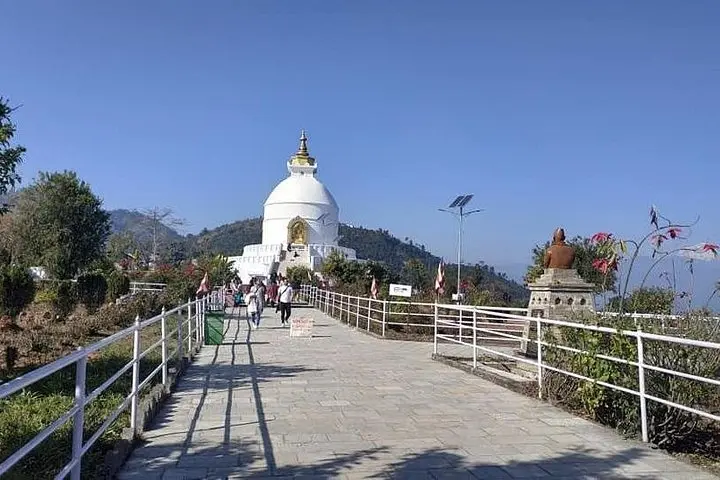
The Shanti Stupa (World Peace Pagoda) was built by Japanese Buddhists on Ananda Hill and now watches over Pokhara’s valley and Fewa Lake. The hill is a product of local uplift and river-cut terraces—farm plots and stone walls step downward toward the lake—so the views capture both human cultivation and the raw geometry of the Annapurna massif. Local vendors and small shrines underline the cultural mix: Nepali village life meeting Buddhist pilgrimage and international visitors.
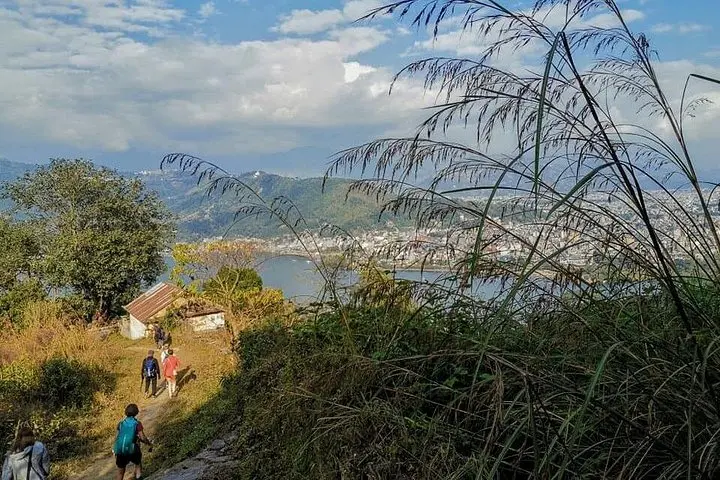
Expect a 3–4 hour outing with 300–500 m of ascent depending on your start point. Trails vary from compact dirt to stepped stone; some sections are steep with loose gravel. Paths pass orchards, shaded tree lines, and occasional waterfalls before opening to the stupa’s broad viewing terrace.
Practicalities: start early to avoid heat and crowds, carry water and sun protection, and wear grippy footwear for steps and loose rock. You can descend toward David’s Falls or return to the lakeside by trail or by boat—both options give different perspectives on the valley. The hike balances short effort with big alpine panoramas, ideal for travelers who want accessible mountain views without technical climbing.
Typical round-trip from the lakeshore or nearby trailheads takes 3–4 hours depending on pace and chosen route.
Yes—no technical skills are required, but expect steep sections and uneven steps; reasonable fitness is recommended.
Yes — many visitors descend to the lakeside where boat services operate seasonally; bring cash and check return boat schedules.
No formal national park fee is required at the Pagoda, though small donations and boat/transport costs are common.
Transport Hub Nepal operates guided outdoor trips and adventures with an emphasis on safety, stewardship, and memorable experiences.
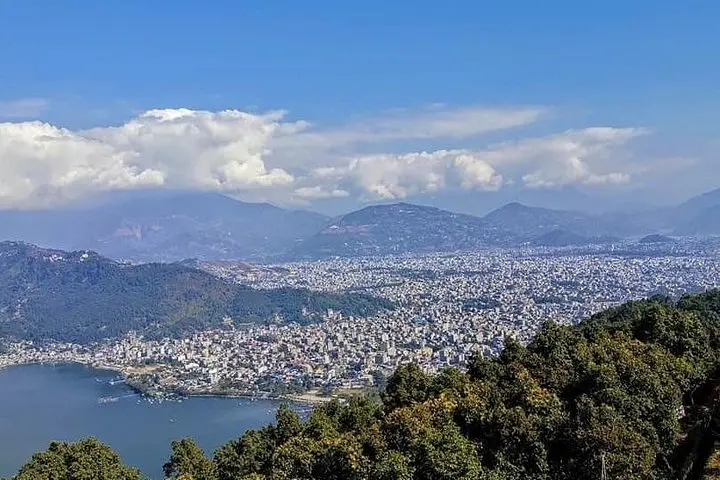
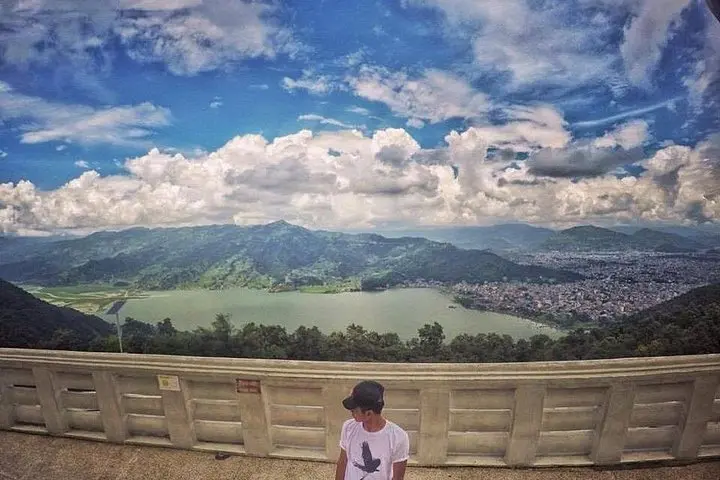
You emerge from the mango and litchi gardens onto a narrow track; the hill pulls you upward and the city below begins to shrink into the mirror of Fewa Lake. Early light paints Machhapuchare’s sharp flanks in pale gold as the Pagoda’s white dome sits quiet on the rim of the ridge, a calm point against a row of snow peaks.
You emerge from the mango and litchi gardens onto a narrow track; the hill pulls you upward and the city below begins to shrink into the mirror of Fewa Lake. Early light paints Machhapuchare’s sharp flanks in pale gold as the Pagoda’s white dome sits quiet on the rim of the ridge, a calm point against a row of snow peaks.
The Shanti Stupa (World Peace Pagoda) was built by Japanese Buddhists on Ananda Hill and now watches over Pokhara’s valley and Fewa Lake. The hill is a product of local uplift and river-cut terraces—farm plots and stone walls step downward toward the lake—so the views capture both human cultivation and the raw geometry of the Annapurna massif. Local vendors and small shrines underline the cultural mix: Nepali village life meeting Buddhist pilgrimage and international visitors.
Expect a 3–4 hour outing with 300–500 m of ascent depending on your start point. Trails vary from compact dirt to stepped stone; some sections are steep with loose gravel. Paths pass orchards, shaded tree lines, and occasional waterfalls before opening to the stupa’s broad viewing terrace.
Practicalities: start early to avoid heat and crowds, carry water and sun protection, and wear grippy footwear for steps and loose rock. You can descend toward David’s Falls or return to the lakeside by trail or by boat—both options give different perspectives on the valley. The hike balances short effort with big alpine panoramas, ideal for travelers who want accessible mountain views without technical climbing.