THE ADVENTURE COLLECTIVE® · Independent discovery and booking for outdoor travel

Spend a full day in Xcan with a local family—sharing a traditional meal, learning herbal medicine and purification rites, watching Jarana dance, and cooling off in a nearby cenote. This immersive tour links living Mayan customs to the Yucatán’s stark limestone landscape.
Spend a full day in Xcan with a local family—sharing a traditional meal, learning herbal medicine and purification rites, watching Jarana dance, and cooling off in a nearby cenote. This immersive tour links living Mayan customs to the Yucatán’s stark limestone landscape.
You arrive by shaded road, the air warming as palms and low scrub give way to the compact houses of Xcan. Children dart between yards, and the scent of recado and slow-cooking meat pulls you toward a family kitchen where a midday meal is more than food — it’s an introduction to a living rhythm.
Verified experiences and guided adventures in the surrounding area.
You arrive by shaded road, the air warming as palms and low scrub give way to the compact houses of Xcan. Children dart between yards, and the scent of recado and slow-cooking meat pulls you toward a family kitchen where a midday meal is more than food — it’s an introduction to a living rhythm.
This full-day visit moves from everyday life to ritual. Xcan sits within the Yucatán’s limestone plain; underground water carved the region’s cenotes and shaped Mayan settlement patterns for millennia. In town, a short stop at the cemetery frames local pre-Hispanic views of death and their links to Mexico’s Day of the Dead traditions. You’ll learn about herbal medicine from elders, observe a purification ceremony, and later feel the cool pull of a nearby cenote daring you to wade into crystalline water.
Cultural highlights include a communal meal with a host family and a performance of the Jarana, a lively Yucatecan folk dance that connects dance, rhythm and social memory.
Practical side: the tour is a long, mostly low-impact day with short walks and seated segments, plus brief bike transfers on two-seater bicycles. Expect uneven village paths and limestone terrain near the cenote. Bring water, sun protection and modest clothing for ceremonies. Carry small bills to support local vendors and tip the hosts. Respect photography boundaries during rituals and ask before entering private spaces. The result is an immersive encounter that supports community livelihoods while offering direct, human-scale insight into Mayan tradition and the karst landscape that sustains it.
Most tours include a supervised cenote visit; water is typically clear and calm but depth varies—follow guides’ instructions and wear a life vest if offered.
A traditional meal with a host family is included; notify the operator in advance for dietary needs and they will usually make adjustments.
Yes—families and older travelers can participate, but expect a long day with some walking and brief bike rides; notify operators about mobility concerns.
Guides typically speak Spanish and English; interactions with elders may include Mayan words interpreted by the guide.
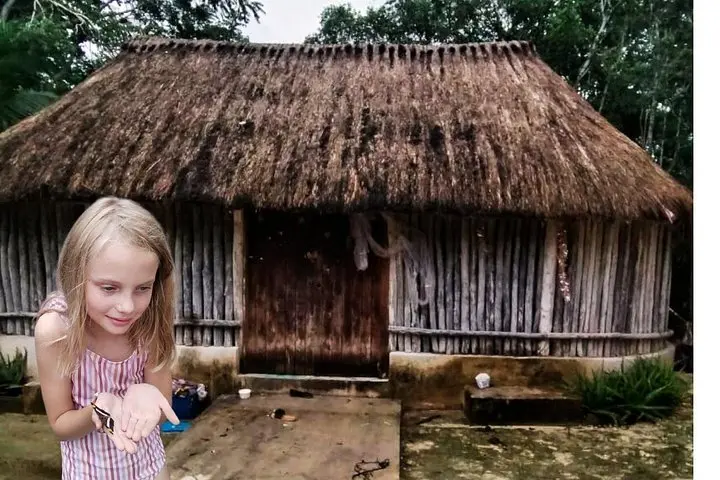
You arrive by shaded road, the air warming as palms and low scrub give way to the compact houses of Xcan. Children dart between yards, and the scent of recado and slow-cooking meat pulls you toward a family kitchen where a midday meal is more than food — it’s an introduction to a living rhythm.
You arrive by shaded road, the air warming as palms and low scrub give way to the compact houses of Xcan. Children dart between yards, and the scent of recado and slow-cooking meat pulls you toward a family kitchen where a midday meal is more than food — it’s an introduction to a living rhythm.
This full-day visit moves from everyday life to ritual. Xcan sits within the Yucatán’s limestone plain; underground water carved the region’s cenotes and shaped Mayan settlement patterns for millennia. In town, a short stop at the cemetery frames local pre-Hispanic views of death and their links to Mexico’s Day of the Dead traditions. You’ll learn about herbal medicine from elders, observe a purification ceremony, and later feel the cool pull of a nearby cenote daring you to wade into crystalline water.
Cultural highlights include a communal meal with a host family and a performance of the Jarana, a lively Yucatecan folk dance that connects dance, rhythm and social memory.
Practical side: the tour is a long, mostly low-impact day with short walks and seated segments, plus brief bike transfers on two-seater bicycles. Expect uneven village paths and limestone terrain near the cenote. Bring water, sun protection and modest clothing for ceremonies. Carry small bills to support local vendors and tip the hosts. Respect photography boundaries during rituals and ask before entering private spaces. The result is an immersive encounter that supports community livelihoods while offering direct, human-scale insight into Mayan tradition and the karst landscape that sustains it.