THE ADVENTURE COLLECTIVE® · Independent discovery and booking for outdoor travel

Turn a long layover into a compact cultural deep-dive: private airport pickup takes you from Xi’an Xianyang International Airport to the Terracotta Warriors Museum for a focused three-hour visit. Expect efficient logistics, expert commentary, and close-up views of China’s most famous archaeological find.
Turn a long layover into a compact cultural deep-dive: private airport pickup takes you from Xi’an Xianyang International Airport to the Terracotta Warriors Museum for a focused three-hour visit. Expect efficient logistics, expert commentary, and close-up views of China’s most famous archaeological find.
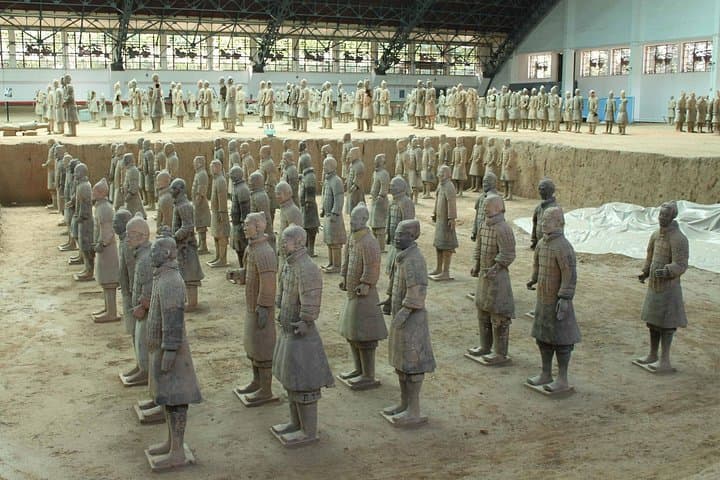
You step off the plane in Xi’an and, within an hour, trade terminal hum for the silent rows of ancient clay soldiers — life-size figures frozen in formation for over 2,200 years.
Verified experiences and guided adventures in the surrounding area.
Operated by TWT Travel · Xi'an, Shaanxi
You step off the plane in Xi’an and, within an hour, trade terminal hum for the silent rows of ancient clay soldiers — life-size figures frozen in formation for over 2,200 years.
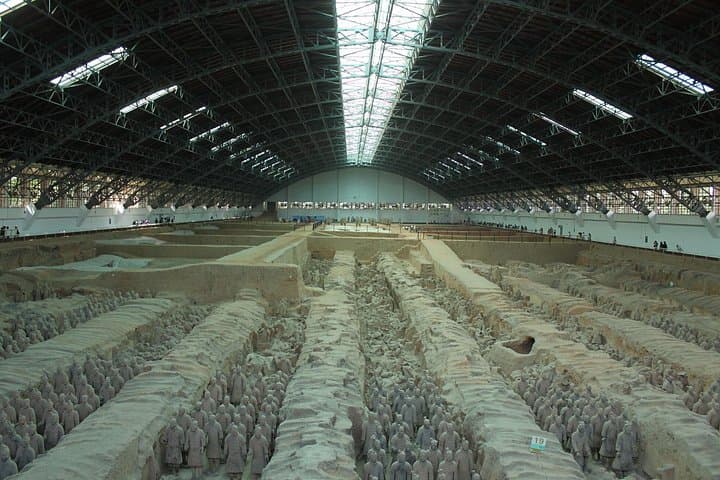
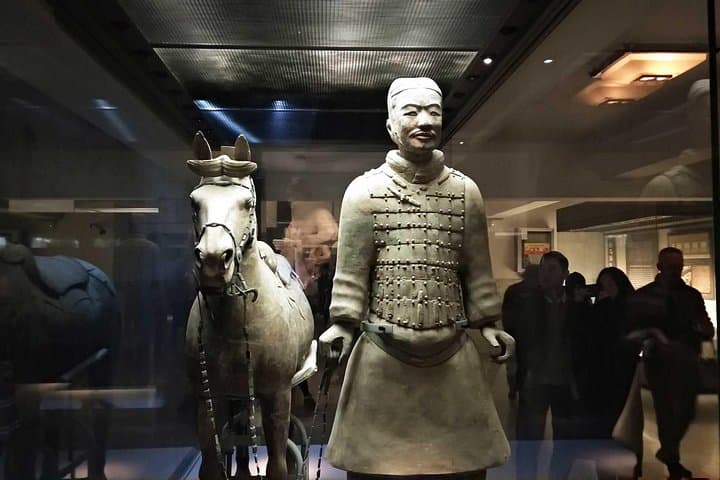
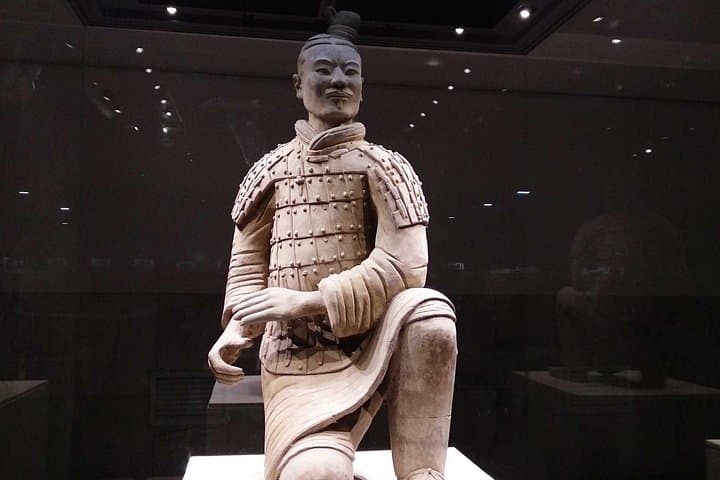
The Terracotta Warriors and Horses Museum sits at the foot of Mount Li, where Qin Shi Huang’s mausoleum complex sprawls across the loess plain. The pits reveal workshops of the Qin Dynasty (3rd century BCE): distinct faces, fragmented horses, and the slow, deliberate work of restoration still underway. Geologically, the site occupies the Yellow River’s loess plateau; wind-shaped soils and the nearby Li Mountain give a dry, open horizon that makes each pit feel like a stage set against the sky.
Culturally, the army reflects imperial power, funerary beliefs, and the early unification of China. On the drive from Xi’an Xianyang Airport, a guide will sketch the dynasty’s rise and practicalities of excavation, placing artifacts in historical context while noting modern conservation efforts.
Practical guidance: the private transfer reduces stress on a tight layover — expect about one hour each way and roughly three hours inside the museum. Wear comfortable walking shoes and plan for flat indoor surfaces with standing and brief stair sections. Bring your passport (required), a charged phone for photos where allowed, and water. Time your tour so you’re back at the airport 2–3 hours before departure.
This outing balances high-impact history with logistical efficiency: it’s a compact, intense immersion into one of China’s most arresting archaeological sites — ideal for travelers who want a meaningful stopover without sacrificing their onward schedule.
The drive to the Terracotta Warriors is approximately 45–60 minutes each way depending on traffic.
Yes — standard private layover tours allocate roughly three hours inside the museum, enough to visit Pits 1, 2 and 3 with a guide.
Visa requirements vary by nationality and layover length; check China’s current transit visa policies before booking.
Yes — the tour includes entrance ticket fees and bottled water, plus private transport and guide services.
TWT Travel operates guided outdoor trips and adventures with an emphasis on safety, stewardship, and memorable experiences.
You step off the plane in Xi’an and, within an hour, trade terminal hum for the silent rows of ancient clay soldiers — life-size figures frozen in formation for over 2,200 years.
You step off the plane in Xi’an and, within an hour, trade terminal hum for the silent rows of ancient clay soldiers — life-size figures frozen in formation for over 2,200 years.
The Terracotta Warriors and Horses Museum sits at the foot of Mount Li, where Qin Shi Huang’s mausoleum complex sprawls across the loess plain. The pits reveal workshops of the Qin Dynasty (3rd century BCE): distinct faces, fragmented horses, and the slow, deliberate work of restoration still underway. Geologically, the site occupies the Yellow River’s loess plateau; wind-shaped soils and the nearby Li Mountain give a dry, open horizon that makes each pit feel like a stage set against the sky.
Culturally, the army reflects imperial power, funerary beliefs, and the early unification of China. On the drive from Xi’an Xianyang Airport, a guide will sketch the dynasty’s rise and practicalities of excavation, placing artifacts in historical context while noting modern conservation efforts.
Practical guidance: the private transfer reduces stress on a tight layover — expect about one hour each way and roughly three hours inside the museum. Wear comfortable walking shoes and plan for flat indoor surfaces with standing and brief stair sections. Bring your passport (required), a charged phone for photos where allowed, and water. Time your tour so you’re back at the airport 2–3 hours before departure.
This outing balances high-impact history with logistical efficiency: it’s a compact, intense immersion into one of China’s most arresting archaeological sites — ideal for travelers who want a meaningful stopover without sacrificing their onward schedule.