THE ADVENTURE COLLECTIVE® · Independent discovery and booking for outdoor travel

Explore ancient Xi'an and tackle the vertical drama of Mount Huashan on a private two-day tour that pairs the Terracotta Warriors with steep granite ridgelines. Expect cultural depth, strenuous hiking, and optional cable-car relief.
Explore ancient Xi'an and tackle the vertical drama of Mount Huashan on a private two-day tour that pairs the Terracotta Warriors with steep granite ridgelines. Expect cultural depth, strenuous hiking, and optional cable-car relief.
You arrive in Xi'an through early morning light, narrow streets still warm from the previous day's commerce. The city hums around the Bell Tower while on day one the guide steers you east toward the Terracotta Army—rows of clay soldiers frozen in formation, each face a small, deliberate story.
Verified experiences and guided adventures in the surrounding area.
Operated by Lily's Private Tours · Xi'an, Shaanxi
You arrive in Xi'an through early morning light, narrow streets still warm from the previous day's commerce. The city hums around the Bell Tower while on day one the guide steers you east toward the Terracotta Army—rows of clay soldiers frozen in formation, each face a small, deliberate story.
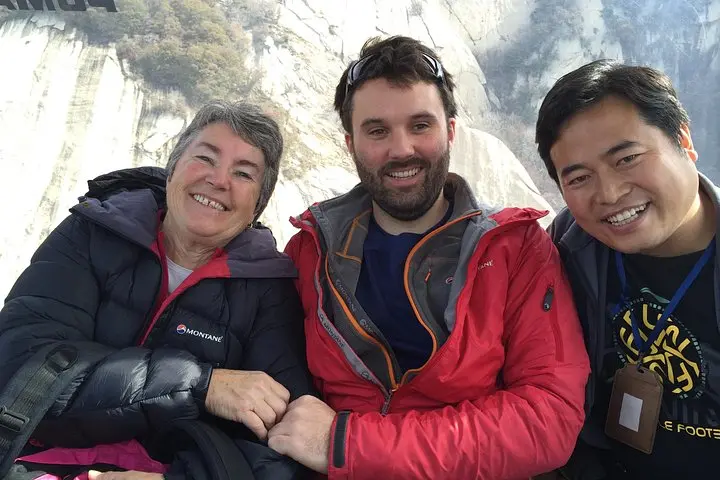
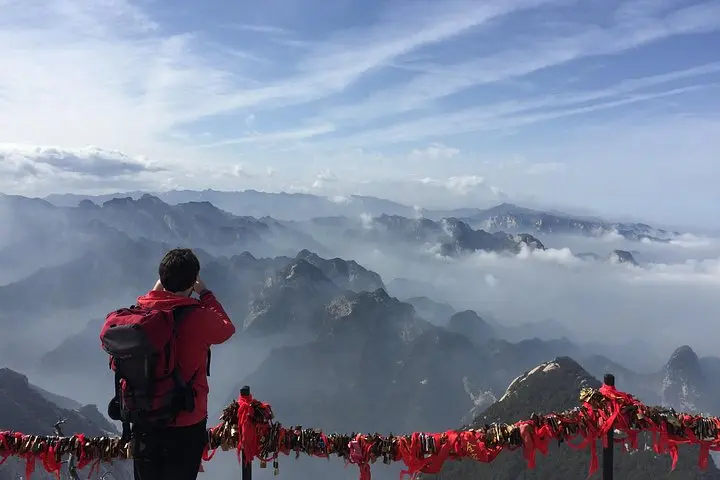
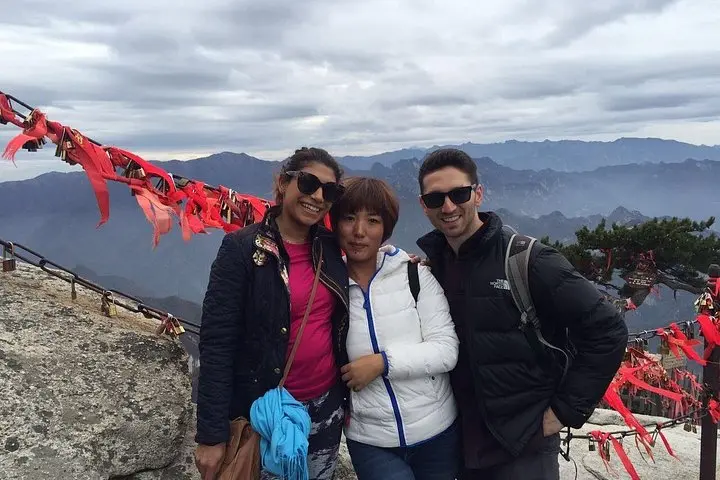
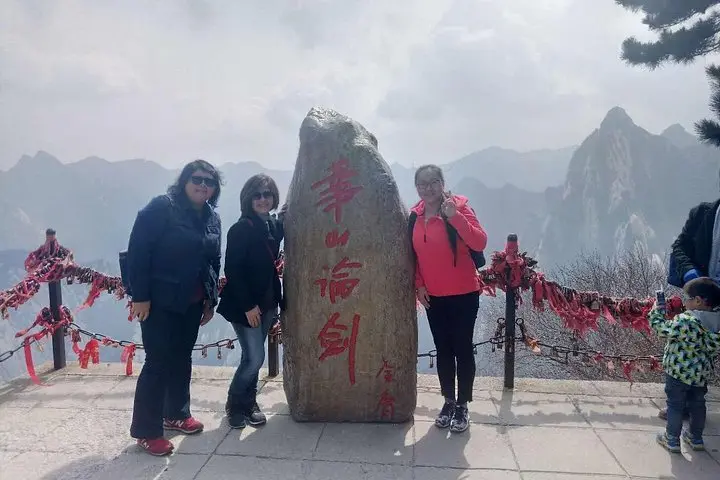
The next day the terrain changes; the road climbs southeast for roughly 120 km and two hours to Mount Huashan, a Taoist peak whose granite spines rise into clouds. Huashan’s five main summits—East, West, South (2,083 m), North and Central—offer dramatic ridgelines, iron chains and steep stone stairways carved into vertical rock. The city wall you walk or bike on is about 13.7 km in circumference and built in Ming-era dimensions: 12 m high and up to 18 m thick at the base.
Historically, Xi'an was the imperial starting point for the Silk Road and the Terracotta Army guards Qin Shi Huang’s mausoleum from the late 3rd century BCE. Huashan has been a pilgrimage and hermitage landscape for over a millennium, its temples and stairways shaped by devotees and later by tourists.
Practical guidance: this private two-day loop mixes cultural walking and a full-day mountain hike; expect 6–7 hours of active time on mountain trails, steep exposure, and optional cable-car segments (West Peak cable car is often used). Bring sturdy shoes, 2–3 liters of water, layered clothing, and allow time for crowds at both the museum and Huashan trailheads. The trip is immersive and physically demanding—plan for early starts, secure footwear and a measured pace.
The main Huashan routes are steep with long stone stair sections and exposed ridgelines; expect 6–7 hours of active hiking for the parts covered on this tour—good fitness is required.
Yes—this tour includes the West Peak cable car and shuttle bus on Mt Huashan, which you can use to shorten climbs or descents.
The city components and transfers are generally accessible, but Huashan’s trails are not suitable for wheelchairs or those with limited mobility; discuss alternatives with the operator.
Spring (April–June) and autumn (September–October) offer milder temperatures and clearer skies; summers are hotter and busier, winters can be icy on mountain steps.
Lily's Private Tours operates guided outdoor trips and adventures with an emphasis on safety, stewardship, and memorable experiences.
You arrive in Xi'an through early morning light, narrow streets still warm from the previous day's commerce. The city hums around the Bell Tower while on day one the guide steers you east toward the Terracotta Army—rows of clay soldiers frozen in formation, each face a small, deliberate story.
You arrive in Xi'an through early morning light, narrow streets still warm from the previous day's commerce. The city hums around the Bell Tower while on day one the guide steers you east toward the Terracotta Army—rows of clay soldiers frozen in formation, each face a small, deliberate story.
The next day the terrain changes; the road climbs southeast for roughly 120 km and two hours to Mount Huashan, a Taoist peak whose granite spines rise into clouds. Huashan’s five main summits—East, West, South (2,083 m), North and Central—offer dramatic ridgelines, iron chains and steep stone stairways carved into vertical rock. The city wall you walk or bike on is about 13.7 km in circumference and built in Ming-era dimensions: 12 m high and up to 18 m thick at the base.
Historically, Xi'an was the imperial starting point for the Silk Road and the Terracotta Army guards Qin Shi Huang’s mausoleum from the late 3rd century BCE. Huashan has been a pilgrimage and hermitage landscape for over a millennium, its temples and stairways shaped by devotees and later by tourists.
Practical guidance: this private two-day loop mixes cultural walking and a full-day mountain hike; expect 6–7 hours of active time on mountain trails, steep exposure, and optional cable-car segments (West Peak cable car is often used). Bring sturdy shoes, 2–3 liters of water, layered clothing, and allow time for crowds at both the museum and Huashan trailheads. The trip is immersive and physically demanding—plan for early starts, secure footwear and a measured pace.