THE ADVENTURE COLLECTIVE® · Independent discovery and booking for outdoor travel

A private day tour that pairs the monumental Terracotta Army with the intimate Banpo Neolithic site. Spend the morning among life‑size warriors and the afternoon exploring a 6,000‑year‑old village, with a local guide, hotel pickup and practical logistics handled.
A private day tour that pairs the monumental Terracotta Army with the intimate Banpo Neolithic site. Spend the morning among life‑size warriors and the afternoon exploring a 6,000‑year‑old village, with a local guide, hotel pickup and practical logistics handled.
A cool morning, your guide at the hotel lobby and an air‑conditioned van slicing across the Guanzhong plain — within an hour the exhibit halls of the Terracotta Army appear, low and modern against a flat horizon. Rows of sculpted soldiers and horses stand frozen in mid‑order; you move among them like a late arrival to a paused parade.
Verified experiences and guided adventures in the surrounding area.
Operated by Stefanie's XiAn Private Tour · Xi'an, Shaanxi
A cool morning, your guide at the hotel lobby and an air‑conditioned van slicing across the Guanzhong plain — within an hour the exhibit halls of the Terracotta Army appear, low and modern against a flat horizon. Rows of sculpted soldiers and horses stand frozen in mid‑order; you move among them like a late arrival to a paused parade.
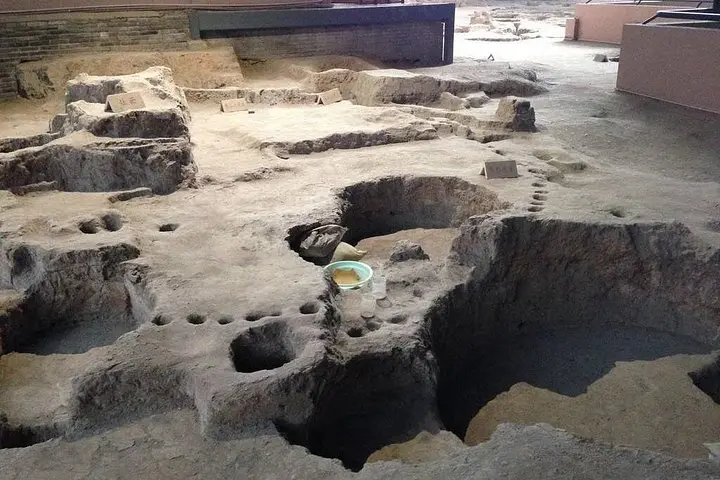
The Terracotta Army dates to the late 3rd century BCE, created as funerary companions for Qin Shi Huang, China’s first emperor. Each figure is hand‑modeled and posed; the arrangement reflects Qin military structure and funerary ritual. The site sits on the fertile loess fringe of the Wei River valley, where soft clays made large‑scale ceramic work feasible. In the afternoon, the tone changes at Banpo: a 6,000‑year‑old Yangshao Neolithic village whose earthen houses, pottery shards and cellar pits sketch ordinary daily life long before imperial power centralized.
Expect a balance of spectacle and archaeology: one colossal imperial narrative, one intimate prehistoric settlement. Practicalities are straightforward — this private tour runs roughly eight hours with hotel pickup, bottled water and an English‑speaking guide; entrance fees and lunch are separate. Wear comfortable walking shoes for packed earth and exhibit ramps, carry sun protection in summer, and plan for museum security checks and queued ticketing. Photography policies vary by pit and object; your guide will flag restricted areas.
Timing your visit for early pickup helps avoid the largest crowds at the Terracotta pits and leaves a calmer afternoon at Banpo to study artifacts and reconstructed dwellings. The route is accessible for many mobility needs but check specifics when booking. This combination gives a compact, layered view of Xi’an’s deep past — from household life to imperial ambition.
No — entrance fees are not included in the tour price; your guide will advise when and where to purchase tickets or handle admissions locally.
The tour is approximately eight hours with hotel lobby pickup and drop‑off included within Xi’an; confirm your pickup point when booking.
The itinerary notes wheelchair accessibility for transport and many surfaces, but some exhibit ramps and viewing areas can be constrained — confirm needs ahead of time.
Lunch is not included; the schedule includes a stop at a local restaurant where you can pay for your meal.
Stefanie's XiAn Private Tour operates guided outdoor trips and adventures with an emphasis on safety, stewardship, and memorable experiences.
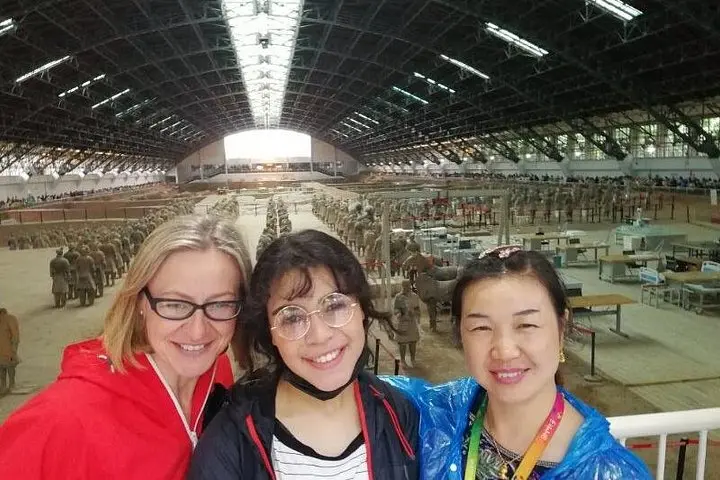
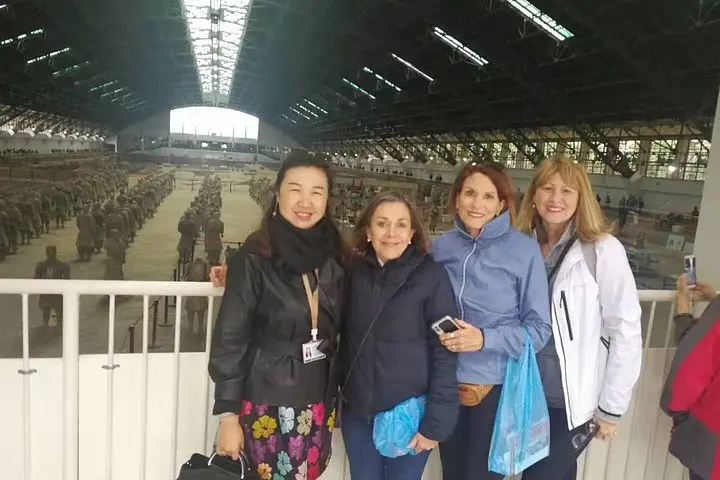
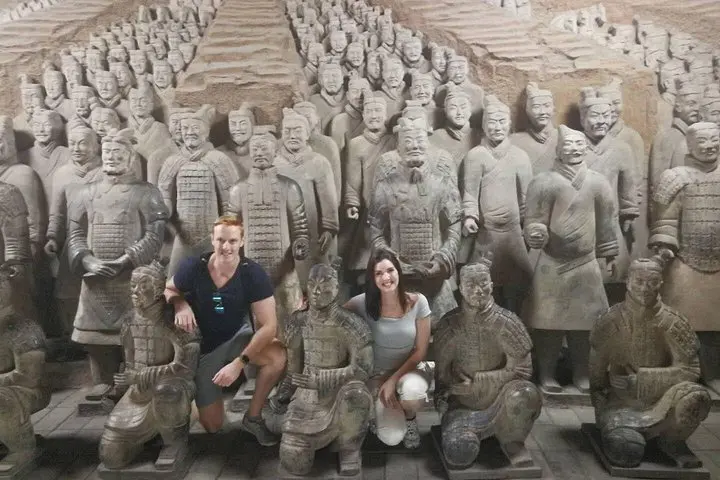
A cool morning, your guide at the hotel lobby and an air‑conditioned van slicing across the Guanzhong plain — within an hour the exhibit halls of the Terracotta Army appear, low and modern against a flat horizon. Rows of sculpted soldiers and horses stand frozen in mid‑order; you move among them like a late arrival to a paused parade.
A cool morning, your guide at the hotel lobby and an air‑conditioned van slicing across the Guanzhong plain — within an hour the exhibit halls of the Terracotta Army appear, low and modern against a flat horizon. Rows of sculpted soldiers and horses stand frozen in mid‑order; you move among them like a late arrival to a paused parade.
The Terracotta Army dates to the late 3rd century BCE, created as funerary companions for Qin Shi Huang, China’s first emperor. Each figure is hand‑modeled and posed; the arrangement reflects Qin military structure and funerary ritual. The site sits on the fertile loess fringe of the Wei River valley, where soft clays made large‑scale ceramic work feasible. In the afternoon, the tone changes at Banpo: a 6,000‑year‑old Yangshao Neolithic village whose earthen houses, pottery shards and cellar pits sketch ordinary daily life long before imperial power centralized.
Expect a balance of spectacle and archaeology: one colossal imperial narrative, one intimate prehistoric settlement. Practicalities are straightforward — this private tour runs roughly eight hours with hotel pickup, bottled water and an English‑speaking guide; entrance fees and lunch are separate. Wear comfortable walking shoes for packed earth and exhibit ramps, carry sun protection in summer, and plan for museum security checks and queued ticketing. Photography policies vary by pit and object; your guide will flag restricted areas.
Timing your visit for early pickup helps avoid the largest crowds at the Terracotta pits and leaves a calmer afternoon at Banpo to study artifacts and reconstructed dwellings. The route is accessible for many mobility needs but check specifics when booking. This combination gives a compact, layered view of Xi’an’s deep past — from household life to imperial ambition.