THE ADVENTURE COLLECTIVE® · Independent discovery and booking for outdoor travel

Cross a hand-cranked ferry, climb to a 130-foot Maya pyramid for panoramic views, then cool off beneath Big Rock Falls—this one-day combo pairs archaeology with a forested swim. Perfect for travelers who want history, wildlife, and a refreshing finish.
Cross a hand-cranked ferry, climb to a 130-foot Maya pyramid for panoramic views, then cool off beneath Big Rock Falls—this one-day combo pairs archaeology with a forested swim. Perfect for travelers who want history, wildlife, and a refreshing finish.
The day begins on the slow, deliberate rhythm of a hand-cranked ferry. You stand on the wooden ramp as the Mopan River tugs at the ferry’s moorings and the guide calls directions in a low, easy voice; on the far bank a trail climbs through glossy green and the outline of El Castillo cuts the skyline.
Verified experiences and guided adventures in the surrounding area.
Operated by Cayo Inland Expeditions · San Ignacio, Cayo District
The day begins on the slow, deliberate rhythm of a hand-cranked ferry. You stand on the wooden ramp as the Mopan River tugs at the ferry’s moorings and the guide calls directions in a low, easy voice; on the far bank a trail climbs through glossy green and the outline of El Castillo cuts the skyline.
By mid-morning you are moving up a one-mile rise through secondary jungle—roots and limestone underfoot, howler monkeys rolling a bassline through the canopy, and the occasional iguana flattening itself on a sunlit rock. The Maya built Xunantunich on a high escarpment to command the surrounding valley, and that intent is obvious when you crest the plaza and El Castillo’s profile resolves into a 130-foot platform. From the top the Maya Mountains fold out like a sequence of blue-gray waves, and the lowlands below reveal agricultural plots and the ribbon of the Mopan.
Xunantunich is not just a set of stones but a place layered with human and geological history. The plaza and stucco friezes date to the Late and Terminal Classic periods; the site sits on uplifted limestone and river-deposited sediments that shaped Maya settlement patterns. Nearby San Jose Succotz remains a living Maya village—families tend small farms and speak of the ruins not as relic but as part of place and identity.
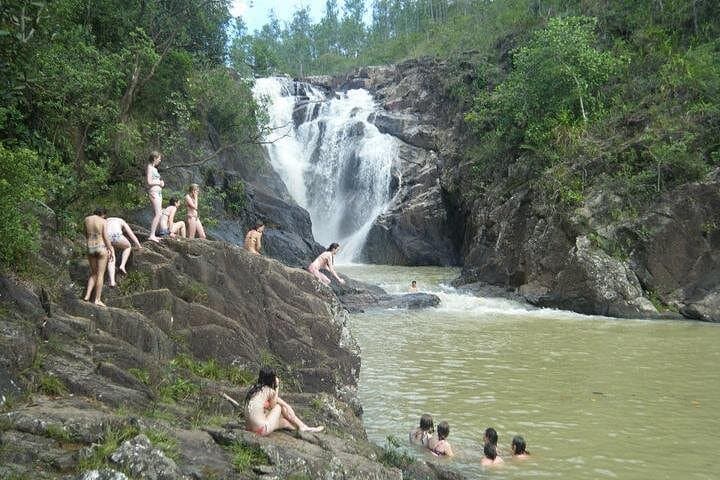
After a sit-down lunch the tempo changes. The ride into Mountain Pine Ridge Reserve is a scenic, 45-minute descent into a different ecology: pine savanna and steep granite outcrops. Big Rock Falls arrives without pretense—a curtain of clear water spilling over river-polished boulders into a shallow pool framed by ferns and hammocks of lianas. The current invites you; the pools are cool relief after the climb and the heat of the day.
This combo is paced for curiosity more than endurance. Expect a mix of uneven walking at the ruins, short stair climbs, and slippery rock at the falls. Guides here will weave in archaeology and local stories, explain the hand-cranked ferry, and offer context on park conservation and water quality. Practicalities matter: an early start pays off—fewer people at the summit and cooler hiking temperatures.
Bring sturdy shoes with good grip for both limestone steps and slick river stone, insect repellent, sun protection, and a quick-dry swim kit. Hydrate before the ferry crossing and be ready to move deliberately where trails narrow. For travelers who want history and a swim in one day, the combination of Xunantunich’s sweeping views and the refreshing plunge at Big Rock Falls is hard to beat: it’s an efficiently arranged primer on Belize’s landscape contrasts—stone and water, ruins and reserve—in a single, satisfying loop.
Yes—park fees and transportation are included in this tour, as noted in the itinerary inclusions.
Children can join but must be accompanied by an adult; child rates apply only when sharing with two paying adults.
Yes—there are shallow pools suitable for swimming, but exercise caution on slippery rocks and follow your guide’s instructions.
The ferry is manually operated: guides or workers crank a winch to pull the raft across the Mopan River; guests board from a ramp and should keep weight balanced.
Comfortable clothes, closed-toe shoes for the ruins, and swimwear underneath if you plan to enter the water; bring a light rain jacket in wet months.
The operator may cancel for poor weather; you’ll be offered an alternative date or a different tour depending on availability and conditions.
Cayo Inland Expeditions operates guided outdoor trips and adventures with an emphasis on safety, stewardship, and memorable experiences.



The day begins on the slow, deliberate rhythm of a hand-cranked ferry. You stand on the wooden ramp as the Mopan River tugs at the ferry’s moorings and the guide calls directions in a low, easy voice; on the far bank a trail climbs through glossy green and the outline of El Castillo cuts the skyline.
The day begins on the slow, deliberate rhythm of a hand-cranked ferry. You stand on the wooden ramp as the Mopan River tugs at the ferry’s moorings and the guide calls directions in a low, easy voice; on the far bank a trail climbs through glossy green and the outline of El Castillo cuts the skyline.
By mid-morning you are moving up a one-mile rise through secondary jungle—roots and limestone underfoot, howler monkeys rolling a bassline through the canopy, and the occasional iguana flattening itself on a sunlit rock. The Maya built Xunantunich on a high escarpment to command the surrounding valley, and that intent is obvious when you crest the plaza and El Castillo’s profile resolves into a 130-foot platform. From the top the Maya Mountains fold out like a sequence of blue-gray waves, and the lowlands below reveal agricultural plots and the ribbon of the Mopan.
Xunantunich is not just a set of stones but a place layered with human and geological history. The plaza and stucco friezes date to the Late and Terminal Classic periods; the site sits on uplifted limestone and river-deposited sediments that shaped Maya settlement patterns. Nearby San Jose Succotz remains a living Maya village—families tend small farms and speak of the ruins not as relic but as part of place and identity.
After a sit-down lunch the tempo changes. The ride into Mountain Pine Ridge Reserve is a scenic, 45-minute descent into a different ecology: pine savanna and steep granite outcrops. Big Rock Falls arrives without pretense—a curtain of clear water spilling over river-polished boulders into a shallow pool framed by ferns and hammocks of lianas. The current invites you; the pools are cool relief after the climb and the heat of the day.
This combo is paced for curiosity more than endurance. Expect a mix of uneven walking at the ruins, short stair climbs, and slippery rock at the falls. Guides here will weave in archaeology and local stories, explain the hand-cranked ferry, and offer context on park conservation and water quality. Practicalities matter: an early start pays off—fewer people at the summit and cooler hiking temperatures.
Bring sturdy shoes with good grip for both limestone steps and slick river stone, insect repellent, sun protection, and a quick-dry swim kit. Hydrate before the ferry crossing and be ready to move deliberately where trails narrow. For travelers who want history and a swim in one day, the combination of Xunantunich’s sweeping views and the refreshing plunge at Big Rock Falls is hard to beat: it’s an efficiently arranged primer on Belize’s landscape contrasts—stone and water, ruins and reserve—in a single, satisfying loop.