THE ADVENTURE COLLECTIVE® · Independent discovery and booking for outdoor travel

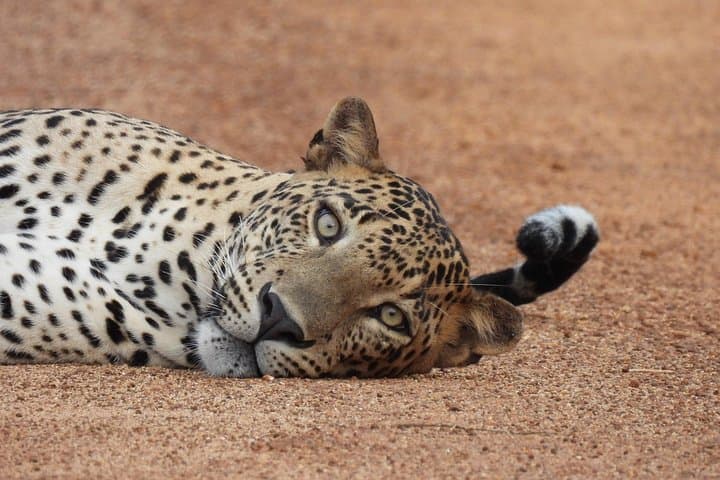
Spend a full day tracking leopards, elephants and wetland birds across Yala’s rocky ridges, open plains and lagoons. This guided safari balances long stretches of quiet observation with focused wildlife viewing—ideal for photographers and wildlife enthusiasts.
Spend a full day tracking leopards, elephants and wetland birds across Yala’s rocky ridges, open plains and lagoons. This guided safari balances long stretches of quiet observation with focused wildlife viewing—ideal for photographers and wildlife enthusiasts.
The jeep noses along a rutted track as early light strikes rock and reed; a lagoon hisses and stirs, sending birds up like thrown coins. Inside Yala National Park the land moves at its own pace—sparse dry forest giving way to open plains, bouldered ridgelines, and shallow coastal lagoons where crocodiles sun themselves and flocks quarter the shoreline.
Verified experiences and guided adventures in the surrounding area.
Operated by Ceylon Safari Tours · Tissamaharama, Southern Province
The jeep noses along a rutted track as early light strikes rock and reed; a lagoon hisses and stirs, sending birds up like thrown coins. Inside Yala National Park the land moves at its own pace—sparse dry forest giving way to open plains, bouldered ridgelines, and shallow coastal lagoons where crocodiles sun themselves and flocks quarter the shoreline.
Yala is one of Sri Lanka’s oldest protected areas and a patchwork of ancient human pathways, granite outcrops and seasonally flooded wetlands. Geologically the park sits on Precambrian charnockite and gneiss, the hard rock forming low ridges that break the horizon and create lookout points for predators and people alike. Culturally, nearby villages and temples—Tissamaharama and Kataragama—supply guides, drivers, and the rhythms of pilgrimage that frame visits to the park.
On a full-day safari expect a long but paced outing (roughly 10–12 hours with breaks), mostly in an open 4x4 through dusty tracks and shallow water crossings. Guides scan for leopards on boulders, elephants along riverine belts, and the small, intense movements of birdlife in lagoons. Photography windows can be long; patience is the real equipment.
Practical notes: start at first light or late afternoon to increase sighting odds, wear breathable long sleeves to block sun and insects, and carry binoculars, sunscreen and cash for park fees or roadside vendors. Respect distance rules—animals set the tempo here; the jeep is the boundary. Hydrate often and plan for dust, heat, and a slow, attentive day in one of Sri Lanka’s most dynamic wildlife landscapes.
Early morning and late afternoon drives concentrate wildlife activity—plan to be in the park at first light or before sunset.
Yes, but infants must sit on an adult’s lap and the operator notes the trip is not recommended for pregnant travelers or those with serious heart conditions.
This full-day private tour typically includes transport, breakfast, lunch, bottled water and a luxury safari jeep, plus an experienced local guide.
The operator offers a full refund if you cancel at least 24 hours before departure; check booking terms for specifics.
Ceylon Safari Tours operates guided outdoor trips and adventures with an emphasis on safety, stewardship, and memorable experiences.


The jeep noses along a rutted track as early light strikes rock and reed; a lagoon hisses and stirs, sending birds up like thrown coins. Inside Yala National Park the land moves at its own pace—sparse dry forest giving way to open plains, bouldered ridgelines, and shallow coastal lagoons where crocodiles sun themselves and flocks quarter the shoreline.
The jeep noses along a rutted track as early light strikes rock and reed; a lagoon hisses and stirs, sending birds up like thrown coins. Inside Yala National Park the land moves at its own pace—sparse dry forest giving way to open plains, bouldered ridgelines, and shallow coastal lagoons where crocodiles sun themselves and flocks quarter the shoreline.
Yala is one of Sri Lanka’s oldest protected areas and a patchwork of ancient human pathways, granite outcrops and seasonally flooded wetlands. Geologically the park sits on Precambrian charnockite and gneiss, the hard rock forming low ridges that break the horizon and create lookout points for predators and people alike. Culturally, nearby villages and temples—Tissamaharama and Kataragama—supply guides, drivers, and the rhythms of pilgrimage that frame visits to the park.
On a full-day safari expect a long but paced outing (roughly 10–12 hours with breaks), mostly in an open 4x4 through dusty tracks and shallow water crossings. Guides scan for leopards on boulders, elephants along riverine belts, and the small, intense movements of birdlife in lagoons. Photography windows can be long; patience is the real equipment.
Practical notes: start at first light or late afternoon to increase sighting odds, wear breathable long sleeves to block sun and insects, and carry binoculars, sunscreen and cash for park fees or roadside vendors. Respect distance rules—animals set the tempo here; the jeep is the boundary. Hydrate often and plan for dust, heat, and a slow, attentive day in one of Sri Lanka’s most dynamic wildlife landscapes.