THE ADVENTURE COLLECTIVE® · Independent discovery and booking for outdoor travel

A full-day jeep safari from Hambantota Port takes you into Yala National Park’s varied ecosystems, where leopards, elephants and rich birdlife are the main draws. This guide covers what you’ll see, when to go, and how to prepare for the best possible wildlife viewing.
A full-day jeep safari from Hambantota Port takes you into Yala National Park’s varied ecosystems, where leopards, elephants and rich birdlife are the main draws. This guide covers what you’ll see, when to go, and how to prepare for the best possible wildlife viewing.
A dawn jeep grinds along the dusty track as sunlight pries open the canopy; the air smells of warm earth and salt from the nearby coast. On a full-day safari from Hambantota Port, travelers move through Yala National Park’s shifting scenes — dense thorn forest giving way to grassy plains and tidal lagoons where water birds call and crocodiles sun themselves on mudbanks.
Verified experiences and guided adventures in the surrounding area.
Operated by Dinuka Safari · Hambantota, Southern Province
A dawn jeep grinds along the dusty track as sunlight pries open the canopy; the air smells of warm earth and salt from the nearby coast. On a full-day safari from Hambantota Port, travelers move through Yala National Park’s shifting scenes — dense thorn forest giving way to grassy plains and tidal lagoons where water birds call and crocodiles sun themselves on mudbanks.
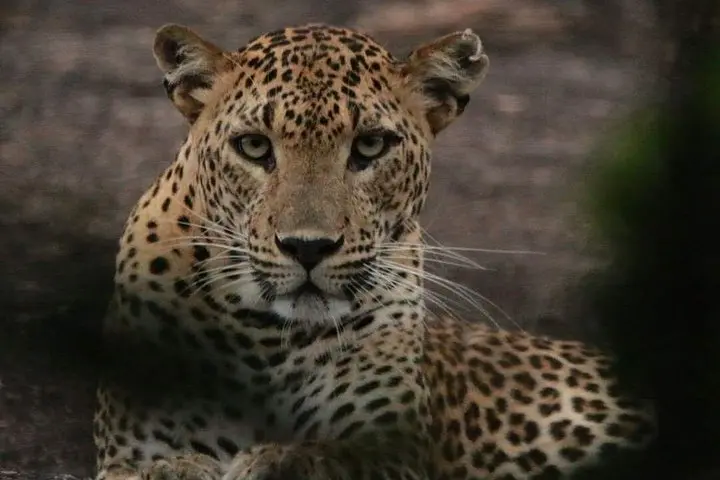
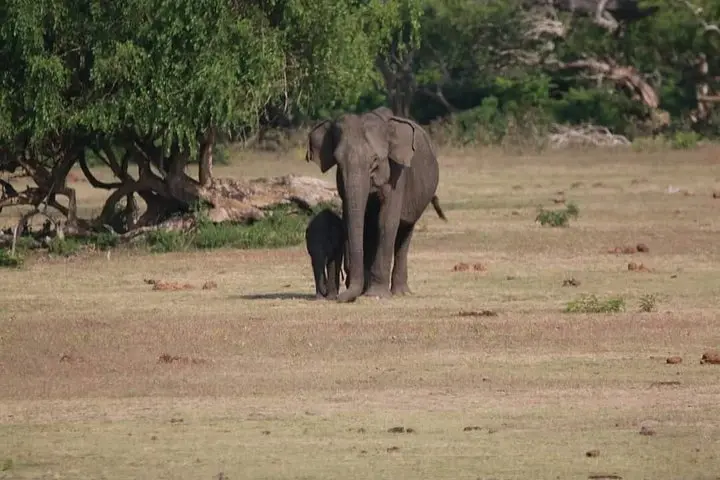
Yala’s landscape is the result of ancient coastal sediments and monsoonal rhythms; pockets of granite hint at older geology under the scrub. The park has been a protected area since the early 20th century and holds the world’s highest recorded density of Sri Lankan leopards, alongside elephants, sloth bears and a rich bird list shaped by the island’s position on major migratory routes. Local guides balance wildlife tracking with cultural context, pointing out Buddhist ruins and colonial-era waypoints within park boundaries.
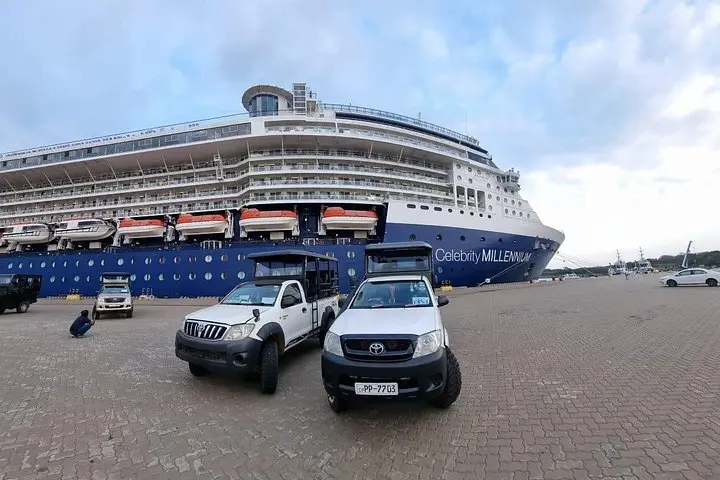
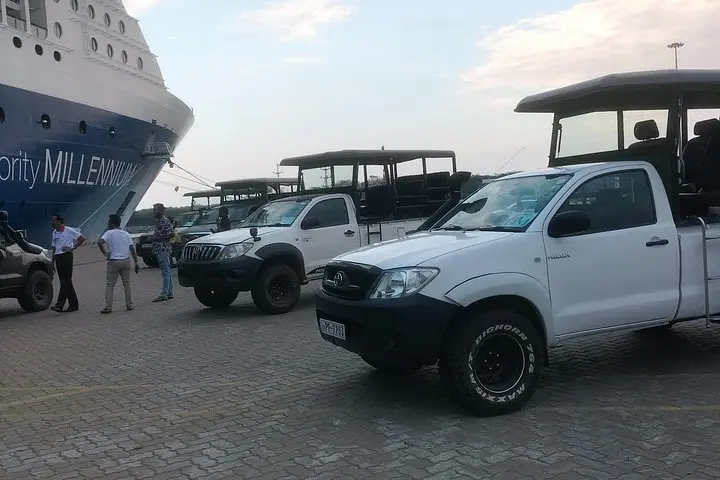
Practical guidance: tours run 6–7 hours and typically use a Toyota Hilux safari jeep with room for up to six passengers; binoculars and bottled water are normally provided. Leopard sightings aren’t guaranteed—early morning and late afternoon offer the best light and animal activity—so patience and a good telephoto lens are invaluable. Wear neutral, breathable clothing, sun protection, and closed shoes; a light rain layer can be useful in shoulder seasons. Phones work intermittently; bring extra batteries or power banks for long photo days.
Expect slow stretches of scanning the bush punctuated by sudden bursts of movement. Yala asks for quiet attention: the landscape gives up its secrets on its own terms.
Yala has the highest leopard density recorded, so sightings are common compared with other parks, but not guaranteed; early morning and late afternoon drives increase your chances.
Typical inclusions are a Toyota Hilux jeep, bottled water, snacks, a local driver/guide, binoculars and port pick-up/drop-off; confirm specifics with your operator before travel.
The tour is suitable for most ages, but the vehicle requires stepping up into a raised jeep and drives are bumpy; infant seats may be available—notify the operator in advance.
The dry months generally offer clearer roads and concentrated wildlife around water—many guides recommend February through June for reliable viewing, though animals are present year-round.
Dinuka Safari operates guided outdoor trips and adventures with an emphasis on safety, stewardship, and memorable experiences.
A dawn jeep grinds along the dusty track as sunlight pries open the canopy; the air smells of warm earth and salt from the nearby coast. On a full-day safari from Hambantota Port, travelers move through Yala National Park’s shifting scenes — dense thorn forest giving way to grassy plains and tidal lagoons where water birds call and crocodiles sun themselves on mudbanks.
A dawn jeep grinds along the dusty track as sunlight pries open the canopy; the air smells of warm earth and salt from the nearby coast. On a full-day safari from Hambantota Port, travelers move through Yala National Park’s shifting scenes — dense thorn forest giving way to grassy plains and tidal lagoons where water birds call and crocodiles sun themselves on mudbanks.
Yala’s landscape is the result of ancient coastal sediments and monsoonal rhythms; pockets of granite hint at older geology under the scrub. The park has been a protected area since the early 20th century and holds the world’s highest recorded density of Sri Lankan leopards, alongside elephants, sloth bears and a rich bird list shaped by the island’s position on major migratory routes. Local guides balance wildlife tracking with cultural context, pointing out Buddhist ruins and colonial-era waypoints within park boundaries.
Practical guidance: tours run 6–7 hours and typically use a Toyota Hilux safari jeep with room for up to six passengers; binoculars and bottled water are normally provided. Leopard sightings aren’t guaranteed—early morning and late afternoon offer the best light and animal activity—so patience and a good telephoto lens are invaluable. Wear neutral, breathable clothing, sun protection, and closed shoes; a light rain layer can be useful in shoulder seasons. Phones work intermittently; bring extra batteries or power banks for long photo days.
Expect slow stretches of scanning the bush punctuated by sudden bursts of movement. Yala asks for quiet attention: the landscape gives up its secrets on its own terms.