THE ADVENTURE COLLECTIVE® · Independent discovery and booking for outdoor travel

Spend a day at Yanacocha Reserve on the Pichincha slopes to watch hummingbirds, tanagers and the endangered Black-breasted Puffleg in a high-Andean cloud forest. This private day tour from Quito combines easy trails, multiple hummingbird stations and a conservation-focused visit.
Spend a day at Yanacocha Reserve on the Pichincha slopes to watch hummingbirds, tanagers and the endangered Black-breasted Puffleg in a high-Andean cloud forest. This private day tour from Quito combines easy trails, multiple hummingbird stations and a conservation-focused visit.
Mist and cloud press close to the trunks as visitors step onto the main trail at Yanacocha Reserve, a high-Andean cloud forest that feels a world away despite being roughly an hour from Quito. Hummingbird feeders clink as tiny wings slice the air; the Black-breasted Puffleg — rare and restless — can appear like a flash of midnight among moss-draped branches.
Verified experiences and guided adventures in the surrounding area.
Operated by Neotropical Nature and Birding Trips · Quito, Pichincha
Mist and cloud press close to the trunks as visitors step onto the main trail at Yanacocha Reserve, a high-Andean cloud forest that feels a world away despite being roughly an hour from Quito. Hummingbird feeders clink as tiny wings slice the air; the Black-breasted Puffleg — rare and restless — can appear like a flash of midnight among moss-draped branches.
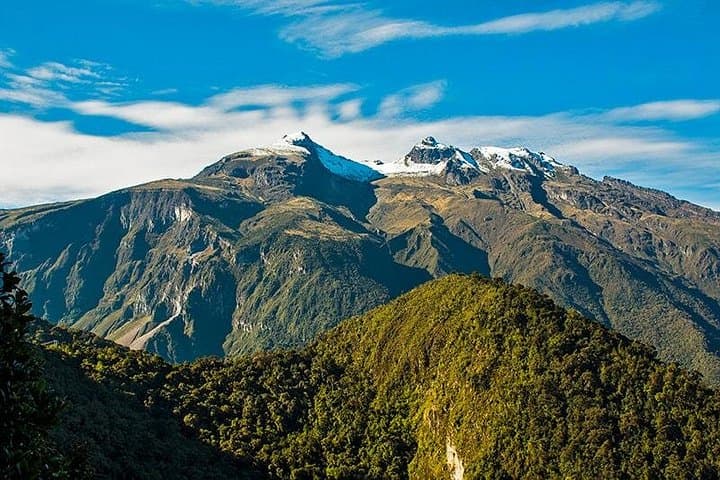
The reserve was established by the Jocotoco Foundation in the early 1990s to protect remnant cloud-forest on the slopes of the Pichincha volcano, resisting agricultural conversion and supporting species found nowhere else. Geologically the area sits on volcanic slopes with steep ridgelines, rich volcanic soils, and persistent orographic cloud that creates the humid montane environment bird species favor. Local communities around Pichincha have long mixed subsistence agriculture with market crops; conservation here links science, tourism, and rural livelihoods.
Practically, expect 2 km+ of irregular but maintained trails at ~3,200 m (10,500 ft), multiple hummingbird stations for close viewing, and a reserve restaurant serving lunch. Guides are bilingual and focused on bird ID and etiquette. Bring layers for rapidly changing conditions: sun, wind, fog and occasional rain can cycle in one hour. Hydrate and move deliberately to accommodate altitude; the pace is observational rather than strenuous.
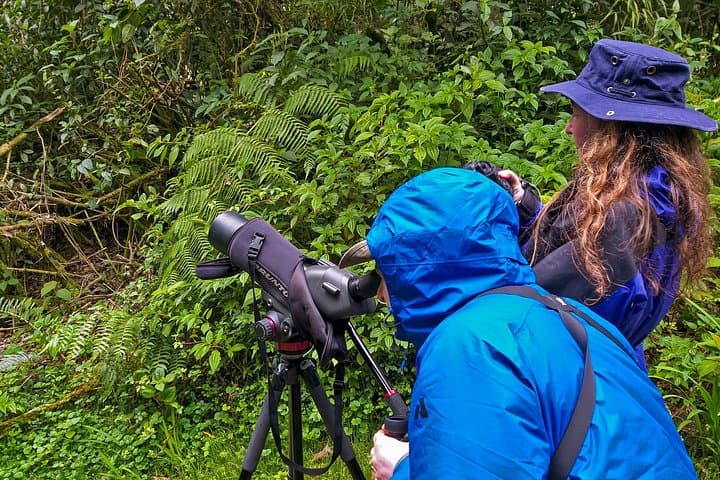
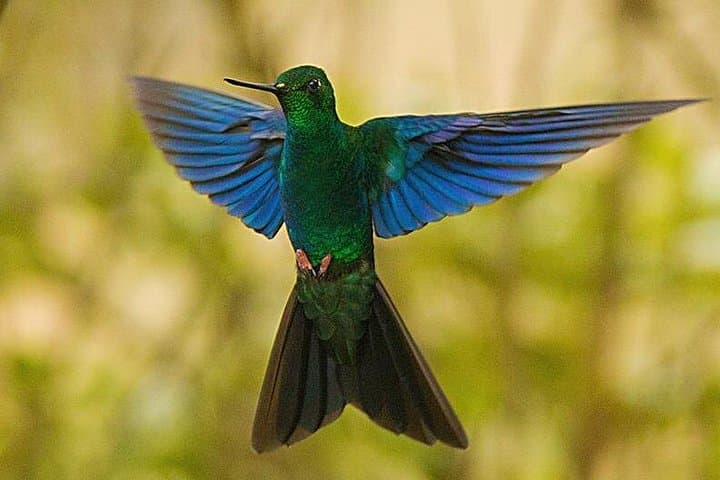
This is a day for patience and optics — binoculars and a steady hand will repay you with point-blank views of Sapphirewings, Sword-billed hummingbirds and tanagers. Support the reserve by following trails, minimizing disturbance at feeders, and leaving only footprints.
The private day tour is about 8 hours and includes entrance fees, lunch with a soft drink, private transportation, a bilingual naturalist guide, and hotel pick-up/drop-off.
Yes—trails are rated easy with short walking distances; the visit is suitable for most fitness levels, though children should be supervised at feeders and near steep slopes.
The Black-breasted Puffleg is endangered and sightings are not guaranteed, but Yanacocha is one of the best places to try; guides know recent sighting areas and hummingbird stations improve odds.
Yanacocha is high (~3,200 m). Light symptoms are possible—stay hydrated, avoid heavy exertion before the visit, and tell your guide if you feel unwell.
Neotropical Nature and Birding Trips operates guided outdoor trips and adventures with an emphasis on safety, stewardship, and memorable experiences.
Mist and cloud press close to the trunks as visitors step onto the main trail at Yanacocha Reserve, a high-Andean cloud forest that feels a world away despite being roughly an hour from Quito. Hummingbird feeders clink as tiny wings slice the air; the Black-breasted Puffleg — rare and restless — can appear like a flash of midnight among moss-draped branches.
Mist and cloud press close to the trunks as visitors step onto the main trail at Yanacocha Reserve, a high-Andean cloud forest that feels a world away despite being roughly an hour from Quito. Hummingbird feeders clink as tiny wings slice the air; the Black-breasted Puffleg — rare and restless — can appear like a flash of midnight among moss-draped branches.
The reserve was established by the Jocotoco Foundation in the early 1990s to protect remnant cloud-forest on the slopes of the Pichincha volcano, resisting agricultural conversion and supporting species found nowhere else. Geologically the area sits on volcanic slopes with steep ridgelines, rich volcanic soils, and persistent orographic cloud that creates the humid montane environment bird species favor. Local communities around Pichincha have long mixed subsistence agriculture with market crops; conservation here links science, tourism, and rural livelihoods.
Practically, expect 2 km+ of irregular but maintained trails at ~3,200 m (10,500 ft), multiple hummingbird stations for close viewing, and a reserve restaurant serving lunch. Guides are bilingual and focused on bird ID and etiquette. Bring layers for rapidly changing conditions: sun, wind, fog and occasional rain can cycle in one hour. Hydrate and move deliberately to accommodate altitude; the pace is observational rather than strenuous.
This is a day for patience and optics — binoculars and a steady hand will repay you with point-blank views of Sapphirewings, Sword-billed hummingbirds and tanagers. Support the reserve by following trails, minimizing disturbance at feeders, and leaving only footprints.