THE ADVENTURE COLLECTIVE® · Independent discovery and booking for outdoor travel

Spend a half‑day moving from gilded pagodas to colonial boulevards and bustling markets in Yangon. This 5–6 hour guided loop highlights Botahtaung, the Secretariat, Kandawgyi and the sunset at Shwedagon.
Spend a half‑day moving from gilded pagodas to colonial boulevards and bustling markets in Yangon. This 5–6 hour guided loop highlights Botahtaung, the Secretariat, Kandawgyi and the sunset at Shwedagon.
You step out of an air-conditioned van into a city where gold flashes against a low tropical sky and the honk of downtown Yangon pushes like a current through colonial avenues.
Verified experiences and guided adventures in the surrounding area.
Operated by Dragon Tourist - Vina Cruise · Yangon, Yangon Region
You step out of an air-conditioned van into a city where gold flashes against a low tropical sky and the honk of downtown Yangon pushes like a current through colonial avenues.
The day begins at Botahtaung Pagoda, its gilded stupa and riverside setting hinting at a history that locals trace back millennia. From there you move through the Secretariat’s stone façade — a building that holds the imprint of Myanmar’s modern political chapters — then into the human bustle of Bogyoke (Scott) Market where vendors, handicrafts and roadside juices crowd narrow lanes.
Geologically Yangon sits on the Irrawaddy delta plain; the city’s lakes and canals like Kandawgyi are artificial edges that frame urban life. Karaweik Hall floats like a crafted creature on Kandawgyi, offering a photo-stop and a sense of royal pageantry, while the reclining Buddha and, finally, the Shwedagon Pagoda dominate the skyline: a 99‑metre stupa that is both a religious focus and a city landmark.
Practical notes: expect 5–6 hours of mostly flat walking with occasional stairs at pagodas. Wear toe-covering shoes for temple areas, bring sunscreen and water—the tour includes bottled water and an English-speaking guide, and groups are typically small (up to about 15). Cultural respect matters: shoulders and knees should be covered at religious sites, and avoid photographing monks or worshippers without permission.
Timing the visit for late afternoon captures the city heat and the golden shift on Shwedagon’s plates. Carry small cash for market purchases, keep valuables secure in crowded markets, and allow time to linger — Yangon’s fabric is in its streets as much as its monuments.
The tour runs about 5–6 hours and typically includes transportation, bottled water, entrance fees as noted, and an English-speaking guide.
Yes—shoulders and knees should be covered at religious sites; remove shoes and socks before entering shrine areas.
The itinerary is rated easy with mostly flat walking, but there are stairs at some pagodas; those with limited mobility should check in advance for accessibility options.
Late afternoon through sunset is ideal—the light is most dramatic and temperatures begin to cool, but it’s also the busiest time.
Dragon Tourist - Vina Cruise operates guided outdoor trips and adventures with an emphasis on safety, stewardship, and memorable experiences.
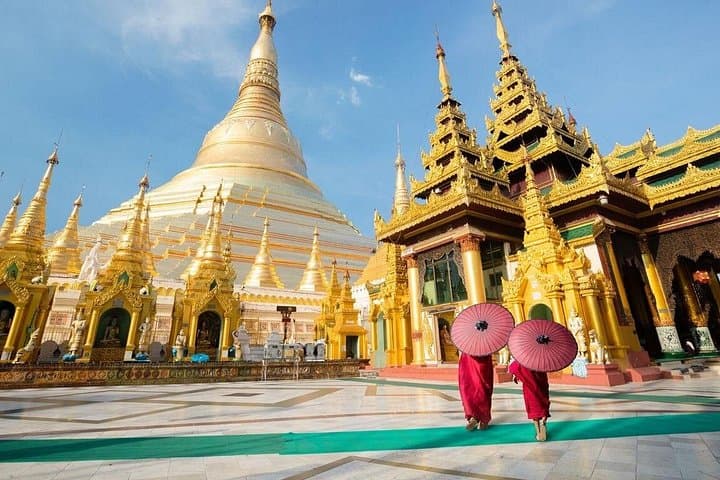


You step out of an air-conditioned van into a city where gold flashes against a low tropical sky and the honk of downtown Yangon pushes like a current through colonial avenues.
You step out of an air-conditioned van into a city where gold flashes against a low tropical sky and the honk of downtown Yangon pushes like a current through colonial avenues.
The day begins at Botahtaung Pagoda, its gilded stupa and riverside setting hinting at a history that locals trace back millennia. From there you move through the Secretariat’s stone façade — a building that holds the imprint of Myanmar’s modern political chapters — then into the human bustle of Bogyoke (Scott) Market where vendors, handicrafts and roadside juices crowd narrow lanes.
Geologically Yangon sits on the Irrawaddy delta plain; the city’s lakes and canals like Kandawgyi are artificial edges that frame urban life. Karaweik Hall floats like a crafted creature on Kandawgyi, offering a photo-stop and a sense of royal pageantry, while the reclining Buddha and, finally, the Shwedagon Pagoda dominate the skyline: a 99‑metre stupa that is both a religious focus and a city landmark.
Practical notes: expect 5–6 hours of mostly flat walking with occasional stairs at pagodas. Wear toe-covering shoes for temple areas, bring sunscreen and water—the tour includes bottled water and an English-speaking guide, and groups are typically small (up to about 15). Cultural respect matters: shoulders and knees should be covered at religious sites, and avoid photographing monks or worshippers without permission.
Timing the visit for late afternoon captures the city heat and the golden shift on Shwedagon’s plates. Carry small cash for market purchases, keep valuables secure in crowded markets, and allow time to linger — Yangon’s fabric is in its streets as much as its monuments.