THE ADVENTURE COLLECTIVE® · Independent discovery and booking for outdoor travel

Step beyond Yangon’s busy streets to a community-run organic farm where bamboo houses, paddies and a small snack stall reveal rural life. This easy 4–5 hour tour blends a village walk with hands‑on insight into traditional farming and local philanthropy.
Step beyond Yangon’s busy streets to a community-run organic farm where bamboo houses, paddies and a small snack stall reveal rural life. This easy 4–5 hour tour blends a village walk with hands‑on insight into traditional farming and local philanthropy.
By 08:30 the city thins out and a ribbon of rice paddies slides into view—the traffic gives way to a quieter rhythm of bicycles, water channels and low, stilted bamboo houses. An hour from central Yangon you step off an air‑conditioned vehicle onto compacted farm tracks, where the farm’s snack shack steams with food made from greens just picked that morning.
Verified experiences and guided adventures in the surrounding area.
Operated by Asian Tour Myanmar · Yangon, Yangon Region
By 08:30 the city thins out and a ribbon of rice paddies slides into view—the traffic gives way to a quieter rhythm of bicycles, water channels and low, stilted bamboo houses. An hour from central Yangon you step off an air‑conditioned vehicle onto compacted farm tracks, where the farm’s snack shack steams with food made from greens just picked that morning.
The landscape here is part of the greater Yangon basin: low, alluvial plains that have supported rice cultivation for generations. Houses on stilts, woven bamboo walls and communal gardens reflect a village economy still linked to seasonal cycles. The organic farm you visit is a community initiative—part philanthropy, part small‑business—that hires students and villagers and experiments with natural fertilizers rather than chemical inputs.
Expect a short guided walk across level terrain, up close with raised beds, herbs and the occasional water buffalo in nearby fields. Local hosts explain planting methods and invite visitors into the snack stall for freshly prepared bites—simple, savory flavors tied to what’s in season.
Practical notes: the tour lasts about 4–5 hours including hotel pickup and drop‑off in Yangon, and is rated easy physically; paths are mostly flat but can be uneven or muddy after rain. Bring closed‑toe shoes, sun protection, insect repellent and small cash for extra snacks or donations. Modest dress and polite photo requests go a long way in small communities. The best window is the dry season (November–February) when tracks stay firm and skies are clearer.
The experience runs about 4–5 hours total and includes hotel pickup and drop‑off in Yangon via air‑conditioned vehicle.
Yes—it's rated easy and suitable for most ages; expect short, flat walks and basic facilities at the farm.
Snacks are prepared from farm ingredients and local hosts can often accommodate simple dietary needs—mention restrictions when booking.
An English‑speaking driver is included; local guides may speak limited English—basic interpretation is provided.
Asian Tour Myanmar operates guided outdoor trips and adventures with an emphasis on safety, stewardship, and memorable experiences.
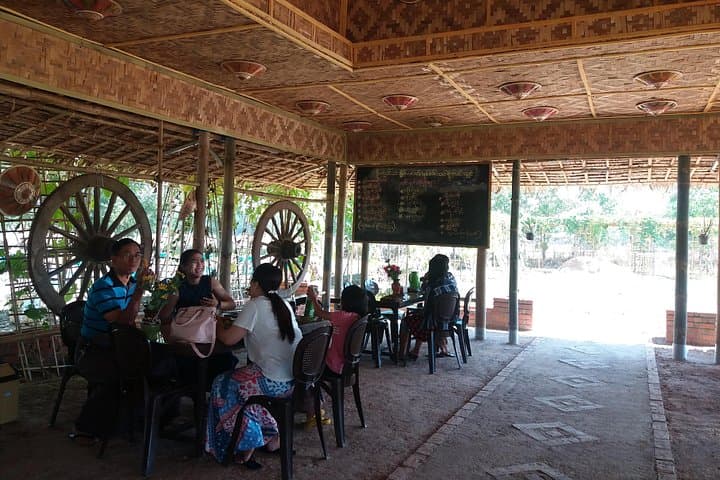


By 08:30 the city thins out and a ribbon of rice paddies slides into view—the traffic gives way to a quieter rhythm of bicycles, water channels and low, stilted bamboo houses. An hour from central Yangon you step off an air‑conditioned vehicle onto compacted farm tracks, where the farm’s snack shack steams with food made from greens just picked that morning.
By 08:30 the city thins out and a ribbon of rice paddies slides into view—the traffic gives way to a quieter rhythm of bicycles, water channels and low, stilted bamboo houses. An hour from central Yangon you step off an air‑conditioned vehicle onto compacted farm tracks, where the farm’s snack shack steams with food made from greens just picked that morning.
The landscape here is part of the greater Yangon basin: low, alluvial plains that have supported rice cultivation for generations. Houses on stilts, woven bamboo walls and communal gardens reflect a village economy still linked to seasonal cycles. The organic farm you visit is a community initiative—part philanthropy, part small‑business—that hires students and villagers and experiments with natural fertilizers rather than chemical inputs.
Expect a short guided walk across level terrain, up close with raised beds, herbs and the occasional water buffalo in nearby fields. Local hosts explain planting methods and invite visitors into the snack stall for freshly prepared bites—simple, savory flavors tied to what’s in season.
Practical notes: the tour lasts about 4–5 hours including hotel pickup and drop‑off in Yangon, and is rated easy physically; paths are mostly flat but can be uneven or muddy after rain. Bring closed‑toe shoes, sun protection, insect repellent and small cash for extra snacks or donations. Modest dress and polite photo requests go a long way in small communities. The best window is the dry season (November–February) when tracks stay firm and skies are clearer.