THE ADVENTURE COLLECTIVE® · Independent discovery and booking for outdoor travel

Spend three days in Yasuni National Park with river travel, Shuar cultural visits, and guided wildlife watches at dawn and dusk. Expect muddy trails, small boats, and rare bird and mammal sightings guided by local experts.
Spend three days in Yasuni National Park with river travel, Shuar cultural visits, and guided wildlife watches at dawn and dusk. Expect muddy trails, small boats, and rare bird and mammal sightings guided by local experts.
You step off the motorized canoe into a world where the river dares you to slow down — the Napo’s current nudges the boat away and the forest answers with layered birdcalls.
Verified experiences and guided adventures in the surrounding area.
You step off the motorized canoe into a world where the river dares you to slow down — the Napo’s current nudges the boat away and the forest answers with layered birdcalls.
This three-day, two-night Yasuni circuit moves through primary lowland Amazon: shaded trails that turn to silt after rain, blackwater oxbows, and narrow channels that the community guides know by name. The region sits on young Amazonian floodplain geology, shaped by river meanders and rich alluvial soil that feeds an extraordinary diversity of trees and palms.
Humans have lived here for millennia; the tour includes time with Shuar families to learn about subsistence gardens, canoe craft, and traditional uses of medicinal plants. Yasuni’s modern history is marked by scientific research and contentious oil exploration — the park remains one of the planet’s most biodiverse reserves.
Expect close-up wildlife encounters more often at dawn and dusk: macaws peeling through the canopy, howler monkeys declaring territory, and the soft slide of caimans along lagoon edges. At night the forest becomes a chorus that guides you and, occasionally, unnerves you.
Practical edge: pack a reliable rain jacket and quick-dry layers, carry a headlamp and water treatment, and be ready for uneven, muddy trails and boat transfers. Guided group sizes are small; trails are low-impact but can be steep in places and slick after tropical downpours. Mobile signal is intermittent — plan logistics in Coca before you go and allow the rhythm of the jungle to set your pace.
Most departures begin in Coca (Puerto Francisco de Orellana); fly or bus to Coca and meet the operator for a river transfer into the park.
Vaccinations like yellow fever are recommended and malaria prophylaxis is often advised — consult your travel clinic well before departure.
Accommodations vary from basic lodges to cushioned thatched cabins; expect simple meals, shared facilities in some options, and mosquito netting.
Older, adventurous children able to tolerate long boat rides, mosquitoes, and rustic conditions generally do well; check age limits with the operator.
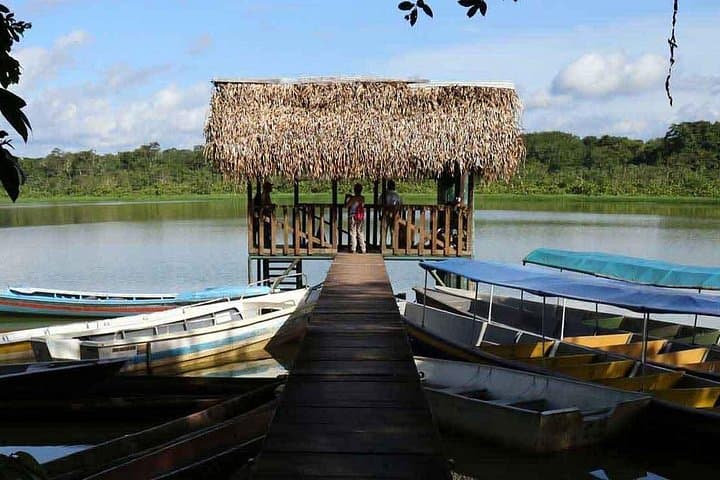
You step off the motorized canoe into a world where the river dares you to slow down — the Napo’s current nudges the boat away and the forest answers with layered birdcalls.
You step off the motorized canoe into a world where the river dares you to slow down — the Napo’s current nudges the boat away and the forest answers with layered birdcalls.
This three-day, two-night Yasuni circuit moves through primary lowland Amazon: shaded trails that turn to silt after rain, blackwater oxbows, and narrow channels that the community guides know by name. The region sits on young Amazonian floodplain geology, shaped by river meanders and rich alluvial soil that feeds an extraordinary diversity of trees and palms.
Humans have lived here for millennia; the tour includes time with Shuar families to learn about subsistence gardens, canoe craft, and traditional uses of medicinal plants. Yasuni’s modern history is marked by scientific research and contentious oil exploration — the park remains one of the planet’s most biodiverse reserves.
Expect close-up wildlife encounters more often at dawn and dusk: macaws peeling through the canopy, howler monkeys declaring territory, and the soft slide of caimans along lagoon edges. At night the forest becomes a chorus that guides you and, occasionally, unnerves you.
Practical edge: pack a reliable rain jacket and quick-dry layers, carry a headlamp and water treatment, and be ready for uneven, muddy trails and boat transfers. Guided group sizes are small; trails are low-impact but can be steep in places and slick after tropical downpours. Mobile signal is intermittent — plan logistics in Coca before you go and allow the rhythm of the jungle to set your pace.