THE ADVENTURE COLLECTIVE® · Independent discovery and booking for outdoor travel

Hit the park roads by snowmobile for a full day that covers about 65 miles and ends at the rim of the Grand Canyon of the Yellowstone. Expect thermal steam, frozen falls, and possible big-game sightings on an 8-hour guided route from Jackson Hole.
Hit the park roads by snowmobile for a full day that covers about 65 miles and ends at the rim of the Grand Canyon of the Yellowstone. Expect thermal steam, frozen falls, and possible big-game sightings on an 8-hour guided route from Jackson Hole.
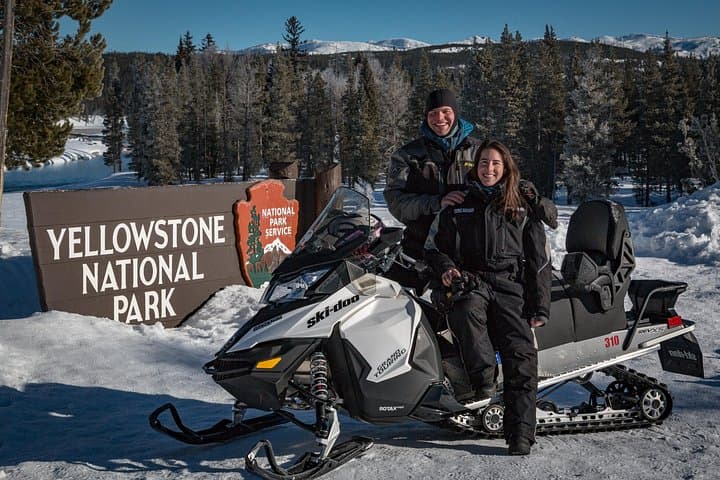
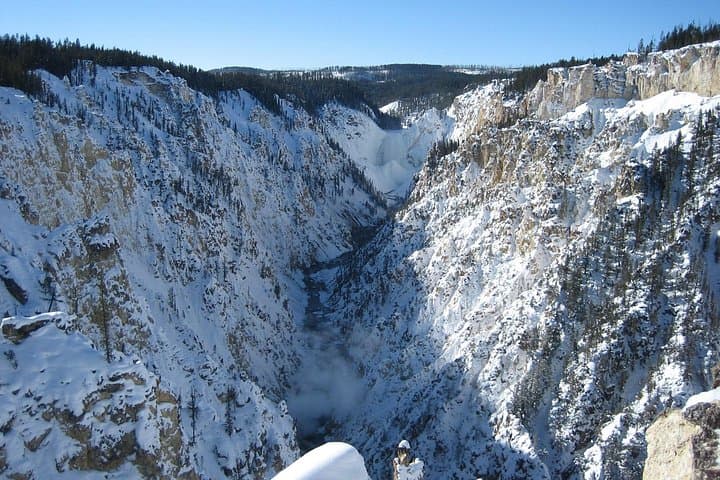
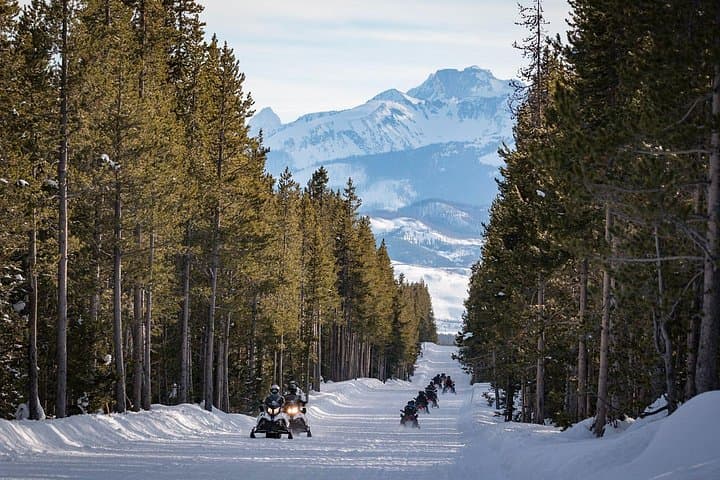
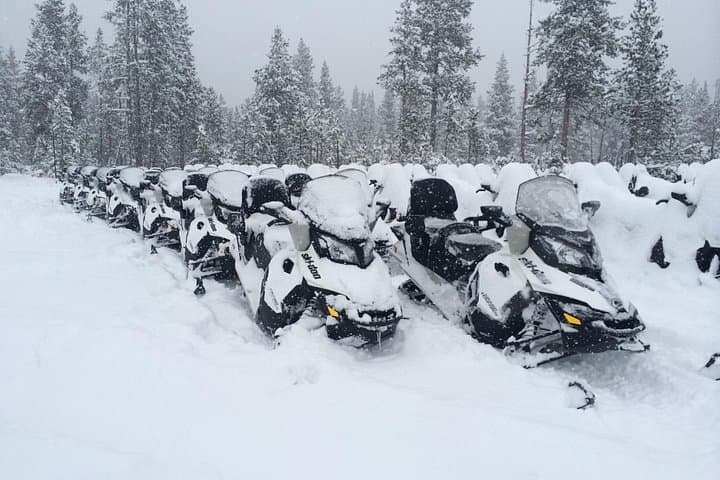
The day begins before sunup in Jackson — a handful of headlamps bob toward the van, breath white in the cold. By 7 a.m. you’re fitted into a windproof suit, handed a helmet and goggles, and led to a line of snowmobiles that hum like patient predators. The machines take off into a landscape that was carved by fire and ice: steaming fumaroles and bleached rhyolite canyon walls slide by as the guide opens the throttle for long runs across packed park roads. Over roughly 65 miles and eight hours on snow, the route threads past Yellowstone Lake and drops you at the rim of the Grand Canyon of the Yellowstone to stare up at the 308-foot Lower Falls.
Verified experiences and guided adventures in the surrounding area.
Operated by Scenic Safaris · Jackson, Wyoming
The day begins before sunup in Jackson — a handful of headlamps bob toward the van, breath white in the cold. By 7 a.m. you’re fitted into a windproof suit, handed a helmet and goggles, and led to a line of snowmobiles that hum like patient predators. The machines take off into a landscape that was carved by fire and ice: steaming fumaroles and bleached rhyolite canyon walls slide by as the guide opens the throttle for long runs across packed park roads. Over roughly 65 miles and eight hours on snow, the route threads past Yellowstone Lake and drops you at the rim of the Grand Canyon of the Yellowstone to stare up at the 308-foot Lower Falls.
This corridor of the park is volcanic in origin — rhyolite flows and hydrothermal alteration painted the canyon walls yellow, orange and red long before the first tourists arrived. The Washburn Expedition of 1870 put the canyon and falls on the map for Euro-American audiences, and the scene later inspired artists whose images helped make Yellowstone America’s first national park in 1872. In winter the canyon’s steam and ice sculpt new features: curtains of frozen spray on the falls, powdered ledges, and thermal vents that smoke against a blue sky.
Culturally, the basin has been a seasonal landscape for Indigenous peoples for millennia, and contemporary guides mix natural history with practical winter knowledge — how thermal ground shifts, where elk and bison congregate, and why winter access changes what you see. Expect to encounter big game at a distance: bison wallowing in drifts, elk silhouetted on ridgelines, and the chance of wolves if your day favors quiet observation.
Practically, this is a full, demanding day at altitude. The tour covers roughly 65 miles over packed snow and groomed roads with occasional off-road transitions; elevations commonly range from Jackson’s 6,200 ft up toward 8,000 ft in parts of the park. Guides limit group size for safety and adjust routing to weather and snow. Bring layered, windproof clothing; plan for a 6–8 a.m. pickup from Jackson hotels; and be prepared for early-morning temps well below freezing.
On a logistical level: you’ll receive a morning snack and boxed lunch, helmets and basic gear are provided, and guides will brief on operations and safety. Prior snowmobile experience is strongly recommended — the terrain requires throttle control, braking on hard-packed snow, and comfort with cold exposure. For photographers, the canyon’s viewpoints favor low winter light; for wildlife lovers, patience and a respectful distance are the best strategy.
This tour is a raw, mechanical way to experience Yellowstone’s winter — equal parts speed, silence, steam and weather — and it rewards those who come prepared to ride, look and listen.
The tour runs about 8 hours and covers roughly 65 miles of groomed park roads and short off-road sections, with stops at major viewpoints including Lower Falls.
Prior experience is strongly recommended — riders should be comfortable operating a snowmobile, handling throttle and brakes, and riding for extended periods in cold conditions.
Wear moisture-wicking base layers, insulating mid-layers, and a windproof outer shell; bring warm boots, goggles, and extra gloves — guides provide helmets and basic gear.
Yes — a morning snack and a boxed lunch are provided, with vegetarian and vegan options available if requested.
Wildlife sightings are common in winter, especially bison and elk; sightings of wolves or other predators are possible but unpredictable and generally observed at a distance.
Pickup is typically between 6:00–7:30 a.m.; the operator will confirm your exact pickup time the day before the tour.
Scenic Safaris operates guided outdoor trips and adventures with an emphasis on safety, stewardship, and memorable experiences.
The day begins before sunup in Jackson — a handful of headlamps bob toward the van, breath white in the cold. By 7 a.m. you’re fitted into a windproof suit, handed a helmet and goggles, and led to a line of snowmobiles that hum like patient predators. The machines take off into a landscape that was carved by fire and ice: steaming fumaroles and bleached rhyolite canyon walls slide by as the guide opens the throttle for long runs across packed park roads. Over roughly 65 miles and eight hours on snow, the route threads past Yellowstone Lake and drops you at the rim of the Grand Canyon of the Yellowstone to stare up at the 308-foot Lower Falls.
The day begins before sunup in Jackson — a handful of headlamps bob toward the van, breath white in the cold. By 7 a.m. you’re fitted into a windproof suit, handed a helmet and goggles, and led to a line of snowmobiles that hum like patient predators. The machines take off into a landscape that was carved by fire and ice: steaming fumaroles and bleached rhyolite canyon walls slide by as the guide opens the throttle for long runs across packed park roads. Over roughly 65 miles and eight hours on snow, the route threads past Yellowstone Lake and drops you at the rim of the Grand Canyon of the Yellowstone to stare up at the 308-foot Lower Falls.
This corridor of the park is volcanic in origin — rhyolite flows and hydrothermal alteration painted the canyon walls yellow, orange and red long before the first tourists arrived. The Washburn Expedition of 1870 put the canyon and falls on the map for Euro-American audiences, and the scene later inspired artists whose images helped make Yellowstone America’s first national park in 1872. In winter the canyon’s steam and ice sculpt new features: curtains of frozen spray on the falls, powdered ledges, and thermal vents that smoke against a blue sky.
Culturally, the basin has been a seasonal landscape for Indigenous peoples for millennia, and contemporary guides mix natural history with practical winter knowledge — how thermal ground shifts, where elk and bison congregate, and why winter access changes what you see. Expect to encounter big game at a distance: bison wallowing in drifts, elk silhouetted on ridgelines, and the chance of wolves if your day favors quiet observation.
Practically, this is a full, demanding day at altitude. The tour covers roughly 65 miles over packed snow and groomed roads with occasional off-road transitions; elevations commonly range from Jackson’s 6,200 ft up toward 8,000 ft in parts of the park. Guides limit group size for safety and adjust routing to weather and snow. Bring layered, windproof clothing; plan for a 6–8 a.m. pickup from Jackson hotels; and be prepared for early-morning temps well below freezing.
On a logistical level: you’ll receive a morning snack and boxed lunch, helmets and basic gear are provided, and guides will brief on operations and safety. Prior snowmobile experience is strongly recommended — the terrain requires throttle control, braking on hard-packed snow, and comfort with cold exposure. For photographers, the canyon’s viewpoints favor low winter light; for wildlife lovers, patience and a respectful distance are the best strategy.
This tour is a raw, mechanical way to experience Yellowstone’s winter — equal parts speed, silence, steam and weather — and it rewards those who come prepared to ride, look and listen.