THE ADVENTURE COLLECTIVE® · Independent discovery and booking for outdoor travel

Ride a heated snowcoach from Jackson Hole into Yellowstone’s winter heart to watch Old Faithful erupt against frosted pines. This full-day tour pairs geothermal spectacle with wildlife viewing and practical logistics for winter travel.
Ride a heated snowcoach from Jackson Hole into Yellowstone’s winter heart to watch Old Faithful erupt against frosted pines. This full-day tour pairs geothermal spectacle with wildlife viewing and practical logistics for winter travel.
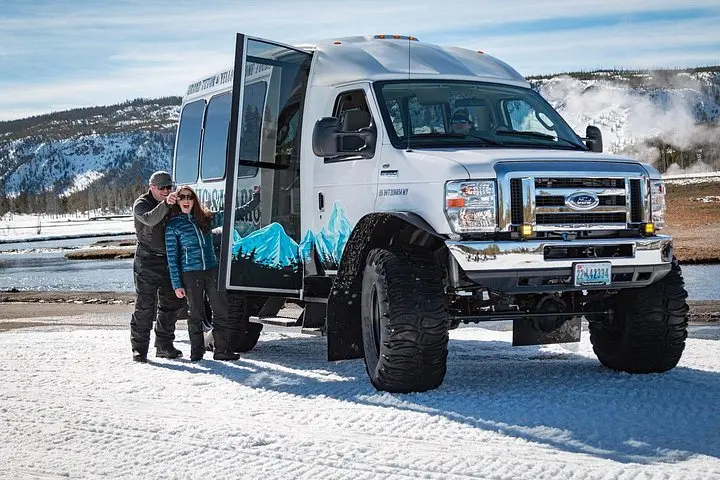
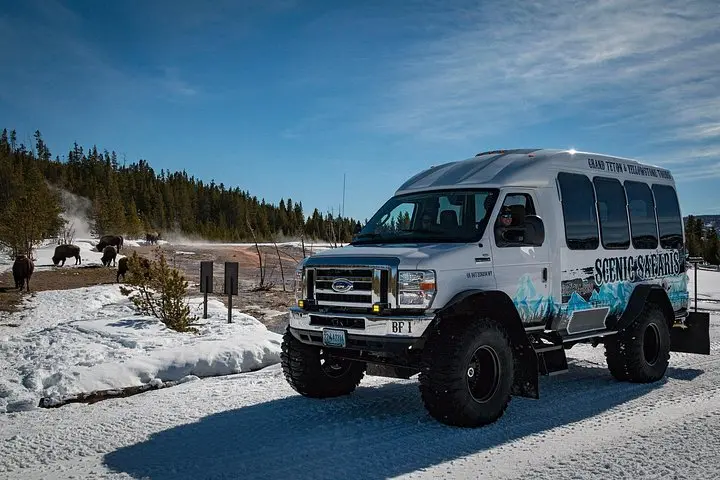
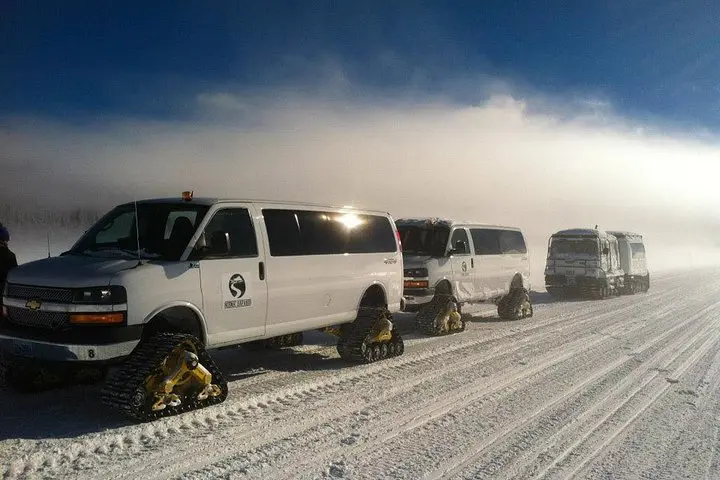
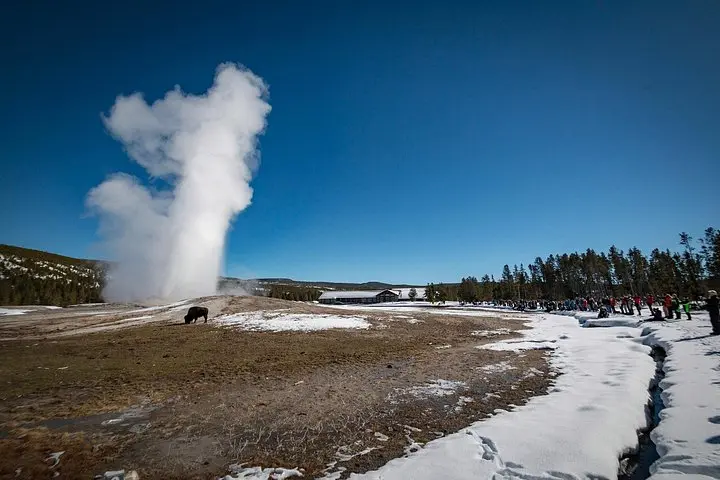
The snowcoach slides onto the highway before dawn, headlights cutting through a powder-gray morning while the Tetons recede in the rearview. Steam rises from the coach vents and from the forest floor itself; the landscape exhales in white plumes as you climb toward Yellowstone. By midmorning the trees thin and the land opens into vast thermal basins where geysers puncture the cold air—Old Faithful marks time with a plume like a bright exhalation against a blue winter sky.
Verified experiences and guided adventures in the surrounding area.
Operated by Scenic Safaris · Jackson, Wyoming
The snowcoach slides onto the highway before dawn, headlights cutting through a powder-gray morning while the Tetons recede in the rearview. Steam rises from the coach vents and from the forest floor itself; the landscape exhales in white plumes as you climb toward Yellowstone. By midmorning the trees thin and the land opens into vast thermal basins where geysers puncture the cold air—Old Faithful marks time with a plume like a bright exhalation against a blue winter sky.
This is a winter tour built for both spectacle and practicality. The route from Jackson follows the southern corridor into Yellowstone NationaI Park, moving roughly 60–70 miles to the Old Faithful area at about 7,350 feet elevation. The park is an active geological canvas: heat from a shallow magma chamber underlies colorful hot springs, acidic paint pots, and frequent eruptions. In winter, steam dominates the scene—pools glow with mineral hues edged by rime, and boardwalks creak under frost.
Human history here is short compared to the slowness of the earth: Native tribes knew these places for generations, and 19th-century explorers turned the geyser basins into curiosities that led to the park’s 1872 protection. The small settlements around Jackson grew from trapper and ranching posts to gateway communities built around access to public lands and tourism. Today, guides balance interpretation with safety—explaining geothermal chemistry one moment and watching for bison in snowfields the next.
Expect a full day: the tour package runs about 12 hours and packs in stops at West Thumb Geyser Basin (views over Yellowstone Lake), Fountain Paint Pots, Lower Geyser Basin, and a snapshot at Moose Falls. Wildlife sightings are common—bison and elk are the loud, steady presences; bald eagles and foxes are quieter prizes.
Practical notes: dress in layers and assume temperatures well below Jackson’s valley floor—wind and steam can make exposed areas bite sharply. Trails at thermal basins will be icy; waterproof boots with good traction or microspikes are wise for boardwalks. The tour includes breakfast, lunch, bottled water, a professional guide, and hotel pickup in Jackson, but park entrance fees are extra. Pickup times vary early in the morning; be ready for a 6:00–7:30 AM window. Cameras do best with fast lenses and a cloth to wipe steam and spray from gear.
For travelers who want winter geology without driving in deep snow, the snowcoach is a pragmatic way to access Yellowstone’s most famous displays. It removes the logistics of winter travel and leaves you to read the steam, time an eruption, and watch wildlife shape the white landscape.
The tour is approximately 12 hours and departs early morning—pickup windows are typically between 6:00 and 7:30 AM; exact time is confirmed the day before.
No—Yellowstone park entrance fees are not included and are payable at check-in.
Yes—infants and small children can ride; infants must sit on an adult’s lap and strollers are accepted for transport.
Yes—the itinerary schedules time in the Old Faithful area to observe an eruption, though exact timing can vary with weather and geothermal activity.
The tour operates in winter conditions and can run in various weather, but providers may cancel for unsafe conditions—check cancellation policy before booking.
Yes—pickup from hotels in the Jackson area is offered; confirm your pickup point when booking.
Scenic Safaris operates guided outdoor trips and adventures with an emphasis on safety, stewardship, and memorable experiences.
The snowcoach slides onto the highway before dawn, headlights cutting through a powder-gray morning while the Tetons recede in the rearview. Steam rises from the coach vents and from the forest floor itself; the landscape exhales in white plumes as you climb toward Yellowstone. By midmorning the trees thin and the land opens into vast thermal basins where geysers puncture the cold air—Old Faithful marks time with a plume like a bright exhalation against a blue winter sky.
The snowcoach slides onto the highway before dawn, headlights cutting through a powder-gray morning while the Tetons recede in the rearview. Steam rises from the coach vents and from the forest floor itself; the landscape exhales in white plumes as you climb toward Yellowstone. By midmorning the trees thin and the land opens into vast thermal basins where geysers puncture the cold air—Old Faithful marks time with a plume like a bright exhalation against a blue winter sky.
This is a winter tour built for both spectacle and practicality. The route from Jackson follows the southern corridor into Yellowstone NationaI Park, moving roughly 60–70 miles to the Old Faithful area at about 7,350 feet elevation. The park is an active geological canvas: heat from a shallow magma chamber underlies colorful hot springs, acidic paint pots, and frequent eruptions. In winter, steam dominates the scene—pools glow with mineral hues edged by rime, and boardwalks creak under frost.
Human history here is short compared to the slowness of the earth: Native tribes knew these places for generations, and 19th-century explorers turned the geyser basins into curiosities that led to the park’s 1872 protection. The small settlements around Jackson grew from trapper and ranching posts to gateway communities built around access to public lands and tourism. Today, guides balance interpretation with safety—explaining geothermal chemistry one moment and watching for bison in snowfields the next.
Expect a full day: the tour package runs about 12 hours and packs in stops at West Thumb Geyser Basin (views over Yellowstone Lake), Fountain Paint Pots, Lower Geyser Basin, and a snapshot at Moose Falls. Wildlife sightings are common—bison and elk are the loud, steady presences; bald eagles and foxes are quieter prizes.
Practical notes: dress in layers and assume temperatures well below Jackson’s valley floor—wind and steam can make exposed areas bite sharply. Trails at thermal basins will be icy; waterproof boots with good traction or microspikes are wise for boardwalks. The tour includes breakfast, lunch, bottled water, a professional guide, and hotel pickup in Jackson, but park entrance fees are extra. Pickup times vary early in the morning; be ready for a 6:00–7:30 AM window. Cameras do best with fast lenses and a cloth to wipe steam and spray from gear.
For travelers who want winter geology without driving in deep snow, the snowcoach is a pragmatic way to access Yellowstone’s most famous displays. It removes the logistics of winter travel and leaves you to read the steam, time an eruption, and watch wildlife shape the white landscape.