THE ADVENTURE COLLECTIVE® · Independent discovery and booking for outdoor travel

Walk through a reconstructed Yayoi settlement at Yoshinogari and learn how rice cultivation reshaped ancient Japan. This guided tour pairs accessible paths with expert interpretation of archaeology and culture.
Walk through a reconstructed Yayoi settlement at Yoshinogari and learn how rice cultivation reshaped ancient Japan. This guided tour pairs accessible paths with expert interpretation of archaeology and culture.
A low wooden walkway leads you across a broad marshy plain and the air changes—the buzz of nearby roads falls away and the rhythm of earth and water takes over. Reconstructed raised-floor houses and defensive wooden palisades rise like a living map of the Yayoi era; rice paddies still reflect the sky where fields once fed a growing sedentary population.
Verified experiences and guided adventures in the surrounding area.
Operated by DeepExperience · Saga, Saga Prefecture
A low wooden walkway leads you across a broad marshy plain and the air changes—the buzz of nearby roads falls away and the rhythm of earth and water takes over. Reconstructed raised-floor houses and defensive wooden palisades rise like a living map of the Yayoi era; rice paddies still reflect the sky where fields once fed a growing sedentary population.
Yoshinogari is one of Japan’s largest archaeological parks, a moated settlement that dates to the Yayoi period (roughly 3rd century BC to 3rd century AD). Excavations here revealed granaries, ritual pits and evidence of early rice cultivation that influenced the archipelago’s shift from foraging to farming. Geologically, the site sits on inland plains formed by river deposits—soft soil that preserved wooden posts and pottery fragments for centuries.
A local guide threads these discoveries into cultural context: how growing rice changed social structures, how ritual spaces connected communities, and how trade linked Kyushu to the wider Japanese islands and the continent.
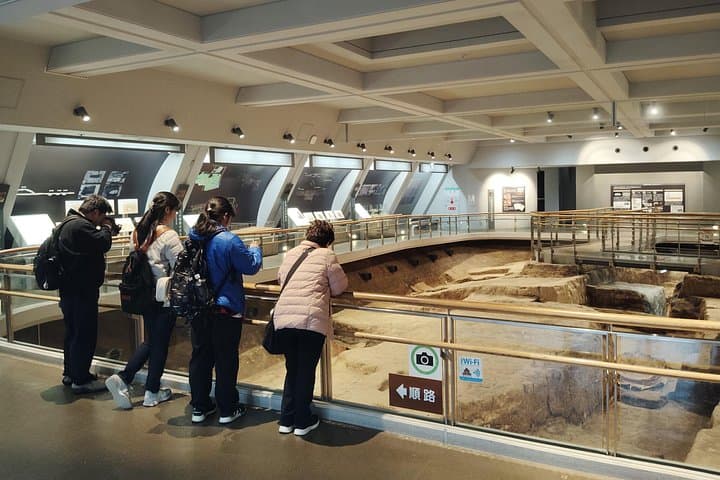
Practical guidance: the guided tour runs about two hours over mostly flat paths with some raised walkways and wooden ramps. Wear sturdy walking shoes, bring water and sun protection in summer, and a light rain layer in spring or autumn. Photography is allowed, but avoid touching reconstructions and follow posted signs; many artifacts remain in the museum collection. Public transport accesses the park; consider arriving early to avoid crowds and to see the open-air exhibits in softer morning light.
The tour is approximately 2 hours, covering the main reconstructed areas and the on-site museum if included.
This tour description indicates admission to the ruins is included as part of the booking.
Paths are mostly flat with wooden walkways and ramps, but check with the operator ahead for specific accessibility needs.
Regional trains and buses serve the area; from Saga city it’s a short drive or local bus ride, while Fukuoka is reachable by a longer train trip and transfer.
DeepExperience operates guided outdoor trips and adventures with an emphasis on safety, stewardship, and memorable experiences.

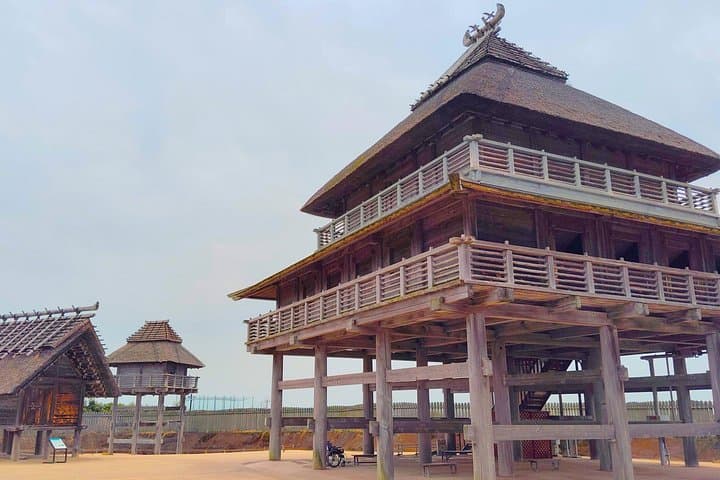

A low wooden walkway leads you across a broad marshy plain and the air changes—the buzz of nearby roads falls away and the rhythm of earth and water takes over. Reconstructed raised-floor houses and defensive wooden palisades rise like a living map of the Yayoi era; rice paddies still reflect the sky where fields once fed a growing sedentary population.
A low wooden walkway leads you across a broad marshy plain and the air changes—the buzz of nearby roads falls away and the rhythm of earth and water takes over. Reconstructed raised-floor houses and defensive wooden palisades rise like a living map of the Yayoi era; rice paddies still reflect the sky where fields once fed a growing sedentary population.
Yoshinogari is one of Japan’s largest archaeological parks, a moated settlement that dates to the Yayoi period (roughly 3rd century BC to 3rd century AD). Excavations here revealed granaries, ritual pits and evidence of early rice cultivation that influenced the archipelago’s shift from foraging to farming. Geologically, the site sits on inland plains formed by river deposits—soft soil that preserved wooden posts and pottery fragments for centuries.
A local guide threads these discoveries into cultural context: how growing rice changed social structures, how ritual spaces connected communities, and how trade linked Kyushu to the wider Japanese islands and the continent.
Practical guidance: the guided tour runs about two hours over mostly flat paths with some raised walkways and wooden ramps. Wear sturdy walking shoes, bring water and sun protection in summer, and a light rain layer in spring or autumn. Photography is allowed, but avoid touching reconstructions and follow posted signs; many artifacts remain in the museum collection. Public transport accesses the park; consider arriving early to avoid crowds and to see the open-air exhibits in softer morning light.