THE ADVENTURE COLLECTIVE® · Independent discovery and booking for outdoor travel

Leave Whitehorse behind and stand under Yukon night where guides and a photographer-ready site set the stage for the aurora. This late-night tour gives you four hours at a dark-sky viewing site—bring warm layers, a tripod if you shoot, and patience for the sky to perform.
Leave Whitehorse behind and stand under Yukon night where guides and a photographer-ready site set the stage for the aurora. This late-night tour gives you four hours at a dark-sky viewing site—bring warm layers, a tripod if you shoot, and patience for the sky to perform.
The tour begins under a wide, cold sky where iron-black trees and distant ridgelines frame a horizon that can suddenly ignite with light.
You drive away from Whitehorse until the town's glow thins to a memory; at a custom-built viewing site your guide—often a professional photographer—sets up a low, heated shelter and points toward the expected band of activity. The aurora here feels like a living curtain: green waves that flex and reach, a solar wind whisper that dares you to keep watch.
Verified experiences and guided adventures in the surrounding area.
Operated by Arctic Range Adventure · Whitehorse, Yukon
The tour begins under a wide, cold sky where iron-black trees and distant ridgelines frame a horizon that can suddenly ignite with light.
You drive away from Whitehorse until the town's glow thins to a memory; at a custom-built viewing site your guide—often a professional photographer—sets up a low, heated shelter and points toward the expected band of activity. The aurora here feels like a living curtain: green waves that flex and reach, a solar wind whisper that dares you to keep watch.
The Yukon has long held the aurora in local First Nation stories that explain the lights as spirits and messages; geologically the clear nights are favored by inland, high-latitude air and low light pollution rather than dramatic topography. Cultural threads run through the night—tales told by guides, the practical choreography of camera tripods, and the shared hush of a group watching an atmospheric reaction play out overhead.
Practically: the tour lasts roughly 4–5 hours with about four hours at the viewing site. Expect cold, still air and wide-open sightlines; bring insulated layers, ground insulation, and a camera with a tripod if you plan to shoot. Hotel pick-up and drop-off are included and snacks and beverages are provided, but guides do not refund for cloud cover or no aurora activity—this is a weather-dependent chase.
Timing your visit for clear, moonless nights improves chances, and arriving rested and warm makes the long watch much more enjoyable. The experience is part science, part patience—and when the sky moves, it's unmistakably rewarding.
No—aurora activity depends on solar conditions and weather. The tour provides access to optimal dark-sky locations and expert guidance, but there is no guarantee.
Nighttime temperatures can range well below freezing in winter (down to -20°C to -30°C). Dress in insulated, layered clothing, wear a warm hat, mittens, and insulated boots.
Yes—hotel pick-up and drop-off are included as part of the tour; confirm exact pickup time on your booking voucher.
Modern phones can capture some aurora if you use a stable mount and long-exposure camera mode, but a mirrorless/DSLR with a tripod and manual controls will produce the best results.
Arctic Range Adventure operates guided outdoor trips and adventures with an emphasis on safety, stewardship, and memorable experiences.
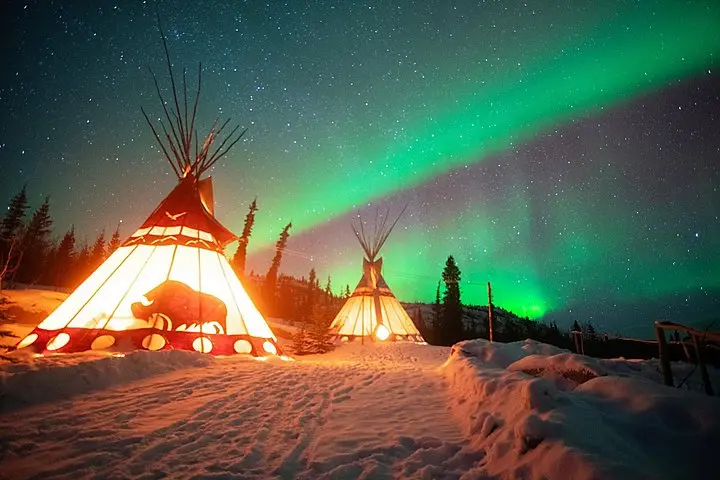
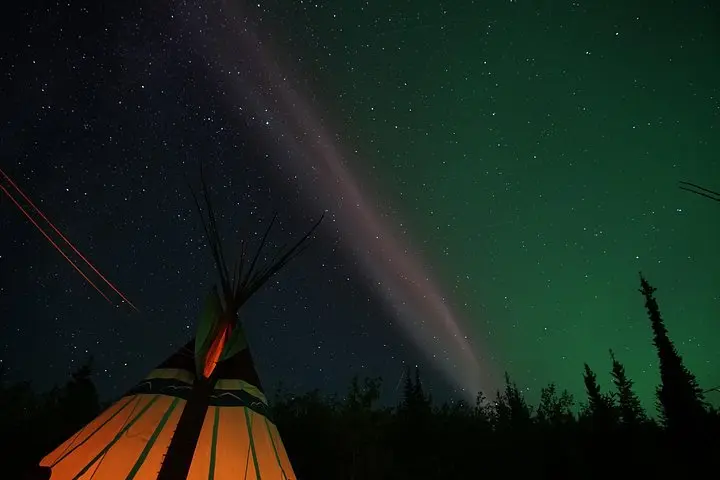
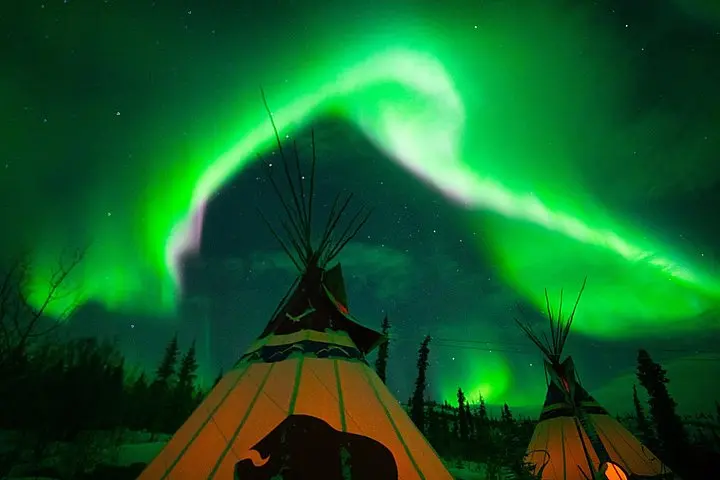
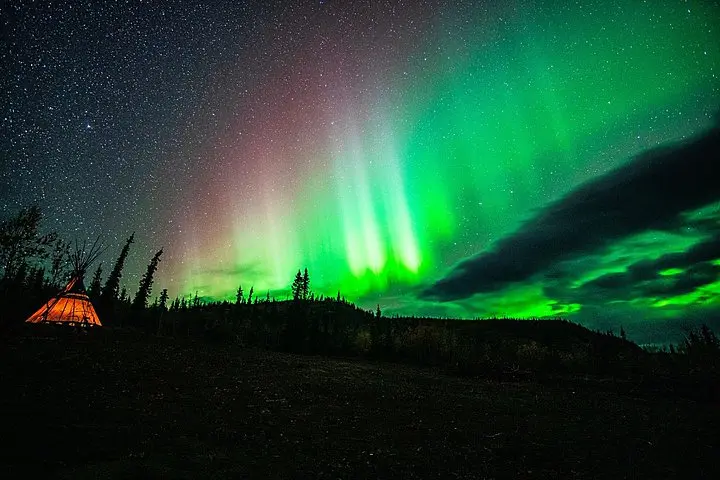
The tour begins under a wide, cold sky where iron-black trees and distant ridgelines frame a horizon that can suddenly ignite with light.
You drive away from Whitehorse until the town's glow thins to a memory; at a custom-built viewing site your guide—often a professional photographer—sets up a low, heated shelter and points toward the expected band of activity. The aurora here feels like a living curtain: green waves that flex and reach, a solar wind whisper that dares you to keep watch.
The Yukon has long held the aurora in local First Nation stories that explain the lights as spirits and messages; geologically the clear nights are favored by inland, high-latitude air and low light pollution rather than dramatic topography. Cultural threads run through the night—tales told by guides, the practical choreography of camera tripods, and the shared hush of a group watching an atmospheric reaction play out overhead.
Practically: the tour lasts roughly 4–5 hours with about four hours at the viewing site. Expect cold, still air and wide-open sightlines; bring insulated layers, ground insulation, and a camera with a tripod if you plan to shoot. Hotel pick-up and drop-off are included and snacks and beverages are provided, but guides do not refund for cloud cover or no aurora activity—this is a weather-dependent chase.
Timing your visit for clear, moonless nights improves chances, and arriving rested and warm makes the long watch much more enjoyable. The experience is part science, part patience—and when the sky moves, it's unmistakably rewarding.