THE ADVENTURE COLLECTIVE® · Independent discovery and booking for outdoor travel

Drive the Atlas, cross the Tizi n'Tichka pass and sleep under the Sahara stars on this economical two-day tour. Visit Ait Ben Haddou, ride a camel on Zagora dunes and explore the verdant Draa Valley before returning to Marrakech.
Drive the Atlas, cross the Tizi n'Tichka pass and sleep under the Sahara stars on this economical two-day tour. Visit Ait Ben Haddou, ride a camel on Zagora dunes and explore the verdant Draa Valley before returning to Marrakech.
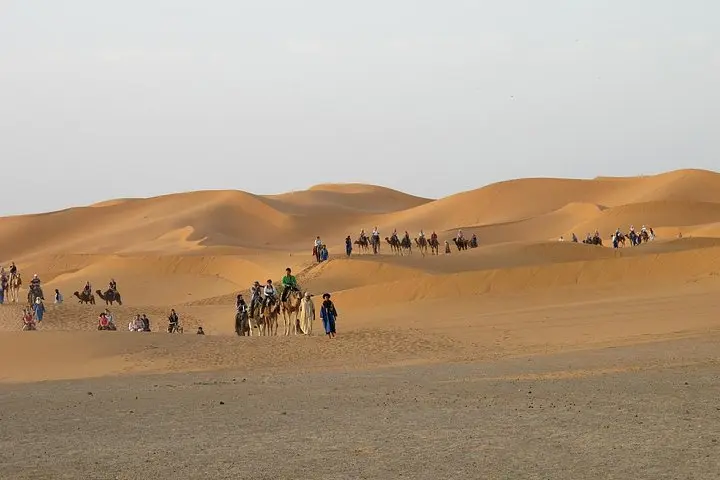
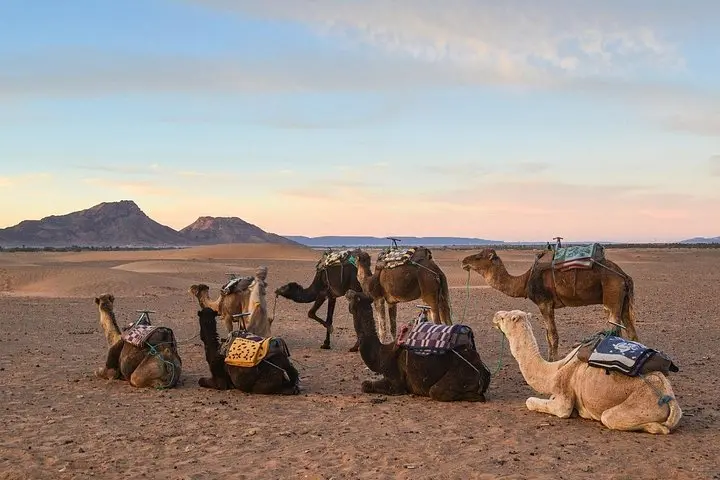
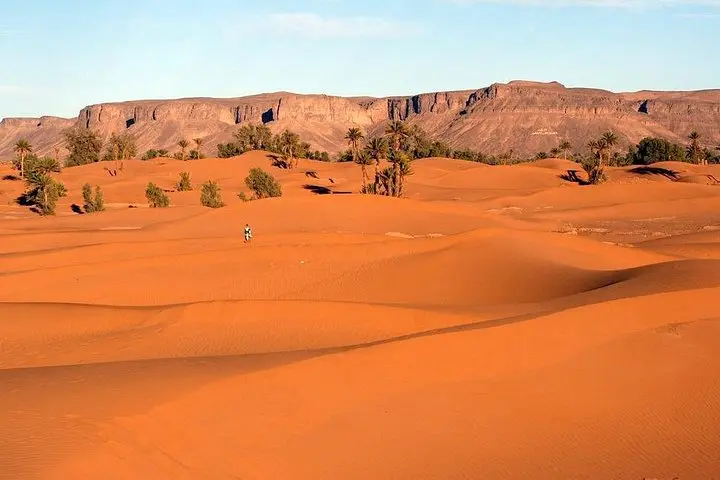
The sun slides toward the horizon and the dunes of Zagora throw long, clean shadows; a line of camels moves like punctuation against the sky. This two-day run from Marrakech follows the Atlas crests, drops through red-clay kasbahs and ends with a night in a Berber bivouac where stars seem to press close.
Verified experiences and guided adventures in the surrounding area.
Operated by Traces Berbres Voyages · Zagora, Drâa-Tafilalet
The sun slides toward the horizon and the dunes of Zagora throw long, clean shadows; a line of camels moves like punctuation against the sky. This two-day run from Marrakech follows the Atlas crests, drops through red-clay kasbahs and ends with a night in a Berber bivouac where stars seem to press close.
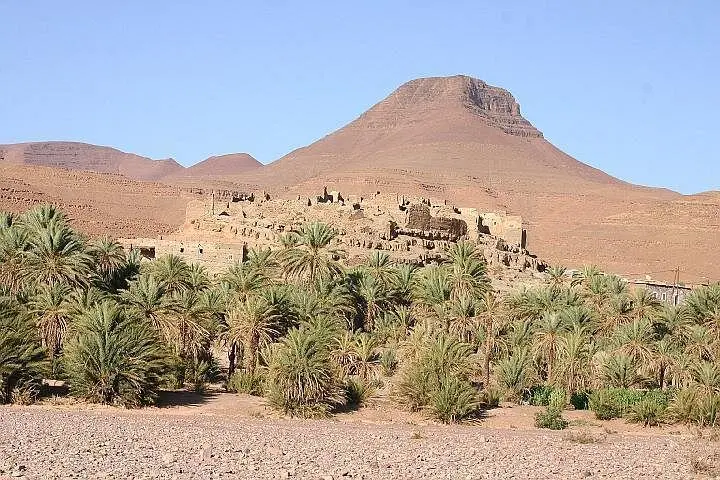
Travelers pass Ait Ben Haddou, a UNESCO-listed ksar of packed earth that recalls caravan trade and film sets, then descend into the Pre-Sahara and the Draa River Valley — a ribbon of palms and irrigation that sustained trans-Saharan routes for centuries. Geologically the route shifts quickly: granite high passes at Tizi n'Tichka give way to alluvial plains, intermittent dunes and stony hamada before the sands of Zagora appear.
Culture here is tactile: mud-brick architecture, local tajine kitchens and shared evening fires in the bivouac. The camel ride is short but emblematic — a practical way to read the rhythm of the desert and reach dune edges for sunset or dawn, when light carves the landscape.
Expect long road hours the first day (stops at Ait Ben Haddou and Ouarzazate), sand-scrambled walking near dunes, and a cold night despite daytime heat. Bring layered clothing, at least 2–3 liters of water per person, strong footwear for mixed terrain and a headlamp. Hotel pickup in Marrakech is included; note the tour is marketed as low cost and operates in shared groups. Plan arrival in Marrakech the night before and allow time for Tizi n'Tichka traffic — the pass can be slow but delivers wide views and a quick, dramatic change of place.
Yes — the tour includes pickup and drop-off from Marrakech hotels; you’ll be given a pickup point when you book.
The camel ride in Zagora is typically short (30–60 minutes) and intended to reach dunes for sunset or sunrise views.
Bivouac accommodation is basic half-board in Berber tents with shared facilities; expect simple toilets and communal dining.
Children must be accompanied by an adult; the operator advises the trip is not recommended for pregnant travelers or people with serious back problems.
Traces Berbres Voyages operates guided outdoor trips and adventures with an emphasis on safety, stewardship, and memorable experiences.
The sun slides toward the horizon and the dunes of Zagora throw long, clean shadows; a line of camels moves like punctuation against the sky. This two-day run from Marrakech follows the Atlas crests, drops through red-clay kasbahs and ends with a night in a Berber bivouac where stars seem to press close.
The sun slides toward the horizon and the dunes of Zagora throw long, clean shadows; a line of camels moves like punctuation against the sky. This two-day run from Marrakech follows the Atlas crests, drops through red-clay kasbahs and ends with a night in a Berber bivouac where stars seem to press close.
Travelers pass Ait Ben Haddou, a UNESCO-listed ksar of packed earth that recalls caravan trade and film sets, then descend into the Pre-Sahara and the Draa River Valley — a ribbon of palms and irrigation that sustained trans-Saharan routes for centuries. Geologically the route shifts quickly: granite high passes at Tizi n'Tichka give way to alluvial plains, intermittent dunes and stony hamada before the sands of Zagora appear.
Culture here is tactile: mud-brick architecture, local tajine kitchens and shared evening fires in the bivouac. The camel ride is short but emblematic — a practical way to read the rhythm of the desert and reach dune edges for sunset or dawn, when light carves the landscape.
Expect long road hours the first day (stops at Ait Ben Haddou and Ouarzazate), sand-scrambled walking near dunes, and a cold night despite daytime heat. Bring layered clothing, at least 2–3 liters of water per person, strong footwear for mixed terrain and a headlamp. Hotel pickup in Marrakech is included; note the tour is marketed as low cost and operates in shared groups. Plan arrival in Marrakech the night before and allow time for Tizi n'Tichka traffic — the pass can be slow but delivers wide views and a quick, dramatic change of place.