THE ADVENTURE COLLECTIVE® · Independent discovery and booking for outdoor travel

Walk Dolac market with a local host, sample regional produce, then cook a three-course Zagreb meal in a private apartment. This combined market tour and hands-on class blends food history, vendor visits, and practical kitchen technique.
Walk Dolac market with a local host, sample regional produce, then cook a three-course Zagreb meal in a private apartment. This combined market tour and hands-on class blends food history, vendor visits, and practical kitchen technique.
Morning light hits the red awnings of Dolac market and stalls call out with the day’s first peaches and cheeses. The tour starts here—among vendors arranging trays of sour cream, spring greens, and smoked meats—before moving to a central Zagreb apartment where a local host leads a hands-on cooking class.
Verified experiences and guided adventures in the surrounding area.
Operated by Traveling Spoon · Zagreb, Zagreb
Morning light hits the red awnings of Dolac market and stalls call out with the day’s first peaches and cheeses. The tour starts here—among vendors arranging trays of sour cream, spring greens, and smoked meats—before moving to a central Zagreb apartment where a local host leads a hands-on cooking class.
Dolac has functioned as Zagreb’s main open-air market for decades, sitting between the medieval Upper Town neighborhoods of Gradec and Kaptol and fed by the city’s continental climate and nearby Medvednica slopes. Croatian cuisine in Zagreb blends Austro-Hungarian influence with local Slavic and Mediterranean touches: pumpkin seed oil, freshwater fish, hearty soups, and fruit preserves all have roles at the table.
The experience is straightforward: an hour-long market walk sampling and selecting ingredients from favored vendors, coffee at a nearby café, then roughly two hours of hands-on cooking in a private kitchen where you prepare a seasonal soup, a meat or fish main with sides, and a traditional dessert. Expect practical technique—hand-rolled noodles, seasoning tips, and potato-dumpling shaping—paired with stories about family recipes and why pumpkin seeds appear in so many dishes.
Practical notes: plan for about 5–6 hours total, wear comfortable shoes for cobbled streets and standing in a kitchen, and notify the host of dietary restrictions in advance. The class includes an aperitif, wine or beer, and coffee; it’s ideal for travelers who want up-close food culture, not just a sit-down meal.
Plan for approximately 5–6 hours: about an hour at Dolac market, coffee, then roughly two to three hours of hands-on cooking and dining.
Yes—inform the host when booking. Menus change by day, and the host can usually adapt dishes for common allergies and dietary preferences.
The meeting point is typically at or near Dolac market in central Zagreb; transportation to the market and back to your lodging is not included.
Absolutely—no prior culinary experience is required; the host guides participants through practical, hands-on techniques.
Traveling Spoon operates guided outdoor trips and adventures with an emphasis on safety, stewardship, and memorable experiences.
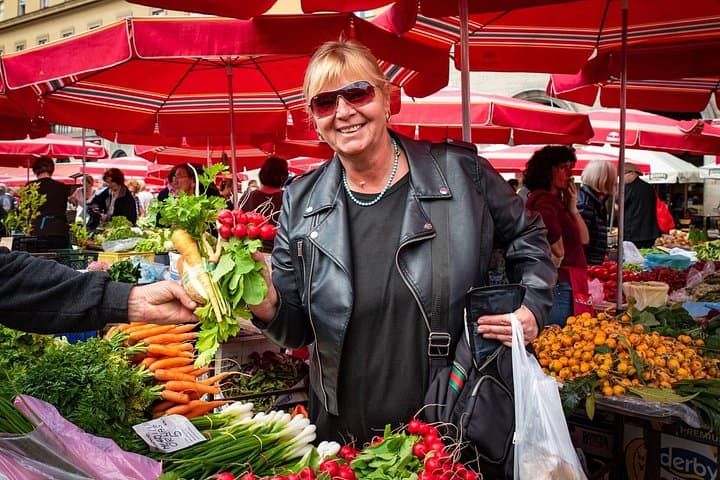


Morning light hits the red awnings of Dolac market and stalls call out with the day’s first peaches and cheeses. The tour starts here—among vendors arranging trays of sour cream, spring greens, and smoked meats—before moving to a central Zagreb apartment where a local host leads a hands-on cooking class.
Morning light hits the red awnings of Dolac market and stalls call out with the day’s first peaches and cheeses. The tour starts here—among vendors arranging trays of sour cream, spring greens, and smoked meats—before moving to a central Zagreb apartment where a local host leads a hands-on cooking class.
Dolac has functioned as Zagreb’s main open-air market for decades, sitting between the medieval Upper Town neighborhoods of Gradec and Kaptol and fed by the city’s continental climate and nearby Medvednica slopes. Croatian cuisine in Zagreb blends Austro-Hungarian influence with local Slavic and Mediterranean touches: pumpkin seed oil, freshwater fish, hearty soups, and fruit preserves all have roles at the table.
The experience is straightforward: an hour-long market walk sampling and selecting ingredients from favored vendors, coffee at a nearby café, then roughly two hours of hands-on cooking in a private kitchen where you prepare a seasonal soup, a meat or fish main with sides, and a traditional dessert. Expect practical technique—hand-rolled noodles, seasoning tips, and potato-dumpling shaping—paired with stories about family recipes and why pumpkin seeds appear in so many dishes.
Practical notes: plan for about 5–6 hours total, wear comfortable shoes for cobbled streets and standing in a kitchen, and notify the host of dietary restrictions in advance. The class includes an aperitif, wine or beer, and coffee; it’s ideal for travelers who want up-close food culture, not just a sit-down meal.