THE ADVENTURE COLLECTIVE® · Independent discovery and booking for outdoor travel

Skip the flight and take the road: this private transfer from Zagreb to Dubrovnik stops at Krka National Park for a guided walk past Skradinski Buk’s travertine falls. Expect a long day of driving, short hikes on boardwalks, and vivid river scenery.
Skip the flight and take the road: this private transfer from Zagreb to Dubrovnik stops at Krka National Park for a guided walk past Skradinski Buk’s travertine falls. Expect a long day of driving, short hikes on boardwalks, and vivid river scenery.
You leave Zagreb before dawn and the highway thins; olive groves and karst ridges slide past the window while the driver keeps a steady pace toward the coast. Midway, the road pulls you toward Krka National Park, where the river insists you stop: tumbling falls, travertine steps, and a wooden boardwalk that invites slow travel. The three-hour park visit centers on Skradinski Buk—Croatia’s most photographed cascade—whose limestone shelves have been shaped by the river’s patient chemistry for millennia.
Verified experiences and guided adventures in the surrounding area.
Operated by Budget Transfer Croatia · Skradin, Šibenik-Knin County
You leave Zagreb before dawn and the highway thins; olive groves and karst ridges slide past the window while the driver keeps a steady pace toward the coast. Midway, the road pulls you toward Krka National Park, where the river insists you stop: tumbling falls, travertine steps, and a wooden boardwalk that invites slow travel. The three-hour park visit centers on Skradinski Buk—Croatia’s most photographed cascade—whose limestone shelves have been shaped by the river’s patient chemistry for millennia.
Krka’s geology is classic Dinaric karst: soluble limestone, underground drainage, and ribbons of waterfalls formed where springs meet the river. The area holds medieval remnants—a handful of monasteries and mill buildings—evidence of communities that harnessed water for milling and faith. Local culture leans coastal Dalmatian: simple seafood, olive oil, and small towns like Skradin and Šibenik with stone streets and seafaring histories.
Practically, expect a full day (about 11 hours) with extended driving and a guided park walkthrough. Paths are mostly wooden boardwalks and paved trails but can be uneven and wet; sturdy shoes and sun protection are sensible. Arrive early or late in the day to avoid the largest crowds, and carry water — shade is limited in sections. Park entry may require a separate fee and occasional seasonal boat transfers to viewpoints. This private transfer model trades the speed of flying for curated stops: you’ll cover ground efficiently while getting out to stretch, photograph, and walk where nature demands attention.
Admission is often not included — check the booking details; some operators include entry and boat rides, others charge on-site.
Expect 1–3 hours of walking on mostly flat wooden boardwalks and paved paths with some steps to viewpoints.
Yes — private transfers typically include hotel pickup and drop-off; confirm your exact pickup point when booking.
Driving adds time but offers scenic stops like Krka; it’s less time-efficient than flying but provides a more experiential journey.
Budget Transfer Croatia operates guided outdoor trips and adventures with an emphasis on safety, stewardship, and memorable experiences.
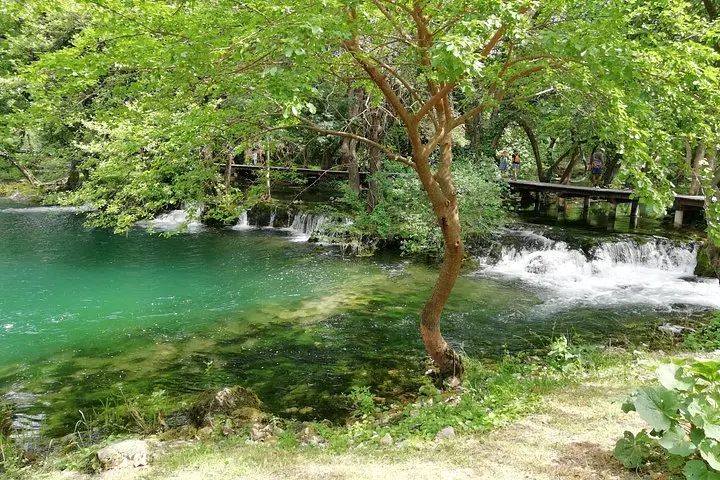
You leave Zagreb before dawn and the highway thins; olive groves and karst ridges slide past the window while the driver keeps a steady pace toward the coast. Midway, the road pulls you toward Krka National Park, where the river insists you stop: tumbling falls, travertine steps, and a wooden boardwalk that invites slow travel. The three-hour park visit centers on Skradinski Buk—Croatia’s most photographed cascade—whose limestone shelves have been shaped by the river’s patient chemistry for millennia.
You leave Zagreb before dawn and the highway thins; olive groves and karst ridges slide past the window while the driver keeps a steady pace toward the coast. Midway, the road pulls you toward Krka National Park, where the river insists you stop: tumbling falls, travertine steps, and a wooden boardwalk that invites slow travel. The three-hour park visit centers on Skradinski Buk—Croatia’s most photographed cascade—whose limestone shelves have been shaped by the river’s patient chemistry for millennia.
Krka’s geology is classic Dinaric karst: soluble limestone, underground drainage, and ribbons of waterfalls formed where springs meet the river. The area holds medieval remnants—a handful of monasteries and mill buildings—evidence of communities that harnessed water for milling and faith. Local culture leans coastal Dalmatian: simple seafood, olive oil, and small towns like Skradin and Šibenik with stone streets and seafaring histories.
Practically, expect a full day (about 11 hours) with extended driving and a guided park walkthrough. Paths are mostly wooden boardwalks and paved trails but can be uneven and wet; sturdy shoes and sun protection are sensible. Arrive early or late in the day to avoid the largest crowds, and carry water — shade is limited in sections. Park entry may require a separate fee and occasional seasonal boat transfers to viewpoints. This private transfer model trades the speed of flying for curated stops: you’ll cover ground efficiently while getting out to stretch, photograph, and walk where nature demands attention.