THE ADVENTURE COLLECTIVE® · Independent discovery and booking for outdoor travel

A private day trip that pairs the sobering history of Turanj’s Homeland War Museum with the primal rush of Plitvice Lakes. Expect a 7–14 hour door-to-door journey from Zagreb with private transport, boardwalk walks of 3–8 km, and unforgettable waterfall vistas.
A private day trip that pairs the sobering history of Turanj’s Homeland War Museum with the primal rush of Plitvice Lakes. Expect a 7–14 hour door-to-door journey from Zagreb with private transport, boardwalk walks of 3–8 km, and unforgettable waterfall vistas.
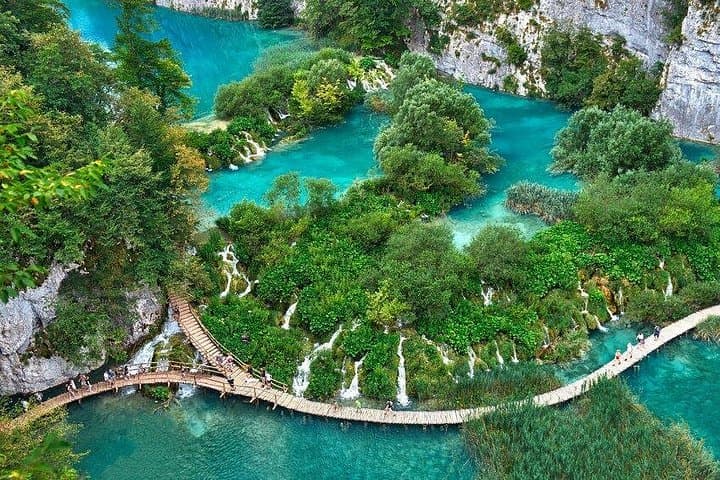
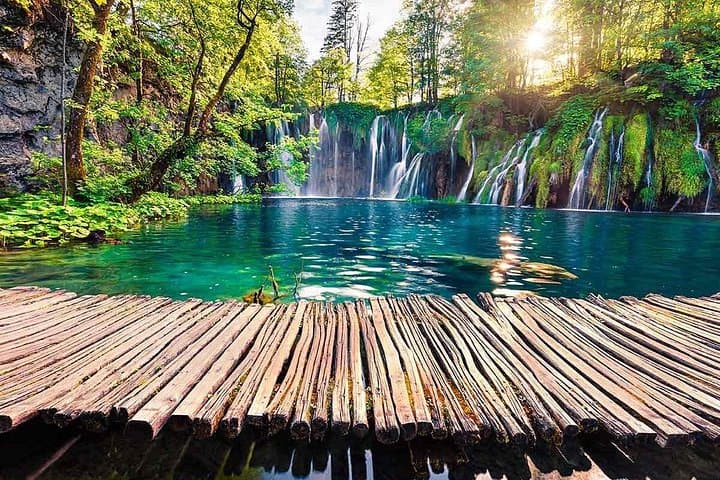
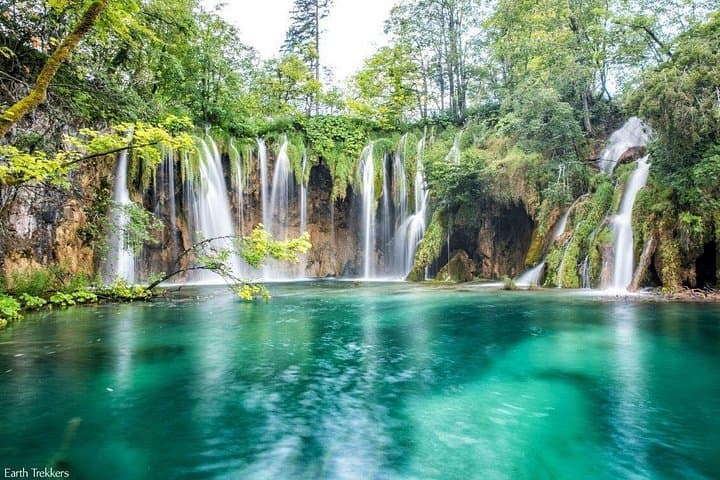
You step out of the vehicle and the air changes — cooler, mineral-scented, threaded with the constant voice of water. Wooden walkways fan across a network of emerald pools and small, frothing falls; steam rises where the sun hits the spray and the path snakes through moss-draped limestone. This is Plitvice Lakes National Park, but the day begins in Zagreb, threads a brief, intentional stop at Turanj’s Homeland War Museum, then unfolds into one of Europe’s most direct encounters with karst geology and cascading water.
Verified experiences and guided adventures in the surrounding area.
Operated by Nalu-Sava Transfers · Plitvička Jezera, Lika-Senj County
You step out of the vehicle and the air changes — cooler, mineral-scented, threaded with the constant voice of water. Wooden walkways fan across a network of emerald pools and small, frothing falls; steam rises where the sun hits the spray and the path snakes through moss-draped limestone. This is Plitvice Lakes National Park, but the day begins in Zagreb, threads a brief, intentional stop at Turanj’s Homeland War Museum, then unfolds into one of Europe’s most direct encounters with karst geology and cascading water.
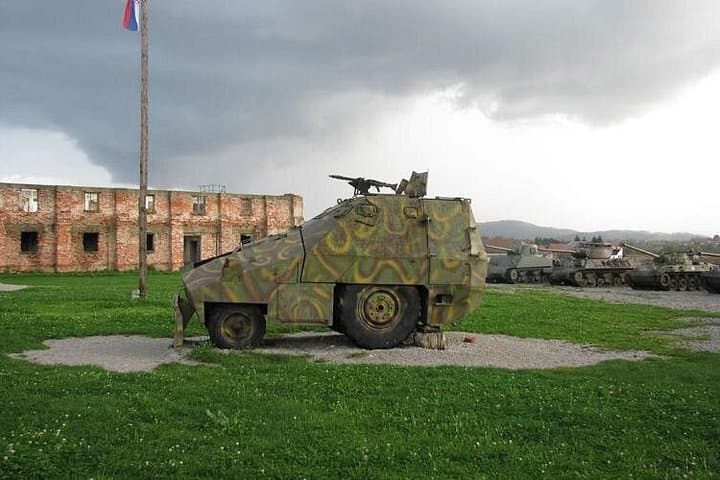
The route itself tells two chapters of Croatian recent history and deep time. Turanj, outside Karlovac, preserves the ruin and the story of the 1990s Homeland War — an austere, glass-fronted museum that conserves a former military building known locally as "California," alongside an outdoor weapons display and photographic records that place the modern visitor in an uneasy, factual context before they move on to the landscape.
Plitvice’s geology is older: limestone bedrock and underground rivers have built a stepped landscape of travertine dams over millennia. Water here has agency — it sculpts, deposits, and closes passages; tufa barriers grow slowly, redirecting streams and forming pools that range from cobalt to pale green depending on depth and algae. Trails run along upper and lower lakes; small elevation differences (typically on the order of 100–200 meters over the main circuits) create a rhythm of boardwalk, stair, lookout, and sudden waterfall.
Culturally, the park sits at the crossroads of inland Croatia and the Adriatic route — a place travelers have paused for centuries, now managed as the nation’s oldest and most visited park. Local inns in the Plitvička Jezera area serve hearty mountain fare: stewed meats, homemade cheeses, and štrukli (baked cheese dough) that feel earned after a long loop.
Practical guidance: expect a 2–2.5 hour drive from Zagreb (roughly 130 km) each way if traffic is typical; the full private tour runs between 7–14 hours depending on stops. Inside the park choose a route of 3–8 km for a day visit; boardwalks are stable but include stairs and narrow stretches. Buy tickets in advance in high season to avoid long lines; bring rain protection and a refillable water bottle (bottled water is often provided on private transfers). The tour’s private transport and on-board Wi‑Fi make the transfer comfortable; pick-up in Zagreb is usually included.
Timing is everything: arrive early for softer light and thinner crowds; late afternoon brings golden contrasts on the falls. Respect marked trails — the travertine is fragile and park management emphasizes conservation. Whether you come for geology, photography, or to reconcile history at Turanj, this private day trip stitches practical convenience to two very different kinds of Croatian memory.
Expect about 2–2.5 hours (roughly 130 km) each way by private vehicle, depending on traffic and your pick-up point in Zagreb.
This private transfer often does not include park admission; check the booking details and reserve Plitvice tickets separately during high season.
Parts of the park are stroller-accessible but boardwalks and stairs limit where you can go; the tour can accommodate infants with prior notice and infant seats on the vehicle.
Yes—photography is allowed, but drones are restricted and require park permission; respect other visitors and use trailside viewpoints.
Wear closed-toe shoes with good traction, quick-dry layers, and a light waterproof jacket; summers can be hot while mornings remain cool.
The museum is a factual, sober presentation of recent conflict; it’s accessible but can be emotionally intense—parents should consider this for younger children.
Nalu-Sava Transfers operates guided outdoor trips and adventures with an emphasis on safety, stewardship, and memorable experiences.
You step out of the vehicle and the air changes — cooler, mineral-scented, threaded with the constant voice of water. Wooden walkways fan across a network of emerald pools and small, frothing falls; steam rises where the sun hits the spray and the path snakes through moss-draped limestone. This is Plitvice Lakes National Park, but the day begins in Zagreb, threads a brief, intentional stop at Turanj’s Homeland War Museum, then unfolds into one of Europe’s most direct encounters with karst geology and cascading water.
You step out of the vehicle and the air changes — cooler, mineral-scented, threaded with the constant voice of water. Wooden walkways fan across a network of emerald pools and small, frothing falls; steam rises where the sun hits the spray and the path snakes through moss-draped limestone. This is Plitvice Lakes National Park, but the day begins in Zagreb, threads a brief, intentional stop at Turanj’s Homeland War Museum, then unfolds into one of Europe’s most direct encounters with karst geology and cascading water.
The route itself tells two chapters of Croatian recent history and deep time. Turanj, outside Karlovac, preserves the ruin and the story of the 1990s Homeland War — an austere, glass-fronted museum that conserves a former military building known locally as "California," alongside an outdoor weapons display and photographic records that place the modern visitor in an uneasy, factual context before they move on to the landscape.
Plitvice’s geology is older: limestone bedrock and underground rivers have built a stepped landscape of travertine dams over millennia. Water here has agency — it sculpts, deposits, and closes passages; tufa barriers grow slowly, redirecting streams and forming pools that range from cobalt to pale green depending on depth and algae. Trails run along upper and lower lakes; small elevation differences (typically on the order of 100–200 meters over the main circuits) create a rhythm of boardwalk, stair, lookout, and sudden waterfall.
Culturally, the park sits at the crossroads of inland Croatia and the Adriatic route — a place travelers have paused for centuries, now managed as the nation’s oldest and most visited park. Local inns in the Plitvička Jezera area serve hearty mountain fare: stewed meats, homemade cheeses, and štrukli (baked cheese dough) that feel earned after a long loop.
Practical guidance: expect a 2–2.5 hour drive from Zagreb (roughly 130 km) each way if traffic is typical; the full private tour runs between 7–14 hours depending on stops. Inside the park choose a route of 3–8 km for a day visit; boardwalks are stable but include stairs and narrow stretches. Buy tickets in advance in high season to avoid long lines; bring rain protection and a refillable water bottle (bottled water is often provided on private transfers). The tour’s private transport and on-board Wi‑Fi make the transfer comfortable; pick-up in Zagreb is usually included.
Timing is everything: arrive early for softer light and thinner crowds; late afternoon brings golden contrasts on the falls. Respect marked trails — the travertine is fragile and park management emphasizes conservation. Whether you come for geology, photography, or to reconcile history at Turanj, this private day trip stitches practical convenience to two very different kinds of Croatian memory.