THE ADVENTURE COLLECTIVE® · Independent discovery and booking for outdoor travel

Leave Zagreb early and trade city streets for waterfalls: a day that stops in the historic mill village of Rastoke, spends four hours wandering Plitvice Lakes National Park, and finishes with a drop-off in Zadar. It’s a compact corridor of Croatia’s inland geology and Adriatic culture.
Leave Zagreb early and trade city streets for waterfalls: a day that stops in the historic mill village of Rastoke, spends four hours wandering Plitvice Lakes National Park, and finishes with a drop-off in Zadar. It’s a compact corridor of Croatia’s inland geology and Adriatic culture.
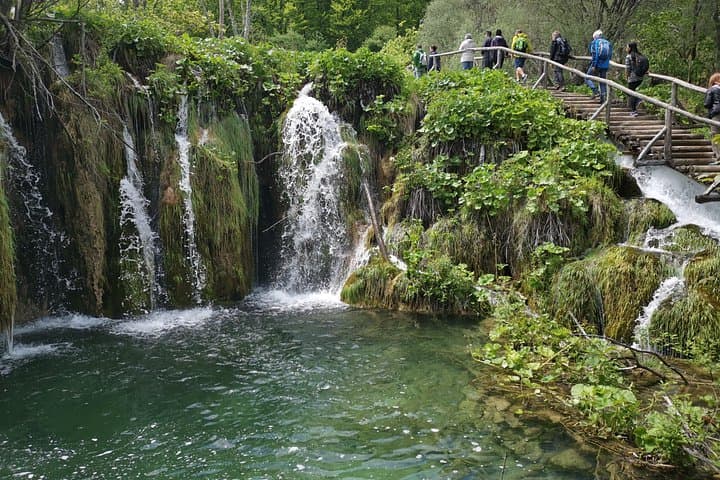
The minivan eases out of Zagreb as morning light slices through the suburbs and the motorway unfurls toward the interior. Fields flatten, then the road narrows into karst country; limestone outcrops puncture the sky and rivers begin to braide and hum. An hour in you slow for Rastoke, a village that wears water like a working garment—old mills grind quietly, the Slunjčica tucks itself into mossy chutes and small cataracts dare you to stay still and watch.
Verified experiences and guided adventures in the surrounding area.
Operated by Wanderer · Plitvička Jezera, Lika-Senj County
The minivan eases out of Zagreb as morning light slices through the suburbs and the motorway unfurls toward the interior. Fields flatten, then the road narrows into karst country; limestone outcrops puncture the sky and rivers begin to braide and hum. An hour in you slow for Rastoke, a village that wears water like a working garment—old mills grind quietly, the Slunjčica tucks itself into mossy chutes and small cataracts dare you to stay still and watch.
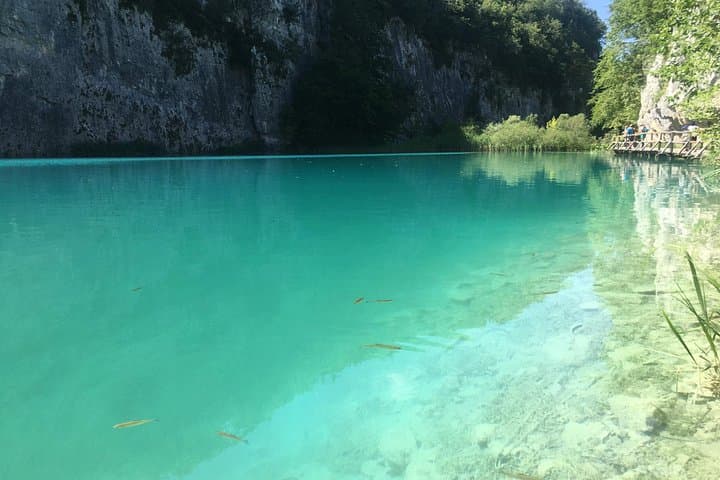
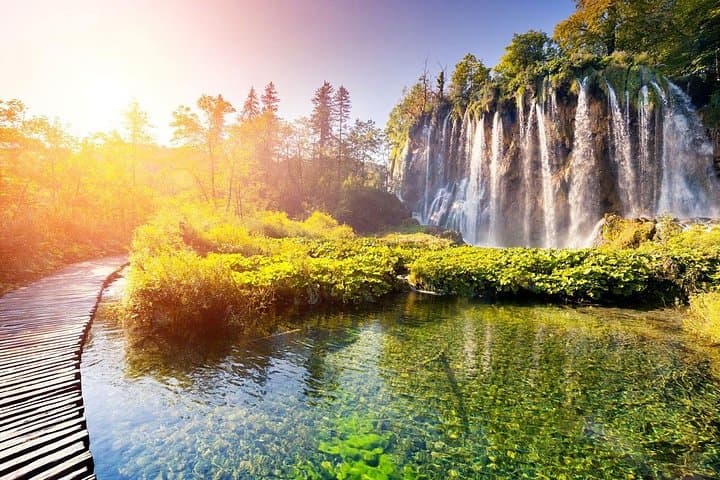
By late morning Plitvice’s outline arrives: forests that seem to breathe and a cool blue that looks like a color someone kept for private use. The national park is a science and a spectacle—sixteen terraced lakes divided between dolomite-laid upper lakes and limestone-formed lower basins, with travertine dams that grow as plants and minerals conspire. Water pushes and negotiates here, cascading over ledges, seeping through porous rock and pooling into lakes so clear they carry reflections like evidence.
The UNESCO label is earned; the landscape records epochs in stone and stream. Human history hangs quietly on the margins—wooden mills in Rastoke, Austro-Hungarian roads that routed commerce through these valleys, fishing and foraging traditions that shaped local cuisine. Later, the Adriatic at Zadar throws its own voice into the trip: Roman ruins, a waterfront that applauds the wind with the Sea Organ, and sunsets that are a municipal pastime.
Logistics are straightforward: this is a private, door-to-door transfer leaving Zagreb (typical 09:00 start) with a 30-minute stop in Rastoke, four hours for a self-guided Plitvice visit, then onward to Zadar with drop-off at your accommodation. Tickets for Plitvice are not included—book them in advance to avoid queues and capacity limits. Four hours gives you time for the classic loop: boardwalks, wooden bridges, and the Veliki Slap viewpoint, but expect to walk 4–6 kilometers at a relaxed pace and to navigate stairs and pebbled trails.
Practical prep matters: wear waterproof, grippy shoes for slick boards and stone steps; bring a lightweight rain shell and 1–2 liters of water; sunrise or late afternoon reduces crowds and yields the best light for photos. Respect park rules—stay on trails, don’t feed wildlife, and carry out trash.
This transfer is efficient travel that stages two distinct Croatian experiences in a day: the thundering, geological calm of Plitvice, and the salt-sifted, human-made rhythms of Zadar. For travelers short on time but hungry for contrast, it’s a tight, rewarding line connecting inland wildness to Adriatic charm.
No—tickets are not included. Purchase timed-entry tickets from the official Plitvice Lakes National Park website before your tour.
You’ll have four hours for a self-guided visit—expect to cover 4–6 km on boardwalks, trails and stairs depending on your route.
The service offers door-to-door pickup within the city; if traffic restrictions apply, you’ll be given the closest legal pickup point.
Yes—tour notes indicate the activity is suitable for all fitness levels, but mobility issues may make the boardwalks and stairs challenging.
The standard itinerary includes only a stop in Rastoke and the Plitvice visit before continuing to Zadar for drop-off.
Yes—drop-off is at your accommodation or the nearest approach point allowed by local traffic regulations.
Wanderer operates guided outdoor trips and adventures with an emphasis on safety, stewardship, and memorable experiences.

The minivan eases out of Zagreb as morning light slices through the suburbs and the motorway unfurls toward the interior. Fields flatten, then the road narrows into karst country; limestone outcrops puncture the sky and rivers begin to braide and hum. An hour in you slow for Rastoke, a village that wears water like a working garment—old mills grind quietly, the Slunjčica tucks itself into mossy chutes and small cataracts dare you to stay still and watch.
The minivan eases out of Zagreb as morning light slices through the suburbs and the motorway unfurls toward the interior. Fields flatten, then the road narrows into karst country; limestone outcrops puncture the sky and rivers begin to braide and hum. An hour in you slow for Rastoke, a village that wears water like a working garment—old mills grind quietly, the Slunjčica tucks itself into mossy chutes and small cataracts dare you to stay still and watch.
By late morning Plitvice’s outline arrives: forests that seem to breathe and a cool blue that looks like a color someone kept for private use. The national park is a science and a spectacle—sixteen terraced lakes divided between dolomite-laid upper lakes and limestone-formed lower basins, with travertine dams that grow as plants and minerals conspire. Water pushes and negotiates here, cascading over ledges, seeping through porous rock and pooling into lakes so clear they carry reflections like evidence.
The UNESCO label is earned; the landscape records epochs in stone and stream. Human history hangs quietly on the margins—wooden mills in Rastoke, Austro-Hungarian roads that routed commerce through these valleys, fishing and foraging traditions that shaped local cuisine. Later, the Adriatic at Zadar throws its own voice into the trip: Roman ruins, a waterfront that applauds the wind with the Sea Organ, and sunsets that are a municipal pastime.
Logistics are straightforward: this is a private, door-to-door transfer leaving Zagreb (typical 09:00 start) with a 30-minute stop in Rastoke, four hours for a self-guided Plitvice visit, then onward to Zadar with drop-off at your accommodation. Tickets for Plitvice are not included—book them in advance to avoid queues and capacity limits. Four hours gives you time for the classic loop: boardwalks, wooden bridges, and the Veliki Slap viewpoint, but expect to walk 4–6 kilometers at a relaxed pace and to navigate stairs and pebbled trails.
Practical prep matters: wear waterproof, grippy shoes for slick boards and stone steps; bring a lightweight rain shell and 1–2 liters of water; sunrise or late afternoon reduces crowds and yields the best light for photos. Respect park rules—stay on trails, don’t feed wildlife, and carry out trash.
This transfer is efficient travel that stages two distinct Croatian experiences in a day: the thundering, geological calm of Plitvice, and the salt-sifted, human-made rhythms of Zadar. For travelers short on time but hungry for contrast, it’s a tight, rewarding line connecting inland wildness to Adriatic charm.