THE ADVENTURE COLLECTIVE® · Independent discovery and booking for outdoor travel

A shallow-draft river cruise that brings you close to hippos, crocodiles and elephants in the quieter channels of the Zambezi. Two-hour departures from Livingstone focus on intimate wildlife encounters, local history and sharp river scenery.
A shallow-draft river cruise that brings you close to hippos, crocodiles and elephants in the quieter channels of the Zambezi. Two-hour departures from Livingstone focus on intimate wildlife encounters, local history and sharp river scenery.
The boat slips away from the Livingstone shoreline and the Zambezi opens like a moving landscape — flat water interrupted by braided channels, low islands and the occasional rise of a hippo's back. Wind tugs at hats and the guide's voice threads through bird calls as the hull eases into shallows unreachable by larger vessels.
Verified experiences and guided adventures in the surrounding area.
Operated by BUSH WILDERNESS SAFARIS · Livingstone, Southern Province
The boat slips away from the Livingstone shoreline and the Zambezi opens like a moving landscape — flat water interrupted by braided channels, low islands and the occasional rise of a hippo's back. Wind tugs at hats and the guide's voice threads through bird calls as the hull eases into shallows unreachable by larger vessels.
This stretch of the Zambezi, a lifeline carved through basalt and sandstone, has supported riverine communities and seasonal migrations for millennia. Geology here feeds ecology: submerged rock shelves create rapids downstream while sandbars host figs and papyrus that attract elephants and fish-eating birds. Colonial-era trading posts gave way to parks and transboundary conservation efforts in the 20th century; local guides often mix natural history with cultural notes about Tonga and Lozi communities along the banks.
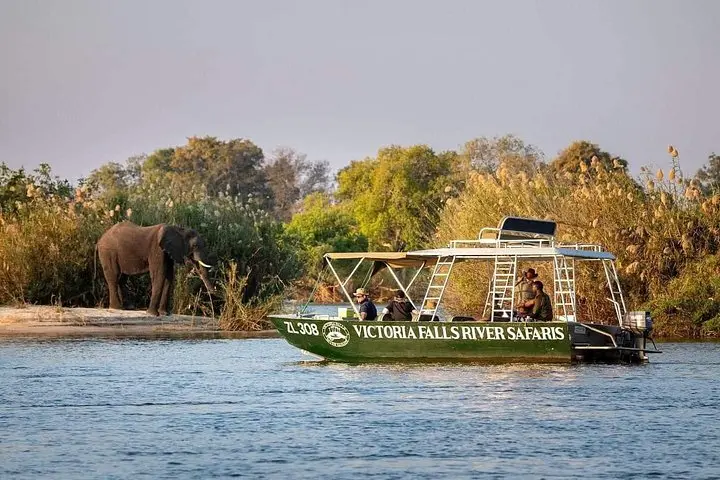
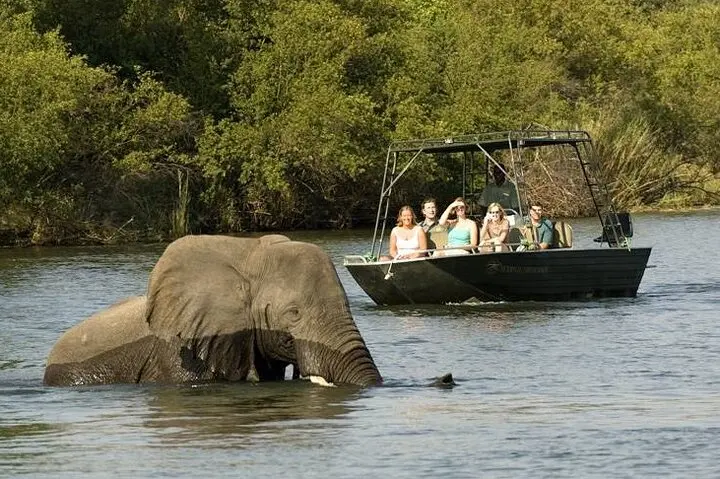
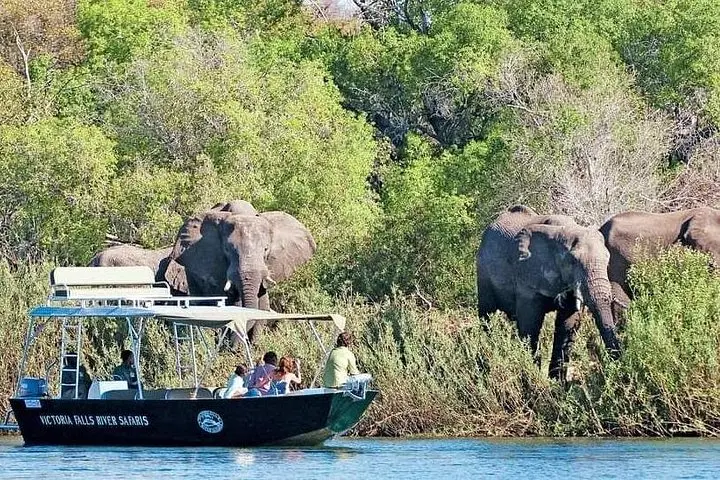
Expect close sightings rather than long lens game drives: hippos haul out on islands, crocodiles bask near shallows and elephants sometimes come to drink at the waterline. Guides position the boat to minimize disturbance; the river itself shapes the encounter, nudging animals and visitors into brief proximity.
Practical guidance: choose early morning or late-afternoon slots for softer light and active mammals; wear layered sun protection and insect repellent; keep movements and noise low. Boats are shallow-draft with open decks, so bring a lightweight waterproof camera and binoculars. Respect guide instructions around hippos and crocodiles — these are wild animals that react fast.
Two hours on the river delivers concentrated wildlife viewing, local interpretation and the simple, tactile thrill of traveling by water where large boats can't go.
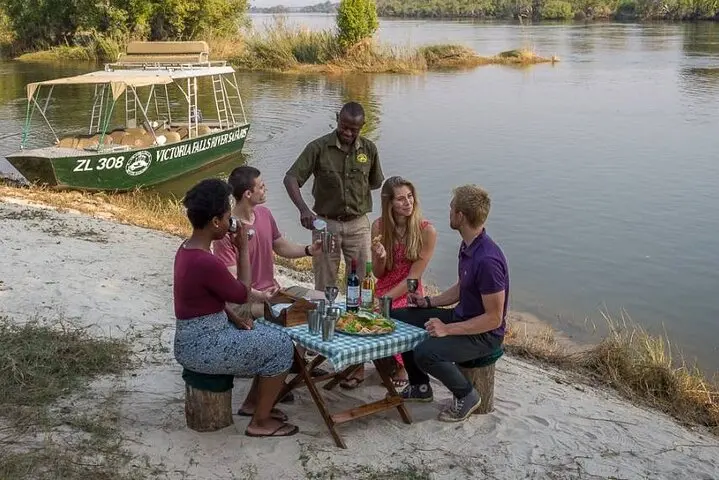
The standard outing lasts about two hours with options for breakfast, lunch or sunset departures.
Sightings are common—hippos, crocodiles and riverbank elephants are regularly seen, though wildlife is never guaranteed.
This operator lists park fees and transfers as included; confirm at booking and carry local currency for optional tips or purchases.
Tours are described as wheelchair accessible and suitable for all fitness levels; children usually must sit on an adult's lap—confirm accessibility needs in advance.
BUSH WILDERNESS SAFARIS operates guided outdoor trips and adventures with an emphasis on safety, stewardship, and memorable experiences.
The boat slips away from the Livingstone shoreline and the Zambezi opens like a moving landscape — flat water interrupted by braided channels, low islands and the occasional rise of a hippo's back. Wind tugs at hats and the guide's voice threads through bird calls as the hull eases into shallows unreachable by larger vessels.
The boat slips away from the Livingstone shoreline and the Zambezi opens like a moving landscape — flat water interrupted by braided channels, low islands and the occasional rise of a hippo's back. Wind tugs at hats and the guide's voice threads through bird calls as the hull eases into shallows unreachable by larger vessels.
This stretch of the Zambezi, a lifeline carved through basalt and sandstone, has supported riverine communities and seasonal migrations for millennia. Geology here feeds ecology: submerged rock shelves create rapids downstream while sandbars host figs and papyrus that attract elephants and fish-eating birds. Colonial-era trading posts gave way to parks and transboundary conservation efforts in the 20th century; local guides often mix natural history with cultural notes about Tonga and Lozi communities along the banks.
Expect close sightings rather than long lens game drives: hippos haul out on islands, crocodiles bask near shallows and elephants sometimes come to drink at the waterline. Guides position the boat to minimize disturbance; the river itself shapes the encounter, nudging animals and visitors into brief proximity.
Practical guidance: choose early morning or late-afternoon slots for softer light and active mammals; wear layered sun protection and insect repellent; keep movements and noise low. Boats are shallow-draft with open decks, so bring a lightweight waterproof camera and binoculars. Respect guide instructions around hippos and crocodiles — these are wild animals that react fast.
Two hours on the river delivers concentrated wildlife viewing, local interpretation and the simple, tactile thrill of traveling by water where large boats can't go.