THE ADVENTURE COLLECTIVE® · Independent discovery and booking for outdoor travel

Drop into the Zambezi’s gorge for a full-day white-water run below Victoria Falls. Expect grade III–V rapids, expert guides, a riverside lunch, and dramatic basalt scenery that makes every rapid feel cinematic.
Drop into the Zambezi’s gorge for a full-day white-water run below Victoria Falls. Expect grade III–V rapids, expert guides, a riverside lunch, and dramatic basalt scenery that makes every rapid feel cinematic.
The raft drops into a churning throat of water and the Zambezi answers back—hot, raw and immediate—slamming the craft from side to side. Spray hammers the helmets, guides shout instructions that slice through the roar, and for a few heart-stopping minutes every paddler becomes part of the river’s punctuation. This is white-water rafting on the Zambezi below Victoria Falls: long, loud, and astonishingly scenic.
Verified experiences and guided adventures in the surrounding area.
Operated by The Shrub Lodge · Victoria Falls, Matabeleland North
The raft drops into a churning throat of water and the Zambezi answers back—hot, raw and immediate—slamming the craft from side to side. Spray hammers the helmets, guides shout instructions that slice through the roar, and for a few heart-stopping minutes every paddler becomes part of the river’s punctuation. This is white-water rafting on the Zambezi below Victoria Falls: long, loud, and astonishingly scenic.
The river here has carved a basalt gorge over millennia, a hard, black spine of rock that focuses torrents into concentrated rapids. David Livingstone’s 19th-century journals first brought global eyes to the falls; downstream, the gorge has kept its wild character. Local Tonga and Lozi communities have long read the river’s moods—fishing, travel and ritual folded into the Zambezi’s annual rise and fall. Today, guided rafts thread between ledges and boils where the geology forces water into teeth: rapids that test teamwork as much as courage.
The full-day trip blends adrenaline and context. Between big sets of rapids there are calmer reaches that act like the river catching its breath—time to spot riverine birds, scan the rocky bluffs for monitor lizards or a croc basking on a shelf, and listen to the guide’s notes on the gorge’s formation and local lore. The guides here are practiced at both safety and storytelling, pointing out fault lines in the basalt and explaining how seasonal rains alter the run.
Practically speaking, expect a roughly seven-hour outing that includes transfers, a safety briefing, protective gear, and a riverside lunch. The rapids vary in intensity—sections rated III to V—so waves will demand quick reflexes and committed paddling. A moderate level of fitness and basic swimming competence are required; you’re on the water all day and will need stamina for repeated, intense bursts.
Plan around seasons: high water after rains makes for bigger, messier waves; dry-season runs can be more technical as rock features reappear. Bring a secure dry bag for your phone and a lightweight windbreaker for spray between rapids. Hotels in Victoria Falls provide pickup within about 8 km on the Zimbabwean side, making logistics straightforward.
Respect the river: follow guides’ commands, avoid sudden movements, and give wildlife wide berth. The experience is as much about reading current and rock as it is about the adrenaline—if you listen, the Zambezi will push you, teach you, and then let you laugh about it over lunch on the sand.
The full-day experience runs about 7 hours including transfers, briefing, the river run and a riverside lunch.
A moderate level of fitness is expected—able to paddle actively during rapids and climb in and out of the raft; basic swimming competency is required.
Age restrictions vary by operator; booking questions include age banding—check with the supplier for minimum age and suitability for young guests.
Trips may be canceled for unsafe conditions; the supplier typically offers a full refund if canceled due to weather (see cancellation policy).
Transfers to and from the activity are included; free pickup is generally limited to hotels within about 8 km of Victoria Falls town on the Zimbabwean side.
Yes—riverine birds, monitor lizards, and occasionally hippos or crocodiles can be seen from the raft or riverbanks; guides will point out safe viewing distances.
The Shrub Lodge operates guided outdoor trips and adventures with an emphasis on safety, stewardship, and memorable experiences.
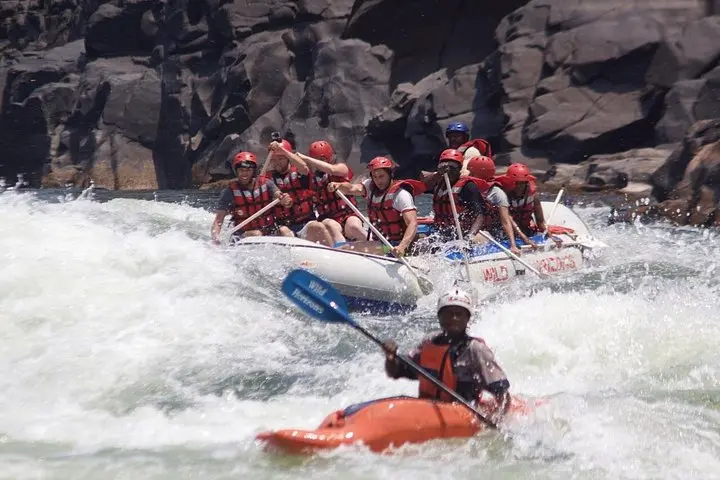
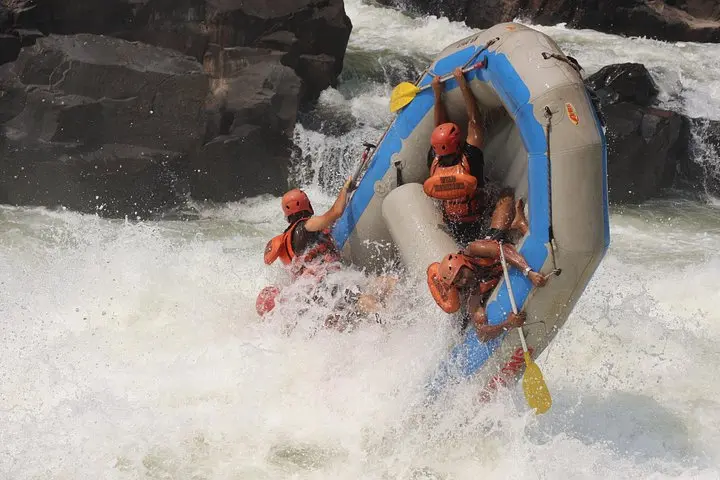
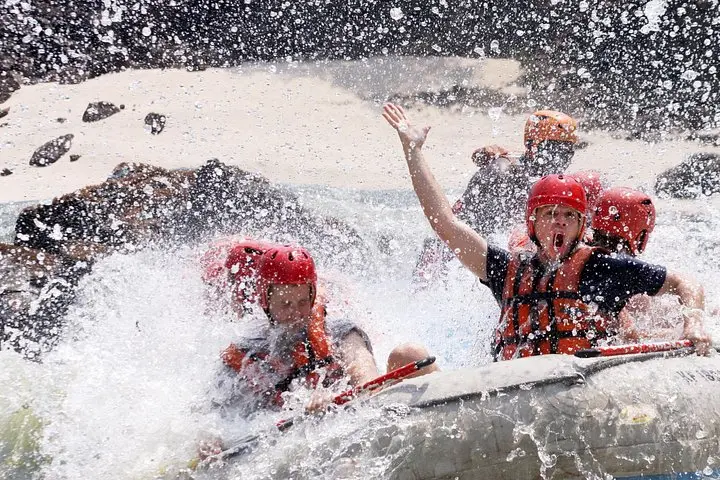
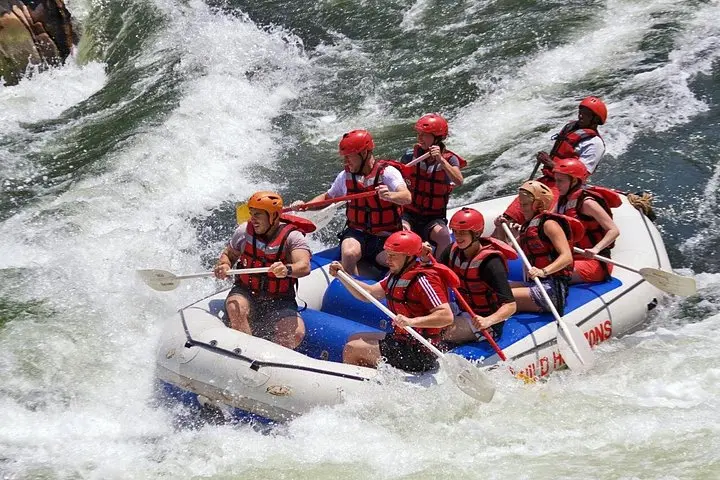
The raft drops into a churning throat of water and the Zambezi answers back—hot, raw and immediate—slamming the craft from side to side. Spray hammers the helmets, guides shout instructions that slice through the roar, and for a few heart-stopping minutes every paddler becomes part of the river’s punctuation. This is white-water rafting on the Zambezi below Victoria Falls: long, loud, and astonishingly scenic.
The raft drops into a churning throat of water and the Zambezi answers back—hot, raw and immediate—slamming the craft from side to side. Spray hammers the helmets, guides shout instructions that slice through the roar, and for a few heart-stopping minutes every paddler becomes part of the river’s punctuation. This is white-water rafting on the Zambezi below Victoria Falls: long, loud, and astonishingly scenic.
The river here has carved a basalt gorge over millennia, a hard, black spine of rock that focuses torrents into concentrated rapids. David Livingstone’s 19th-century journals first brought global eyes to the falls; downstream, the gorge has kept its wild character. Local Tonga and Lozi communities have long read the river’s moods—fishing, travel and ritual folded into the Zambezi’s annual rise and fall. Today, guided rafts thread between ledges and boils where the geology forces water into teeth: rapids that test teamwork as much as courage.
The full-day trip blends adrenaline and context. Between big sets of rapids there are calmer reaches that act like the river catching its breath—time to spot riverine birds, scan the rocky bluffs for monitor lizards or a croc basking on a shelf, and listen to the guide’s notes on the gorge’s formation and local lore. The guides here are practiced at both safety and storytelling, pointing out fault lines in the basalt and explaining how seasonal rains alter the run.
Practically speaking, expect a roughly seven-hour outing that includes transfers, a safety briefing, protective gear, and a riverside lunch. The rapids vary in intensity—sections rated III to V—so waves will demand quick reflexes and committed paddling. A moderate level of fitness and basic swimming competence are required; you’re on the water all day and will need stamina for repeated, intense bursts.
Plan around seasons: high water after rains makes for bigger, messier waves; dry-season runs can be more technical as rock features reappear. Bring a secure dry bag for your phone and a lightweight windbreaker for spray between rapids. Hotels in Victoria Falls provide pickup within about 8 km on the Zimbabwean side, making logistics straightforward.
Respect the river: follow guides’ commands, avoid sudden movements, and give wildlife wide berth. The experience is as much about reading current and rock as it is about the adrenaline—if you listen, the Zambezi will push you, teach you, and then let you laugh about it over lunch on the sand.