THE ADVENTURE COLLECTIVE® · Independent discovery and booking for outdoor travel

Launch into the Zambezi below Victoria Falls and run a series of Batoka Gorge rapids that vary from technical punches to broad hydraulics. This 3–4 hour excursion pairs high-adrenaline paddling with dramatic basalt cliffs and expert local guides.
Launch into the Zambezi below Victoria Falls and run a series of Batoka Gorge rapids that vary from technical punches to broad hydraulics. This 3–4 hour excursion pairs high-adrenaline paddling with dramatic basalt cliffs and expert local guides.
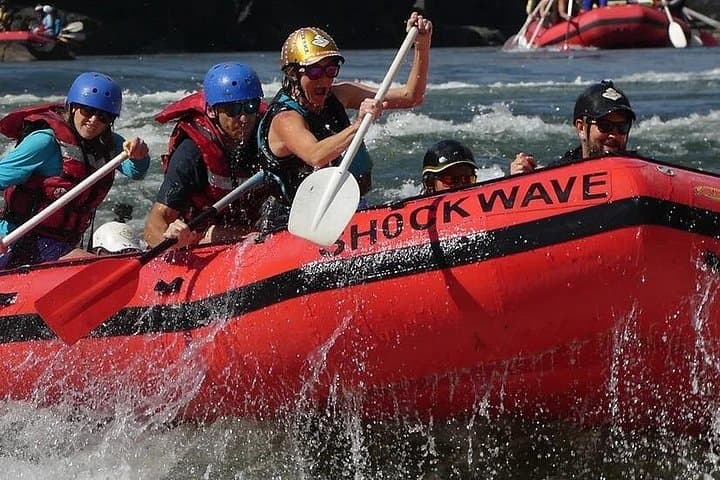
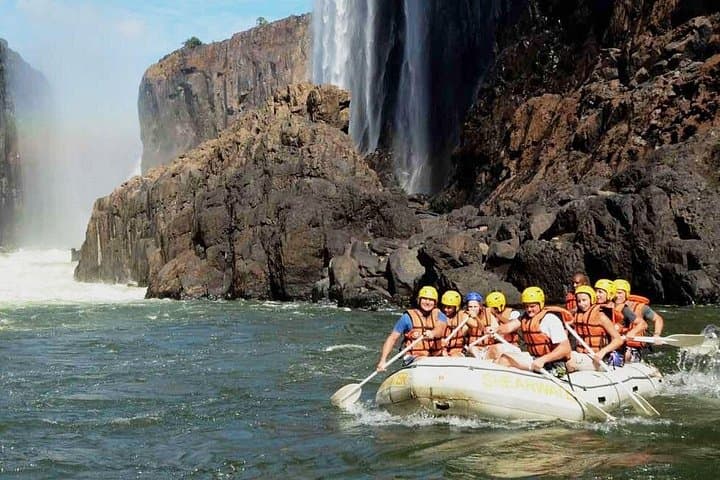
The river announces itself before you see it: a distant, constant roar and the flash of spray where the Zambezi drops into Batoka Gorge. You launch below the Falls into a ribbon of water framed by basalt cliffs; currents pull and eddies toy with the bow, while guides call commands that cut through the rumble.
Verified experiences and guided adventures in the surrounding area.
Operated by Victoria Falls Adventures · Victoria Falls, Matabeleland North
The river announces itself before you see it: a distant, constant roar and the flash of spray where the Zambezi drops into Batoka Gorge. You launch below the Falls into a ribbon of water framed by basalt cliffs; currents pull and eddies toy with the bow, while guides call commands that cut through the rumble.
Geology here is direct — the Zambezi has carved a series of narrow gorges through layered basalt, creating steep-sided channels that focus flow into hard-hitting rapids. That engineering of stone and water has shaped local culture: Tonga and other river communities read the river’s moods for fishing and transport, and European explorers like David Livingstone documented this section in the mid-19th century.
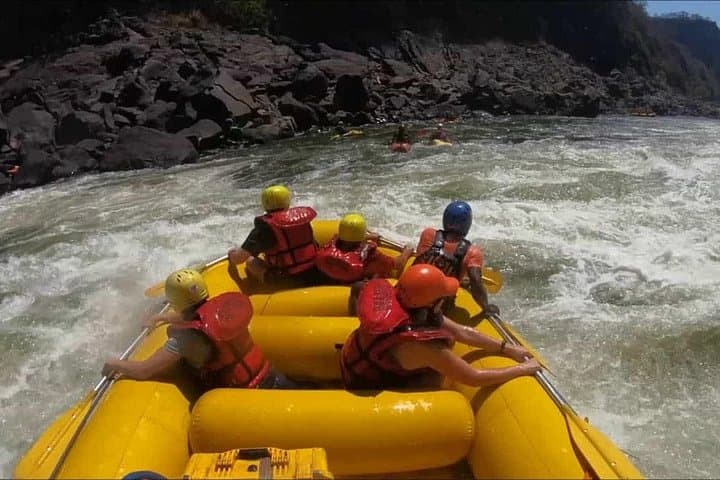
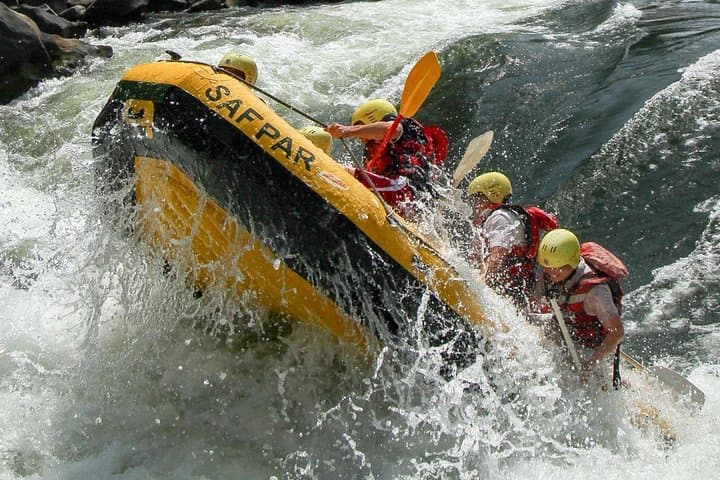
Expect a sequence of rapids that change character with the seasons — from technical, punchy drops in low water to broader, more powerful hydraulics in higher flows. Guides provide safety briefings, lifejackets and a stern-mounted frame on family-friendly rafts that reduce swim risk while still delivering adrenaline.
Practicalities: tours run about 3–4 hours including transfers and safety prep; fitness at a moderate level is required. Wear secure shoes, quick-dry layers, reef-safe sunscreen and a small dry bag for electronics. Morning runs are cooler and often calmer for photography, while low-water months (roughly June–December) produce the most technical rapids. Follow guide instructions, stay hydrated, and expect snacks on return. This is rafting with theatrical scenery and no shortage of rivercraft — prepare for wet, fast fun and a direct encounter with the Zambezi’s power.
Age limits vary by operator; family-friendly stern-mounted rafts make it possible for children to join, but confirm the minimum age and health requirements when booking.
Expect about 3–4 hours door-to-door including safety briefing, transfers, the river run and light snacks provided on return.
Low water season (roughly June–December) concentrates flow into tighter channels and produces more technical, challenging rapids.
Swims can occur in stronger rapids but stern-mounted rafts reduce swim risk; guides control the boat — guests choose whether to paddle when instructed.
Victoria Falls Adventures operates guided outdoor trips and adventures with an emphasis on safety, stewardship, and memorable experiences.
The river announces itself before you see it: a distant, constant roar and the flash of spray where the Zambezi drops into Batoka Gorge. You launch below the Falls into a ribbon of water framed by basalt cliffs; currents pull and eddies toy with the bow, while guides call commands that cut through the rumble.
The river announces itself before you see it: a distant, constant roar and the flash of spray where the Zambezi drops into Batoka Gorge. You launch below the Falls into a ribbon of water framed by basalt cliffs; currents pull and eddies toy with the bow, while guides call commands that cut through the rumble.
Geology here is direct — the Zambezi has carved a series of narrow gorges through layered basalt, creating steep-sided channels that focus flow into hard-hitting rapids. That engineering of stone and water has shaped local culture: Tonga and other river communities read the river’s moods for fishing and transport, and European explorers like David Livingstone documented this section in the mid-19th century.
Expect a sequence of rapids that change character with the seasons — from technical, punchy drops in low water to broader, more powerful hydraulics in higher flows. Guides provide safety briefings, lifejackets and a stern-mounted frame on family-friendly rafts that reduce swim risk while still delivering adrenaline.
Practicalities: tours run about 3–4 hours including transfers and safety prep; fitness at a moderate level is required. Wear secure shoes, quick-dry layers, reef-safe sunscreen and a small dry bag for electronics. Morning runs are cooler and often calmer for photography, while low-water months (roughly June–December) produce the most technical rapids. Follow guide instructions, stay hydrated, and expect snacks on return. This is rafting with theatrical scenery and no shortage of rivercraft — prepare for wet, fast fun and a direct encounter with the Zambezi’s power.