THE ADVENTURE COLLECTIVE® · Independent discovery and booking for outdoor travel

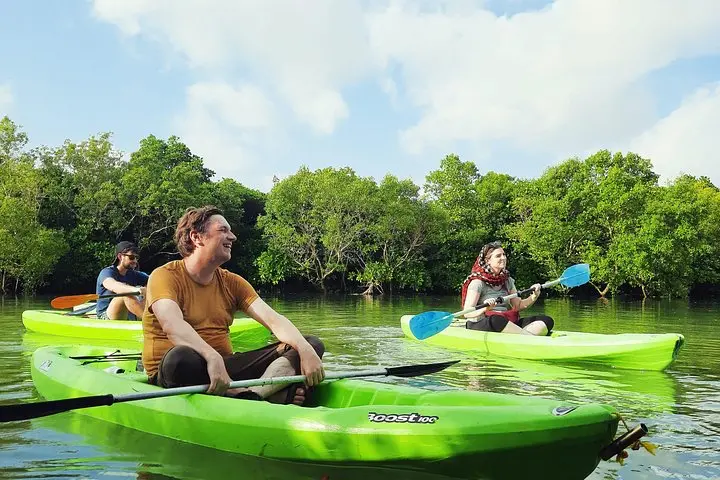
Paddle through Chukwani’s tidal mangroves by SUP or kayak, guided by locals who explain the trees, tides and wildlife. Ideal for beginners, the three-hour trip mixes sheltered tunnels with brief open-ocean sections and ends with local snacks.
Paddle through Chukwani’s tidal mangroves by SUP or kayak, guided by locals who explain the trees, tides and wildlife. Ideal for beginners, the three-hour trip mixes sheltered tunnels with brief open-ocean sections and ends with local snacks.
The paddle slips forward and the mangrove tunnel closes overhead: roots curve like a living lattice, tides whisper against trunks and salt-scented air fills your lungs. In Chukwani, on Unguja's sheltered coast, this guided SUP or kayak tour threads tidal creeks, estuary channels and open ocean—an introduction to a coastal world that pushes and yields with the tide.
Verified experiences and guided adventures in the surrounding area.
Operated by 2 Winds Paddle Sports · Chukwani, Zanzibar
The paddle slips forward and the mangrove tunnel closes overhead: roots curve like a living lattice, tides whisper against trunks and salt-scented air fills your lungs. In Chukwani, on Unguja's sheltered coast, this guided SUP or kayak tour threads tidal creeks, estuary channels and open ocean—an introduction to a coastal world that pushes and yields with the tide.
Geology here is recent: reclaimed sands, coral limestone and alluvial sediments create shallow bays where mangrove species take hold. The local culture is maritime—fisherfolk and boatbuilders have long read the tides and used these channels for shelter and nets. Guides explain how Rhizophora and Avicennia trees stabilize shores, filter water and host juvenile fish and crustaceans.
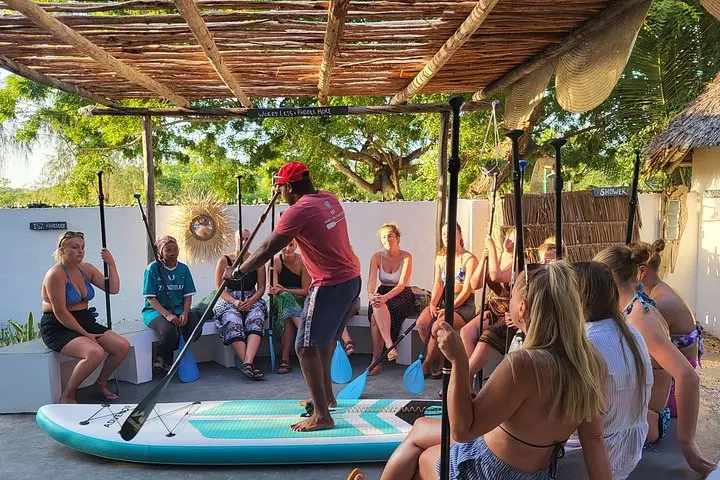
Expect a short lesson and safety brief before launching. Guides lead through narrow tunnels at lower tide and broader estuaries at high tide, pointing out crabs, courtship flights of shorebirds and hidden oyster beds. The route mixes calm flat-water paddling with occasional wind on the open ocean—no prior experience is required, but balance and a willingness to get wet help.
Practical tips: wear quick-dry clothing, reef-safe sunscreen and a hat; bring a dry bag for phones and extra water; and time the tour around high or mid tide for easier traversing of tunnels. Tours conclude with fresh tropical fruit and local snacks, and the operator supports mangrove protection initiatives—your visit is both an adventure and a low-impact contribution to local conservation.
No—guides provide instruction and the tour is suitable for beginners; choose a kayak if you prefer more stability.
Quick-dry clothes, a sun hat, and reef-safe sunscreen; bring a light wind layer for open-ocean sections.
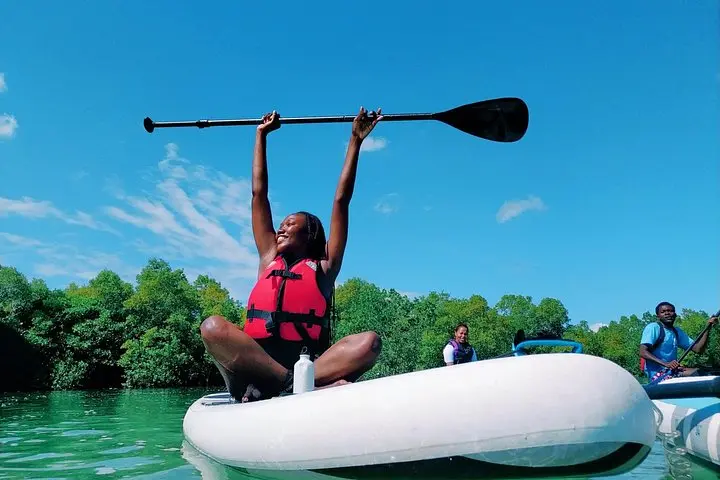
Many families join; operators typically set age limits and provide life jackets—check booking questions for age bands and restrictions.
The experience is about three hours total, with gentle paddling and short periods of standing on SUPs; it’s classified as easy.
2 Winds Paddle Sports operates guided outdoor trips and adventures with an emphasis on safety, stewardship, and memorable experiences.
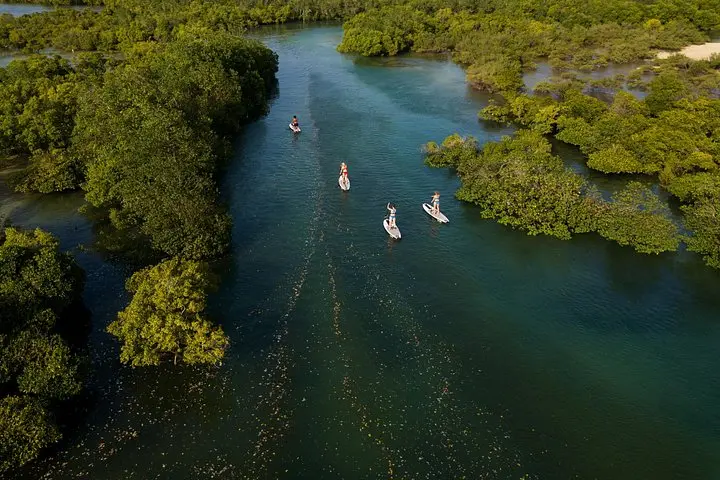
The paddle slips forward and the mangrove tunnel closes overhead: roots curve like a living lattice, tides whisper against trunks and salt-scented air fills your lungs. In Chukwani, on Unguja's sheltered coast, this guided SUP or kayak tour threads tidal creeks, estuary channels and open ocean—an introduction to a coastal world that pushes and yields with the tide.
The paddle slips forward and the mangrove tunnel closes overhead: roots curve like a living lattice, tides whisper against trunks and salt-scented air fills your lungs. In Chukwani, on Unguja's sheltered coast, this guided SUP or kayak tour threads tidal creeks, estuary channels and open ocean—an introduction to a coastal world that pushes and yields with the tide.
Geology here is recent: reclaimed sands, coral limestone and alluvial sediments create shallow bays where mangrove species take hold. The local culture is maritime—fisherfolk and boatbuilders have long read the tides and used these channels for shelter and nets. Guides explain how Rhizophora and Avicennia trees stabilize shores, filter water and host juvenile fish and crustaceans.
Expect a short lesson and safety brief before launching. Guides lead through narrow tunnels at lower tide and broader estuaries at high tide, pointing out crabs, courtship flights of shorebirds and hidden oyster beds. The route mixes calm flat-water paddling with occasional wind on the open ocean—no prior experience is required, but balance and a willingness to get wet help.
Practical tips: wear quick-dry clothing, reef-safe sunscreen and a hat; bring a dry bag for phones and extra water; and time the tour around high or mid tide for easier traversing of tunnels. Tours conclude with fresh tropical fruit and local snacks, and the operator supports mangrove protection initiatives—your visit is both an adventure and a low-impact contribution to local conservation.