THE ADVENTURE COLLECTIVE® · Independent discovery and booking for outdoor travel

Explore Qatar’s west coast on a 4–5 hour private tour to Zekreet: wind‑carved mushroom rocks, Richard Serra’s steel plates, coastal cliffs and Al Shahaniya’s camel racing. Expect short walks, strong sun and cinematic landscapes.
Explore Qatar’s west coast on a 4–5 hour private tour to Zekreet: wind‑carved mushroom rocks, Richard Serra’s steel plates, coastal cliffs and Al Shahaniya’s camel racing. Expect short walks, strong sun and cinematic landscapes.
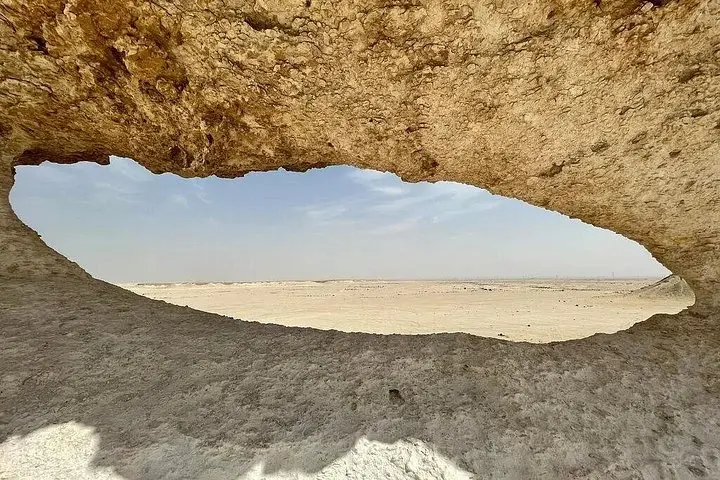
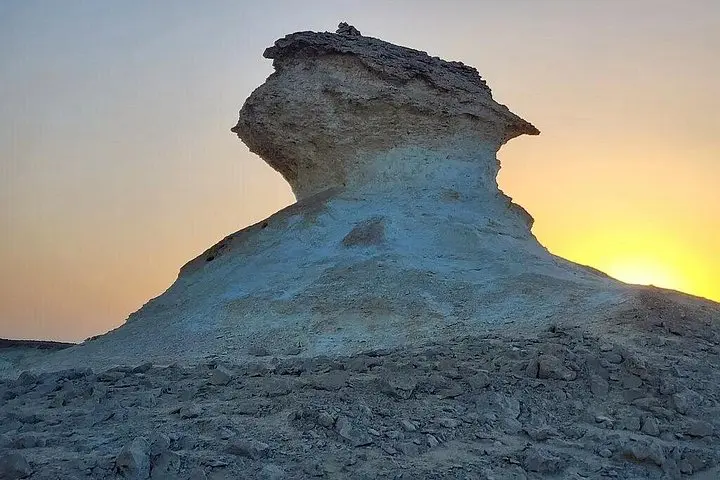
A low sun washes the limestone white as the vehicle drops off the sealed road and the land opens into an austere coastline. Wind sketches the cliffs and scours softer sediment, leaving mushroom-shaped pillars standing like weathered sentinels. The air tastes faintly of salt; the desert keeps moving around the rocks.
Verified experiences and guided adventures in the surrounding area.
Operated by Desert Rose Tourism · Zekreet, Al-Shahaniya
A low sun washes the limestone white as the vehicle drops off the sealed road and the land opens into an austere coastline. Wind sketches the cliffs and scours softer sediment, leaving mushroom-shaped pillars standing like weathered sentinels. The air tastes faintly of salt; the desert keeps moving around the rocks.
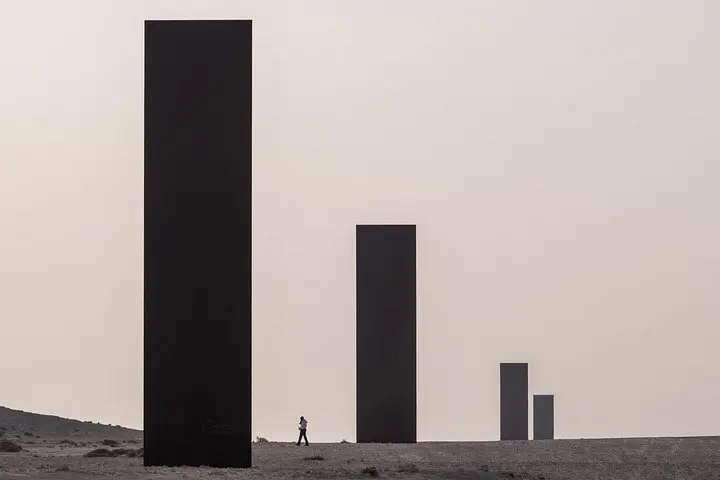
The west coast of Qatar carries a mix of recent cultural spectacle and older trade routes. Zekreet’s chalky spires are geological pages: wind and sea have stripped away softer strata to expose harder limestone. Richard Serra’s East–West/West–East—four steel plates over 14 meters high—arrives like an industrial punctuation mark on the plain, asking questions about scale and isolation.
Nearby, Al Shahaniya’s camel racing track links to a living tradition modernized by remote-controlled jockeys; races run from October to February and reveal a different local pulse.
On a practical level this private 4–5 hour circuit moves easily by air‑conditioned vehicle but requires a readiness for sun, wind and uneven ground. Expect short walks to viewpoints, easy clamber over rock slabs, and broad, exposed beaches. Bring sun protection, at least 2 liters of water, sturdy shoes for gritty limestone, and a camera with sun-shielding lens hood for high-contrast scenes.
Timing matters: visit in the cooler months for comfortable exploration and to catch camel racing season. Respect fenced archaeological sites and local landowners; many coastal reaches are fragile and free of facilities. The reward is direct: raw coastal vistas, sculptural geology, and an encounter with contemporary art set against an elemental desert stage.
The tour runs approximately 4–5 hours, including transport from Doha and stops at the camel track, Zekreet formations, and the Serra installation.
No—walking is short and on mostly flat or gently uneven terrain, but you should be able to walk short distances over rocky ground.
Facilities are limited; expect no permanent restrooms or cafes at remote points—plan accordingly with water and any needed snacks.
Races run primarily from October to February, with major events in March and April; check local schedules and plan winter visits to combine both experiences.
Desert Rose Tourism operates guided outdoor trips and adventures with an emphasis on safety, stewardship, and memorable experiences.
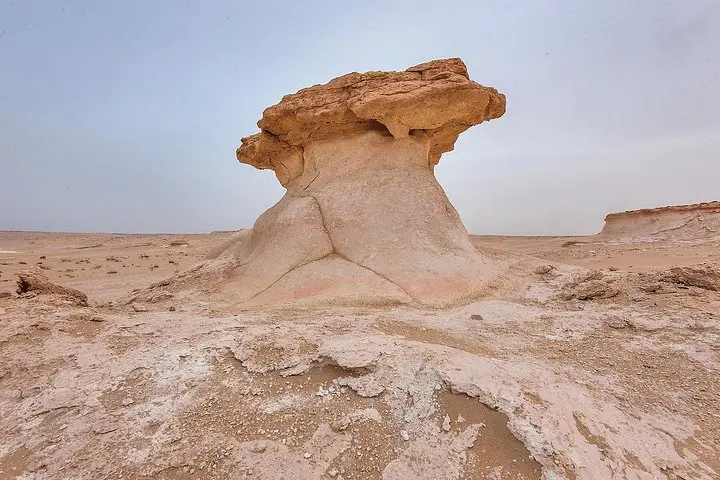
A low sun washes the limestone white as the vehicle drops off the sealed road and the land opens into an austere coastline. Wind sketches the cliffs and scours softer sediment, leaving mushroom-shaped pillars standing like weathered sentinels. The air tastes faintly of salt; the desert keeps moving around the rocks.
A low sun washes the limestone white as the vehicle drops off the sealed road and the land opens into an austere coastline. Wind sketches the cliffs and scours softer sediment, leaving mushroom-shaped pillars standing like weathered sentinels. The air tastes faintly of salt; the desert keeps moving around the rocks.
The west coast of Qatar carries a mix of recent cultural spectacle and older trade routes. Zekreet’s chalky spires are geological pages: wind and sea have stripped away softer strata to expose harder limestone. Richard Serra’s East–West/West–East—four steel plates over 14 meters high—arrives like an industrial punctuation mark on the plain, asking questions about scale and isolation.
Nearby, Al Shahaniya’s camel racing track links to a living tradition modernized by remote-controlled jockeys; races run from October to February and reveal a different local pulse.
On a practical level this private 4–5 hour circuit moves easily by air‑conditioned vehicle but requires a readiness for sun, wind and uneven ground. Expect short walks to viewpoints, easy clamber over rock slabs, and broad, exposed beaches. Bring sun protection, at least 2 liters of water, sturdy shoes for gritty limestone, and a camera with sun-shielding lens hood for high-contrast scenes.
Timing matters: visit in the cooler months for comfortable exploration and to catch camel racing season. Respect fenced archaeological sites and local landowners; many coastal reaches are fragile and free of facilities. The reward is direct: raw coastal vistas, sculptural geology, and an encounter with contemporary art set against an elemental desert stage.