THE ADVENTURE COLLECTIVE® · Independent discovery and booking for outdoor travel

Walk the vertiginous Zhangjiajie Grand Canyon glass bridge and peer down into a carved sandstone gorge. This practical guide covers what to expect, when to go, and how to prepare for a safe, memorable visit.
Walk the vertiginous Zhangjiajie Grand Canyon glass bridge and peer down into a carved sandstone gorge. This practical guide covers what to expect, when to go, and how to prepare for a safe, memorable visit.
Standing at the lip of Zhangjiajie Grand Canyon, the glass bridge unfurls like a translucent plank across a raw chasm; beneath, the canyon cuts down into a ribbon of jade water and sheer sandstone walls.
Air moves through the gorge, carrying pine resin and the distant murmur of hikers.
Verified experiences and guided adventures in the surrounding area.
Operated by Travel China Guide · Zhangjiajie, Hunan
Standing at the lip of Zhangjiajie Grand Canyon, the glass bridge unfurls like a translucent plank across a raw chasm; beneath, the canyon cuts down into a ribbon of jade water and sheer sandstone walls.
Air moves through the gorge, carrying pine resin and the distant murmur of hikers.
The Grand Canyon is part of the greater Wulingyuan geological zone, where quartz‑sandstone plateaus fractured and eroded into dramatic cliffs and narrow gorges over millions of years. Modern interventions like the glass bridge and trails offer engineered access while nearby villages preserve Tujia and Miao cultural threads in crafts and food.
Visitors follow well‑built paths, viewing platforms, and staircases; options include a short loop or several‑hour explorations that descend toward the water. Entry is managed with opening hours and last admission set in late afternoon. Spring and autumn offer comfortable temperatures; summer brings heat and crowds, winter can be icy on side trails.
Practical tips: book bridge tickets in advance, wear sturdy footwear, pack water, and bring a light layer for canyon winds. Allow two to four hours for a relaxed visit, and step back from edges to protect vegetation and safety.
For thrill‑seekers, the bridge area offers optional bungee experiences, and boating on calmer channels provides a vantage. Facilities include ticket booths, food stalls, and limited public transport connections. Children under specified heights may enter free depending on conditions, but passport or ID checks apply for concessions. Respect site rules, keep noise low, and choose off‑peak times to enhance views.
Yes—entry is managed with opening hours and last admission; prebooking the glass bridge option is recommended to guarantee access and reduce waiting.
The bridge is engineered to strict safety standards, but the transparent floor can trigger vertigo; children under certain heights may be free but check local rules and consider lower lookouts for sensitive visitors.
Typical entry hours run from morning until late afternoon with last admission earlier; early morning or late afternoon on weekdays reduces crowds and improves light for photos.
Yes—ticket booths and food stalls are available, but services can be limited on quieter trails so bring water and snacks for longer visits.
Travel China Guide operates guided outdoor trips and adventures with an emphasis on safety, stewardship, and memorable experiences.
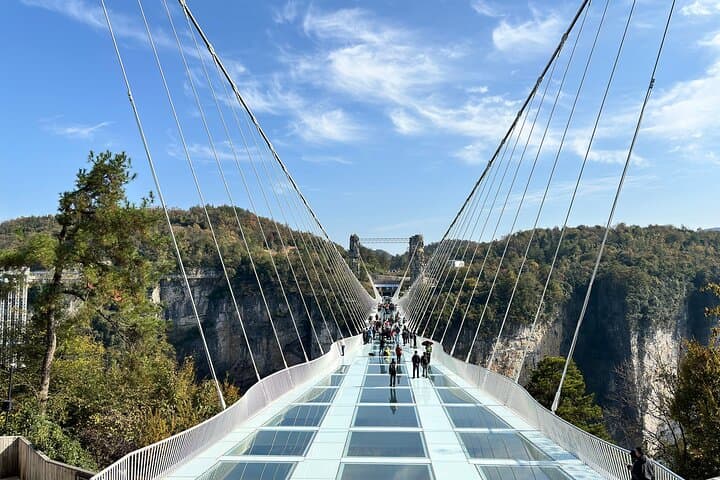


Standing at the lip of Zhangjiajie Grand Canyon, the glass bridge unfurls like a translucent plank across a raw chasm; beneath, the canyon cuts down into a ribbon of jade water and sheer sandstone walls.
Air moves through the gorge, carrying pine resin and the distant murmur of hikers.
Standing at the lip of Zhangjiajie Grand Canyon, the glass bridge unfurls like a translucent plank across a raw chasm; beneath, the canyon cuts down into a ribbon of jade water and sheer sandstone walls.
Air moves through the gorge, carrying pine resin and the distant murmur of hikers.
The Grand Canyon is part of the greater Wulingyuan geological zone, where quartz‑sandstone plateaus fractured and eroded into dramatic cliffs and narrow gorges over millions of years. Modern interventions like the glass bridge and trails offer engineered access while nearby villages preserve Tujia and Miao cultural threads in crafts and food.
Visitors follow well‑built paths, viewing platforms, and staircases; options include a short loop or several‑hour explorations that descend toward the water. Entry is managed with opening hours and last admission set in late afternoon. Spring and autumn offer comfortable temperatures; summer brings heat and crowds, winter can be icy on side trails.
Practical tips: book bridge tickets in advance, wear sturdy footwear, pack water, and bring a light layer for canyon winds. Allow two to four hours for a relaxed visit, and step back from edges to protect vegetation and safety.
For thrill‑seekers, the bridge area offers optional bungee experiences, and boating on calmer channels provides a vantage. Facilities include ticket booths, food stalls, and limited public transport connections. Children under specified heights may enter free depending on conditions, but passport or ID checks apply for concessions. Respect site rules, keep noise low, and choose off‑peak times to enhance views.