THE ADVENTURE COLLECTIVE® · Independent discovery and booking for outdoor travel

Climb into a canopy of live oaks and pine and move from platform to platform on two aerial courses at Tuscawilla Park. This 2.5-hour zipline adventure in Daytona Beach combines approachable obstacles with three long zips that give serious airtime.
Climb into a canopy of live oaks and pine and move from platform to platform on two aerial courses at Tuscawilla Park. This 2.5-hour zipline adventure in Daytona Beach combines approachable obstacles with three long zips that give serious airtime.
The first thing you notice walking into Tuscawilla Park is how ordinary the lawn looks from the road — a neighborhood green, kids’ soccer lines, old oaks shading a picnic shelter. Then you look up and the trees are busy: ropes, platforms, and zip lines staked high among branches that have spent a century catching sea breezes. The Zipline Adventure at Tuscawilla Park drops you into that canopy, a stage set of suspended bridges, swinging logs and long, clean zips that push your pulse without leaving the city.
Verified experiences and guided adventures in the surrounding area.
Operated by Daytona Beach Zipline Adventure · Daytona Beach, Florida
The first thing you notice walking into Tuscawilla Park is how ordinary the lawn looks from the road — a neighborhood green, kids’ soccer lines, old oaks shading a picnic shelter. Then you look up and the trees are busy: ropes, platforms, and zip lines staked high among branches that have spent a century catching sea breezes. The Zipline Adventure at Tuscawilla Park drops you into that canopy, a stage set of suspended bridges, swinging logs and long, clean zips that push your pulse without leaving the city.
What feels new is also part of a longer regional story. Daytona Beach’s coastal forests are a fragment of Florida’s upland hardwoods — centuries-old live oaks and pines that survived development in scattered municipal parks. The aerial course at Tuscawilla borrows from the tradition of southern outdoor recreation, where community parks double as training grounds for adventurous play. The zip lines themselves are engineered steel and cable, but the geology of this place — low, sandy soils over limestone — means trees grow in clumps, perfect anchors for a treetop route.
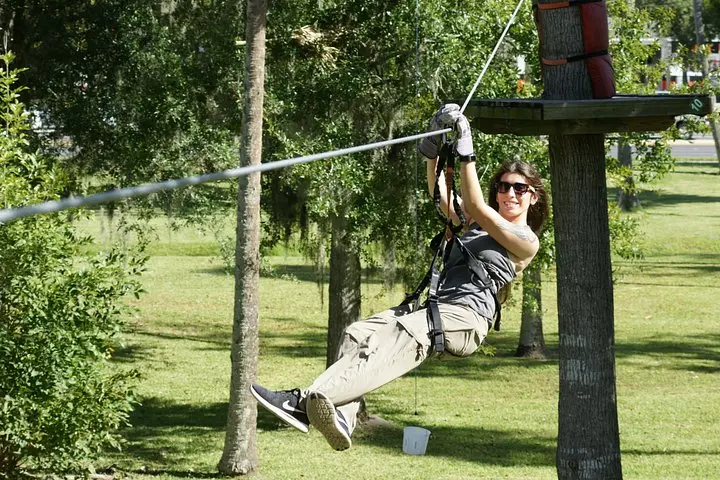
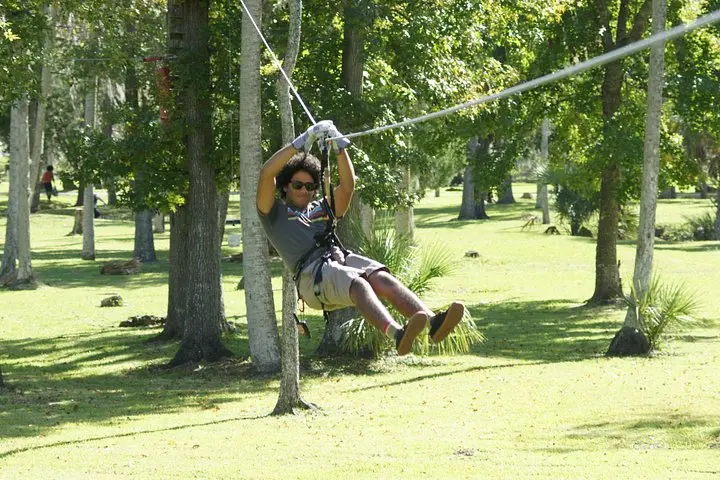
Course design balances thrill and accessibility. Course 1 runs 15–30 feet above the ground: 10 obstacles and four zips, with a longest run around 300 feet. Course 2 graduates you to 20–45 feet altitude with 30 obstacles and six zips, including three long lines roughly 500 feet each. Staff put you through a quick demo, check your harness, and monitor from the ground, so the technical load falls to you: steady hands, attention to belay cues, and comfortable footing.
Practicalities matter here. The full experience is about 2.5 hours — plan for warm-up, a short break between courses, and a chance to retell the best falls-of-laughter at the harness house. Minimum height is 54 inches; sneakers are required. Harness and gloves are provided, and bottled water and snacks are available for purchase if you need a refresher between zips.
If you’re coming from out of town, Daytona Beach puts beach time and fresh seafood an easy drive from the park. Morning sessions are cooler and less crowded; evenings can be breezy and dramatic, though Florida storms arrive fast in summer. For families, the controlled lines and ground-based staff make this an approachable introduction to aerial adventure; for experienced riders, the 500-foot zips deliver enough airtime to feel earned.
Leave no trace-minded: stay on marked paths, use provided gloves, and let the staff handle any clipping or unclipping to protect both you and the trees. In short: arrive hydrated, tie your laces, and get ready to move from platform to platform as the park itself watches, quiet and surprisingly large, beneath you.
Plan for roughly 2.5 hours total, including check-in, safety demo, and both courses with a short break between them.
Participants must be at least 54 inches tall; minors need a parent or legal guardian to sign a release.
No prior zipline experience is required; staff provide a safety demo and monitor participants from the ground.
Yes, the operator supplies harnesses and gloves as part of the activity.
Yes, but handheld cameras are discouraged while moving on obstacles; use a secure mount or keep devices stowed unless staff allow otherwise.
For a full refund, cancel at least 24 hours before your scheduled start time; same-day cancellations are non-refundable.
Daytona Beach Zipline Adventure operates guided outdoor trips and adventures with an emphasis on safety, stewardship, and memorable experiences.
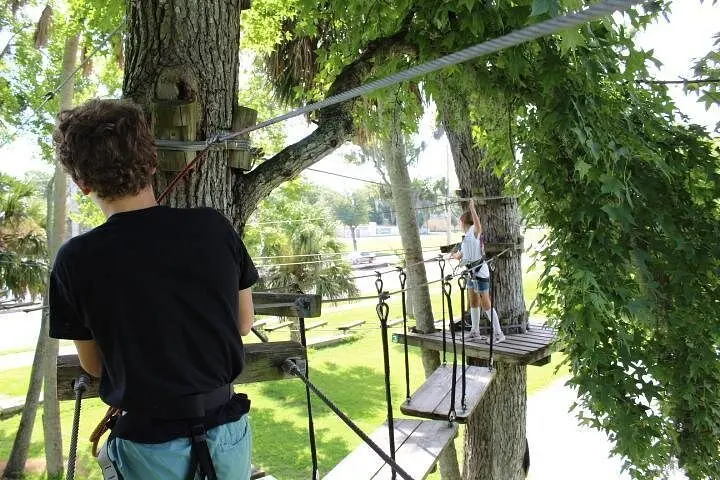
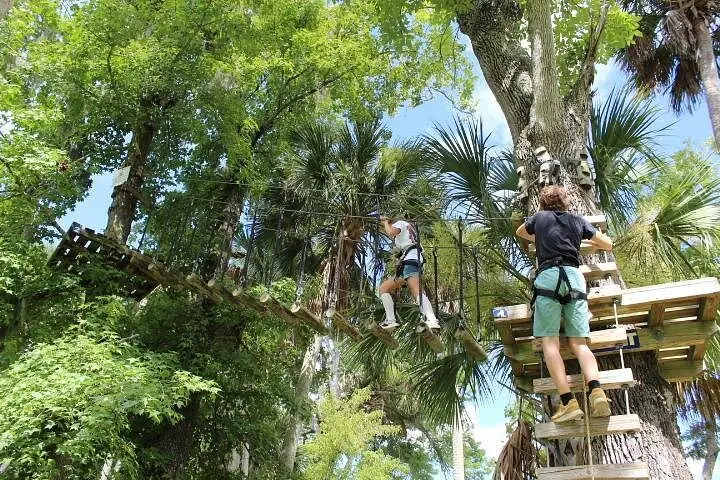
The first thing you notice walking into Tuscawilla Park is how ordinary the lawn looks from the road — a neighborhood green, kids’ soccer lines, old oaks shading a picnic shelter. Then you look up and the trees are busy: ropes, platforms, and zip lines staked high among branches that have spent a century catching sea breezes. The Zipline Adventure at Tuscawilla Park drops you into that canopy, a stage set of suspended bridges, swinging logs and long, clean zips that push your pulse without leaving the city.
The first thing you notice walking into Tuscawilla Park is how ordinary the lawn looks from the road — a neighborhood green, kids’ soccer lines, old oaks shading a picnic shelter. Then you look up and the trees are busy: ropes, platforms, and zip lines staked high among branches that have spent a century catching sea breezes. The Zipline Adventure at Tuscawilla Park drops you into that canopy, a stage set of suspended bridges, swinging logs and long, clean zips that push your pulse without leaving the city.
What feels new is also part of a longer regional story. Daytona Beach’s coastal forests are a fragment of Florida’s upland hardwoods — centuries-old live oaks and pines that survived development in scattered municipal parks. The aerial course at Tuscawilla borrows from the tradition of southern outdoor recreation, where community parks double as training grounds for adventurous play. The zip lines themselves are engineered steel and cable, but the geology of this place — low, sandy soils over limestone — means trees grow in clumps, perfect anchors for a treetop route.
Course design balances thrill and accessibility. Course 1 runs 15–30 feet above the ground: 10 obstacles and four zips, with a longest run around 300 feet. Course 2 graduates you to 20–45 feet altitude with 30 obstacles and six zips, including three long lines roughly 500 feet each. Staff put you through a quick demo, check your harness, and monitor from the ground, so the technical load falls to you: steady hands, attention to belay cues, and comfortable footing.
Practicalities matter here. The full experience is about 2.5 hours — plan for warm-up, a short break between courses, and a chance to retell the best falls-of-laughter at the harness house. Minimum height is 54 inches; sneakers are required. Harness and gloves are provided, and bottled water and snacks are available for purchase if you need a refresher between zips.
If you’re coming from out of town, Daytona Beach puts beach time and fresh seafood an easy drive from the park. Morning sessions are cooler and less crowded; evenings can be breezy and dramatic, though Florida storms arrive fast in summer. For families, the controlled lines and ground-based staff make this an approachable introduction to aerial adventure; for experienced riders, the 500-foot zips deliver enough airtime to feel earned.
Leave no trace-minded: stay on marked paths, use provided gloves, and let the staff handle any clipping or unclipping to protect both you and the trees. In short: arrive hydrated, tie your laces, and get ready to move from platform to platform as the park itself watches, quiet and surprisingly large, beneath you.