THE ADVENTURE COLLECTIVE® · Independent discovery and booking for outdoor travel

Drive west from Doha to Al Zubarah’s UNESCO-listed fort and the ruined pearling town that once lined Qatar’s northern shore. This four-hour private tour combines coastal scenery, archaeology and concise historical context with easy walking and private transport.
Drive west from Doha to Al Zubarah’s UNESCO-listed fort and the ruined pearling town that once lined Qatar’s northern shore. This four-hour private tour combines coastal scenery, archaeology and concise historical context with easy walking and private transport.
A low wind from the Persian Gulf cuts across flat salt pans as the vehicle eases onto the north Qatari coast. Within an hour the skyline shifts from Doha’s glass to low stone walls and scrub; the coast here reads like an archaeological page—broken foundations, a squat fort, and the hard curve of shoreline that once fed a thriving pearling town.
Verified experiences and guided adventures in the surrounding area.
Operated by Oman Day Tours · Al Zubarah, Al Shamal
A low wind from the Persian Gulf cuts across flat salt pans as the vehicle eases onto the north Qatari coast. Within an hour the skyline shifts from Doha’s glass to low stone walls and scrub; the coast here reads like an archaeological page—broken foundations, a squat fort, and the hard curve of shoreline that once fed a thriving pearling town.
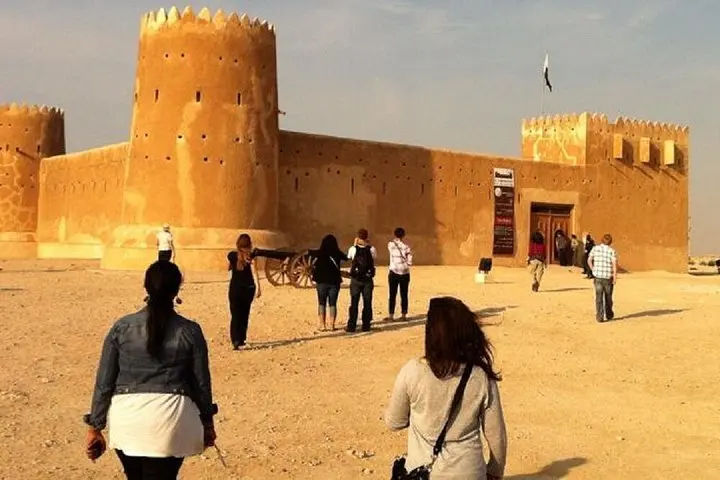
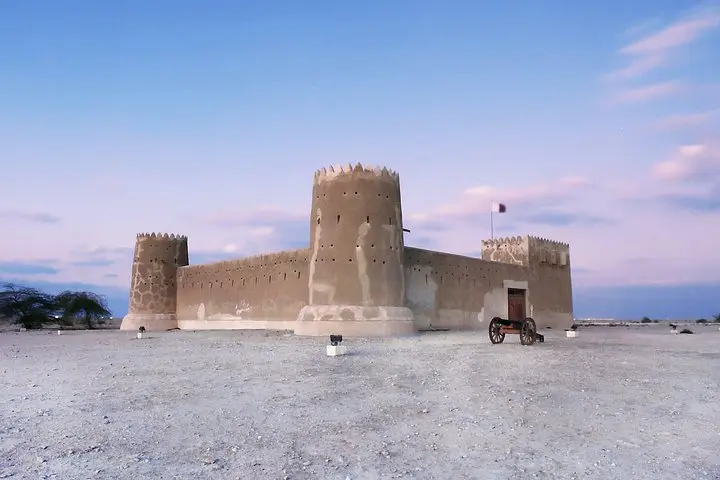
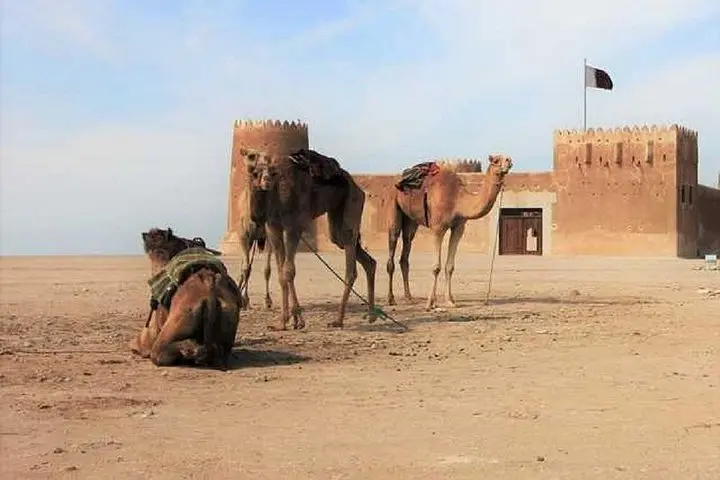
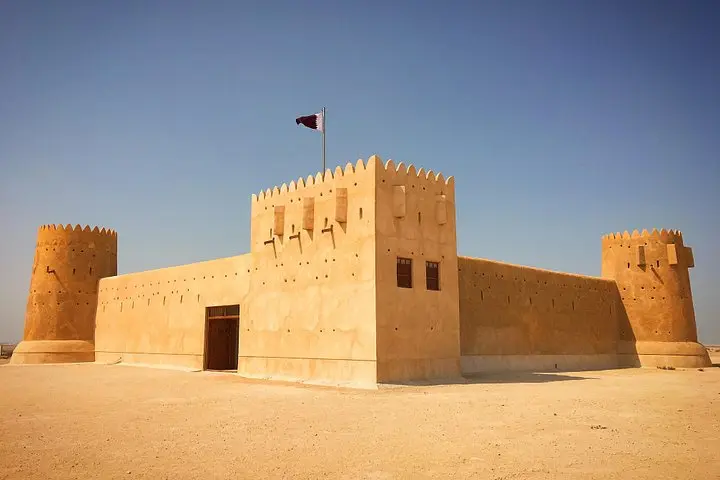
Al Zubarah, a compact fort and an adjacent archaeological landscape, was inscribed as a UNESCO World Heritage Site in 2013 for its role in the 18th–19th century Gulf trading and pearling economy. The fort itself is a short, readable structure of coral rock and lime plaster, built after a raid that reshaped local settlement patterns. Geologically the area is coastal limestone and wind-blown dunes; culturally it sits at a crossroads of Bedouin, pearling and fishing traditions with visible remains of mosques and houses near Ruwais.
Practical guidance: the tour runs about four hours round-trip from Doha (roughly 100 km west), with private transport and admission included. Terrain is flat with short walks on compacted sand and stone—no elevation gain, but exposed sun and reflective surfaces make heat the chief challenge. Wear closed-toe shoes for uneven ground, bring at least 1–2 liters of water, sun protection, and a light layer for coastal breezes. Mornings and late afternoons provide the best light for photography and cooler walking. While the site is wheelchair accessible at major points, some archaeological areas remain uneven; follow marked paths and respect fragile ruins to help preserve this rare slice of Gulf history.
The site sits roughly 100 km northwest of central Doha; the private transfer on this tour makes the round trip and park visit in about four hours total.
Yes—this private tour includes admission to Al Zubarah Fort and the archaeological site as stated in the inclusions.
Major viewpoints and the fort entrance are wheelchair accessible, but many archaeological areas are uneven sand and rubble—assistive access may be limited off the main paths.
This tour focuses on archaeology and coastal scenery; there are no organized swimming facilities at the site and currents or coastal conditions can be hazardous—avoid unsupervised swimming.
Oman Day Tours operates guided outdoor trips and adventures with an emphasis on safety, stewardship, and memorable experiences.
A low wind from the Persian Gulf cuts across flat salt pans as the vehicle eases onto the north Qatari coast. Within an hour the skyline shifts from Doha’s glass to low stone walls and scrub; the coast here reads like an archaeological page—broken foundations, a squat fort, and the hard curve of shoreline that once fed a thriving pearling town.
A low wind from the Persian Gulf cuts across flat salt pans as the vehicle eases onto the north Qatari coast. Within an hour the skyline shifts from Doha’s glass to low stone walls and scrub; the coast here reads like an archaeological page—broken foundations, a squat fort, and the hard curve of shoreline that once fed a thriving pearling town.
Al Zubarah, a compact fort and an adjacent archaeological landscape, was inscribed as a UNESCO World Heritage Site in 2013 for its role in the 18th–19th century Gulf trading and pearling economy. The fort itself is a short, readable structure of coral rock and lime plaster, built after a raid that reshaped local settlement patterns. Geologically the area is coastal limestone and wind-blown dunes; culturally it sits at a crossroads of Bedouin, pearling and fishing traditions with visible remains of mosques and houses near Ruwais.
Practical guidance: the tour runs about four hours round-trip from Doha (roughly 100 km west), with private transport and admission included. Terrain is flat with short walks on compacted sand and stone—no elevation gain, but exposed sun and reflective surfaces make heat the chief challenge. Wear closed-toe shoes for uneven ground, bring at least 1–2 liters of water, sun protection, and a light layer for coastal breezes. Mornings and late afternoons provide the best light for photography and cooler walking. While the site is wheelchair accessible at major points, some archaeological areas remain uneven; follow marked paths and respect fragile ruins to help preserve this rare slice of Gulf history.