THE ADVENTURE COLLECTIVE® · Independent discovery and booking for outdoor travel

Move from Zurich’s ordered streets to the raw ridge-lines of Interlaken and the high summits above Chamonix in 48 hours. This guided two-day route packs Jungfrau, Schilthorn or Harder Kulm and Aiguille du Midi into a compact alpine sampler, finishing with Geneva’s lakeside and Old Town.
Move from Zurich’s ordered streets to the raw ridge-lines of Interlaken and the high summits above Chamonix in 48 hours. This guided two-day route packs Jungfrau, Schilthorn or Harder Kulm and Aiguille du Midi into a compact alpine sampler, finishing with Geneva’s lakeside and Old Town.
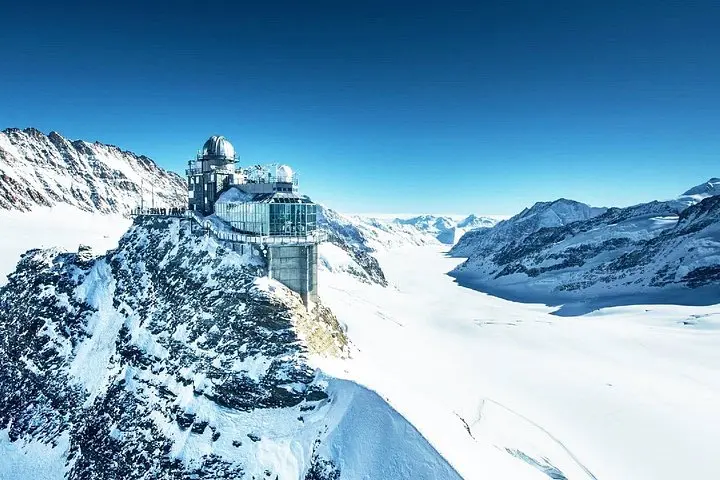
The van eases out of Zurich before dawn, the city’s glass and stone slipping behind you as the road climbs toward the first alpine throat. By mid-morning the Green of the Swiss plateau gives way to knife-edged ridges and villages that seem to grow out of steep meadows. You arrive in Interlaken—two lakes pinching either side of the town—and the choices feel elemental: a rack railway that grinds toward Europe’s highest station at Jungfraujoch, a cable car that flings you to Schilthorn’s cinematic cliffs, or a short climb to the Harder Kulm viewpoint that opens the Bernese Oberland like a map.
Verified experiences and guided adventures in the surrounding area.
Operated by Keytours (Switzerland) · Zurich, Canton of Zurich
The van eases out of Zurich before dawn, the city’s glass and stone slipping behind you as the road climbs toward the first alpine throat. By mid-morning the Green of the Swiss plateau gives way to knife-edged ridges and villages that seem to grow out of steep meadows. You arrive in Interlaken—two lakes pinching either side of the town—and the choices feel elemental: a rack railway that grinds toward Europe’s highest station at Jungfraujoch, a cable car that flings you to Schilthorn’s cinematic cliffs, or a short climb to the Harder Kulm viewpoint that opens the Bernese Oberland like a map.
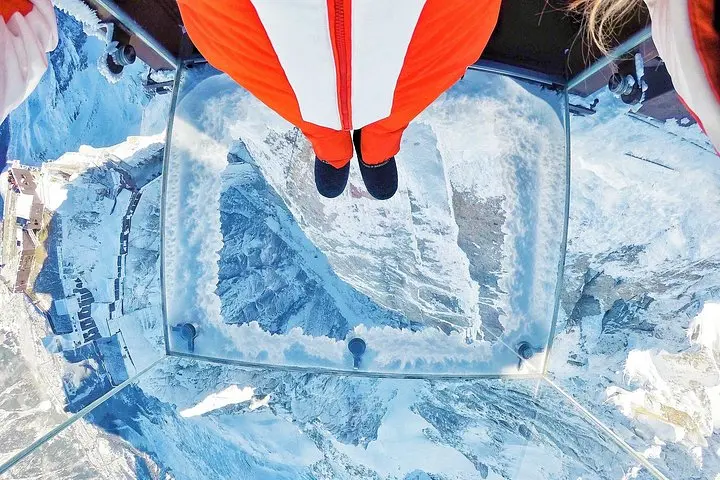
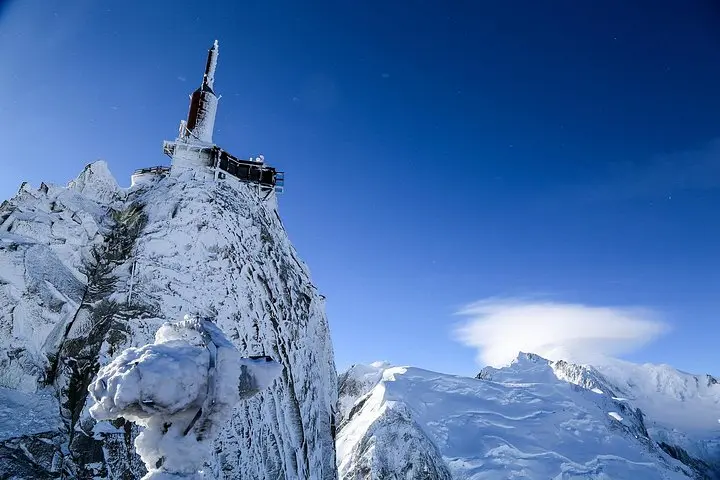
This two-day loop is less about ticking boxes and more about the raw contrasts of the Alps and a brief dive into cross-border mountain culture. Geologically, you’re moving through rock that remembers continental collisions: bands of crystalline granite and folded sedimentary layers thrust up by the same tectonics that birthed Mont Blanc. Jungfrau’s ice fields are living archives—glaciers that carved valleys and still dare hikers to trace their blue crevasses. On day two, the itinerary shifts to Chamonix, where the Aiguille du Midi cable car drags you toward a skyline of serrated summits and the option to peer through the glass box of ‘Step into the Void’ at 3,842 meters.
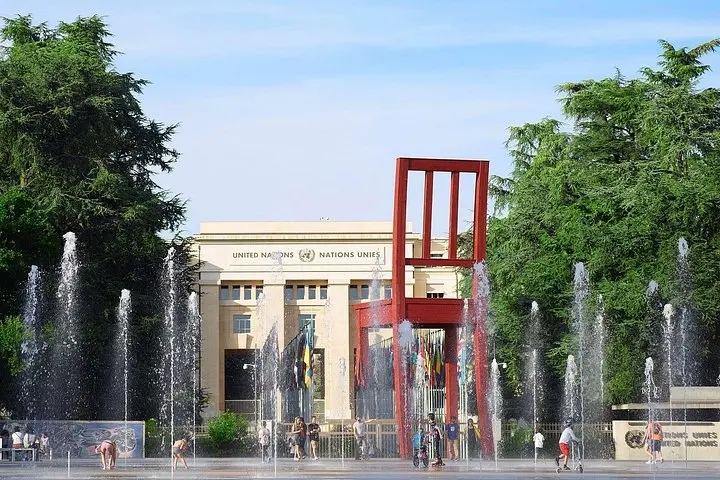
Culturally, the route crosses linguistic and historical borders. Zurich’s German-speaking Swiss urbanity gives way to the French-influenced valleys of the west; cities like Geneva have been shaped by diplomacy and trade, visible in the UN buildings and the lakeside promenades. Local touches—artisan chocolate shops in Interlaken, old-world bakeries in Chamonix, the lakeside cafés of Geneva—remind you that these dramatic landscapes are lived-in places, not just backdrops.
Practicalities matter on a compact itinerary. The tour starts at Zurich’s central bus station with hotel pickup available by arrangement; plan to travel light and bring a small daypack for mountain cable car visits. Weather changes quickly at altitude—layers and a windproof shell are essential. If you plan to ride to Jungfraujoch or the Aiguille du Midi, reserve those mountain tickets early to avoid queues; snow and wind can close high stations, so be flexible. Cross-border travel between Switzerland and France usually requires only valid ID, but check visa rules for your nationality. Finally, pace your sightseeing: spend mornings in the high places for clearer skies and afternoons exploring Geneva’s Old Town and the Jet d’Eau.
In 48 hours you’ll witness glaciers daring you forward, alpine villages that refuse to be rushed, and a city shaped by water and diplomacy. It’s compact, scenic, and logistical—an Alpine sampler that rewards early risers and adaptable travelers.
Yes—this tour crosses into France (Chamonix) from Switzerland; carry a valid passport or national ID depending on your citizenship.
Options like Jungfraujoch and Aiguille du Midi are offered but may require separate admission or reservations; confirm inclusions when booking.
Yes—infant seats and stroller accessibility are mentioned, but mountain stations can be cold and windy; plan accordingly.
Mostly short walks around viewpoints and in village centers; mountain platforms require stairs and uneven surfaces, so moderate mobility helps.
Yes—inform the operator in advance and request an airport drop-off; there may be a different meeting or end point.
Operators will adapt the itinerary where possible; mountain closures are common—have flexible expectations and travel insurance.
Keytours (Switzerland) operates guided outdoor trips and adventures with an emphasis on safety, stewardship, and memorable experiences.
The van eases out of Zurich before dawn, the city’s glass and stone slipping behind you as the road climbs toward the first alpine throat. By mid-morning the Green of the Swiss plateau gives way to knife-edged ridges and villages that seem to grow out of steep meadows. You arrive in Interlaken—two lakes pinching either side of the town—and the choices feel elemental: a rack railway that grinds toward Europe’s highest station at Jungfraujoch, a cable car that flings you to Schilthorn’s cinematic cliffs, or a short climb to the Harder Kulm viewpoint that opens the Bernese Oberland like a map.
The van eases out of Zurich before dawn, the city’s glass and stone slipping behind you as the road climbs toward the first alpine throat. By mid-morning the Green of the Swiss plateau gives way to knife-edged ridges and villages that seem to grow out of steep meadows. You arrive in Interlaken—two lakes pinching either side of the town—and the choices feel elemental: a rack railway that grinds toward Europe’s highest station at Jungfraujoch, a cable car that flings you to Schilthorn’s cinematic cliffs, or a short climb to the Harder Kulm viewpoint that opens the Bernese Oberland like a map.
This two-day loop is less about ticking boxes and more about the raw contrasts of the Alps and a brief dive into cross-border mountain culture. Geologically, you’re moving through rock that remembers continental collisions: bands of crystalline granite and folded sedimentary layers thrust up by the same tectonics that birthed Mont Blanc. Jungfrau’s ice fields are living archives—glaciers that carved valleys and still dare hikers to trace their blue crevasses. On day two, the itinerary shifts to Chamonix, where the Aiguille du Midi cable car drags you toward a skyline of serrated summits and the option to peer through the glass box of ‘Step into the Void’ at 3,842 meters.
Culturally, the route crosses linguistic and historical borders. Zurich’s German-speaking Swiss urbanity gives way to the French-influenced valleys of the west; cities like Geneva have been shaped by diplomacy and trade, visible in the UN buildings and the lakeside promenades. Local touches—artisan chocolate shops in Interlaken, old-world bakeries in Chamonix, the lakeside cafés of Geneva—remind you that these dramatic landscapes are lived-in places, not just backdrops.
Practicalities matter on a compact itinerary. The tour starts at Zurich’s central bus station with hotel pickup available by arrangement; plan to travel light and bring a small daypack for mountain cable car visits. Weather changes quickly at altitude—layers and a windproof shell are essential. If you plan to ride to Jungfraujoch or the Aiguille du Midi, reserve those mountain tickets early to avoid queues; snow and wind can close high stations, so be flexible. Cross-border travel between Switzerland and France usually requires only valid ID, but check visa rules for your nationality. Finally, pace your sightseeing: spend mornings in the high places for clearer skies and afternoons exploring Geneva’s Old Town and the Jet d’Eau.
In 48 hours you’ll witness glaciers daring you forward, alpine villages that refuse to be rushed, and a city shaped by water and diplomacy. It’s compact, scenic, and logistical—an Alpine sampler that rewards early risers and adaptable travelers.