
What the day feels like
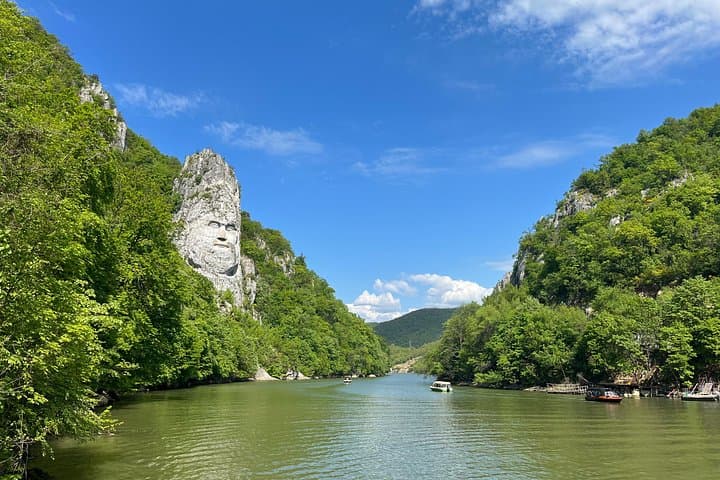
Stepping off the minivan just before the river bends, the Danube feels like an old, deliberate thing: slow, wide, and unbothered by a century of borders and barges. You board a small boat and the engine's staccato dissolves into the hush of limestone cliffs. Water pinches through rock here, and the gorge narrows until the current seems to have carved a doorway through the Carpathians. On the far bank, a colossal face stares back — the carved likeness of Decebalus, its flat, weathered planes catching the afternoon light — and for a moment the scale of human ambition seems to match the scale of the river.
This full-day outing from Timisoara stitches together the region's best short narratives: a riverside lunch, a private boat cruise through the most dramatic stretch of the Danube in Romania, and a pair of mountain-fed waterfalls tucked into the Banat hinterland on the return. It's an approachable but richly textured day for travelers who want river scenery, a touch of history, and a short hike that culminates with cold spray and moss-slick rocks.
Geology and history are visible at once. The Danube Gorge here — commonly called the Iron Gates — is where the river forced its way through ancient, folded limestone as the Carpathian flank rose. That pressure produced narrow channels, steep bluffs, and turbulent eddies that have dictated human movement for millennia. Romans, Ottomans, merchants, and modern engineers have all left marks: fortresses long gone, river towns, and the enormous 20th-century hydropower projects upriver. The Decebalus rock sculpture, an audacious modern monument carved into a cliff face opposite the Serbian bank, is a contemporary marker of identity and storytelling; at roughly 55 meters tall it is the largest rock relief in Europe, a reminder that culture can be as monumental as geology.
Culturally the Banat region folds in Hungarian, Serbian, Romanian, and German influences, which show up in food, architecture, and local folklore. On the shore you’ll eat freshwater fish grilled or in a rustic braise, and your guide will point out old Danube trade routes and the tiny riverside settlements that once survived by fishing, ferrying, and timber.
What the day actually feels like is simple: morning pickup in Timisoara, an hour-and-a-half drive to the Danube and its boat docks, a quiet cruise that threads between cliffs and across wider pools, a pause at the cliffs for photos and close-up views of Decebalus, lunch at a riverside restaurant where sandwiches and carp are fresh and straightforward, then a short drive inland to hike to two of Banat's most photogenic waterfalls. The hikes are not technical — you’ll traverse forest tracks, a handful of steps cut into stone, and narrow footbridges — but the terrain is uneven and can be slick after rain.
Practical edge: this is a long day. Expect ten to twelve hours away from Timisoara. The tour includes door-to-door pickup, a professional guide, the boat cruise, and lunch, which streamlines logistics and leaves you free to watch the river change its moods. Weather and river levels can alter the experience; spring melt and heavy rains swell the falls and the Danube's speed, while late summer offers warm light and gentler water.
Who should book it? Families who want a scenic, non-technical day in nature; photographers chasing big cliffs and waterfalls; history-minded travelers eager for a compact cultural primer; and anyone based in Timisoara looking to escape the city for a full day without having to organize car logistics.
Timing and tips: bring layers for the boat — the river breathes cool even in warm months — and waterproof shoes for the waterfall approaches. Charge your camera, but also take time to simply watch; some of the best moments are quiet: herons landing on a shoal, the sudden flash of silver as a fish jumps near the boat, the way sunlight slants between narrow walls.
You don’t need technical skills or big packs. You do need stamina for a day that moves from vehicle to boat to short hikes and back. If you want a quieter experience, choose shoulder season days and avoid national holidays; summer afternoons bring more local boat traffic and louder restaurants.
The day closes with a return drive to Timisoara and the particular satisfaction of walking back into the city having witnessed the Danube in one of its most theatrical stretches: a place where water dared to cut through stone, where people responded in kind with monuments, meals, and small settlements clinging to the river edge. For travelers who prioritize a single, well-paced day trip from Timisoara that balances scenery, history, and light adventure, this is a package that delivers clear returns for modest effort.
Trail wisdom
Small choices, better day.
Layer for the boat
Bring a lightweight windbreaker; the gorge can be significantly cooler and breezier on the water even in summer.
Grip the rocks
Wear shoes with good traction for wet, mossy trails near the waterfalls.
Protect your gear
Use a dry bag or waterproof camera cover during the cruise; river spray and sudden rain are possible.
Start early
Pickup in Timisoara is typically early; an early start avoids afternoon river traffic and gives better light for photos.
Local knowledge
Read the place, not just the route.
Watch for native species including Gray heron, European otter (occasional sightings).
Keep an eye out for wildlife during the transition between areas and habitats. Respect distance guidelines.
The area is sensitive: stay on marked trails, avoid disturbing nesting birds on cliffs, and pack out all trash to protect riparian habitats.
Follow the guide's instructions on size limits, ethical handling, and leave-no-trace practices.
Small riverside villages near Orsova with traditional fish smokehouses. A quiet lookout upstream favored by local anglers for sunrise views
Locally recommended viewpoints and quiet spots known best to local operators.
The Danube Gorge, historically called the Iron Gates, has been a strategic and cultural corridor for millennia and marks a major geological passage through the Carpathians.
Maritime roots and regional tradition shape the waterways and working coasts.
Seasonal guide
Four versions of the same landscape.
Spring
Best forwaterfall flow · wildflower displays · fewer crowds
Challengesmuddy trails · variable river levels
Spring brings swollen falls and green forests but expect muddy approaches and a brisk river breeze.
Summer
Best forwarm weather · longer daylight · calmer river stretches
Challengesmore tourists · hot midday sun
Summer offers warm light and comfortable cruising, though peak months bring more boats and full restaurants.
Fall
Best forautumn colors · crisp air · balanced crowds
Challengesshorter days · cooler mornings
Early fall combines golden forests with quieter shores and still-strong waterfall flows — ideal for photographers.
Winter
Best fordramatic light · solitude · icy river vistas
Challengescold conditions · possible cancellations due to weather
Winter is quiet and atmospheric but bring thermal layers and expect shorter on-water windows and potential route adjustments.
Operator details
What the booking data adds.
Included
- ✓Bottled water
- ✓Professional guide
- ✓Pick up and drop off at your accommodation in Timisoara
Not included
- —Lunch
- —Danube Gorge Boat Ride
Good to know
- ✓Infants and small children can ride in a pram or stroller
- ✓Public transportation options are available nearby
- ✓Specialized infant seats are available
- ✓Not recommended for travelers with spinal injuries
- ✓Not recommended for pregnant travelers
- ✓Not recommended for travelers with poor cardiovascular health
- ✓Travelers should have at least a moderate level of physical fitness
- ✓Children must be accompanied by an adult
Pack with intention
What to bring.
Good to know
Common questions.
The experience runs about 10–12 hours and typically includes pickup/drop-off in Timisoara, a guided boat cruise, riverside lunch, visits to the Decebalus rock sculpture viewpoint, and hikes to two local waterfalls.
Plan the edges
The details that make the day easier.
The Decebalus rock sculpture near Orsova is the tallest rock relief in Europe at approximately 55 meters high, carved between 1994 and 2004.
After the day, head back to Timisoara for hearty Romanian classics like sarmale or riverside fish dishes, or stop in Orsova for grilled carp and a local draft beer — small taverns here are where Danube hospitality feels most authentic.
- Closest airport
- Timisoara Traian Vuia (TSR). Driving from Timisoara to the Danube
- Orsova area
- ~2.5–3 hours (≈180–200 km). Cell service: generally available but patchy inside the gorge. Permits: none typically required; boat cruise and lunch included in the tour.
This river corridor supports sensitive riparian ecosystems; stay on trails, pack out waste, avoid feeding wildlife, and support local guides who practice low-impact tourism.
Explore by topic
Follow the threads.
Keep exploring
Make the story part of the trip.
 Related story
Less than two hours from Nairobi, Kereita Forest pairs hands-on canopy adventure with quiet montane trails and a sobering colonial history—perfect for families, teams, and curious travelers seeking a full-day pulse of nature.
Set out from Bass Harbor for a private, customizable day on Blue Hill Bay — lighthouses, puffins, seals, and the chance to feel Acadia from the water. Small groups, local captains, unforgettable views.
In four hours you can move from shaded canyon ferns to wind-scoured coastal ridgelines, guided by someone who knows where the light—and the hidden views—live. This private half-day hike on the Monterey Peninsula or Big Sur is compact, curated, and perfect for travelers who want depth without a multiday commitment.