
What the day feels like
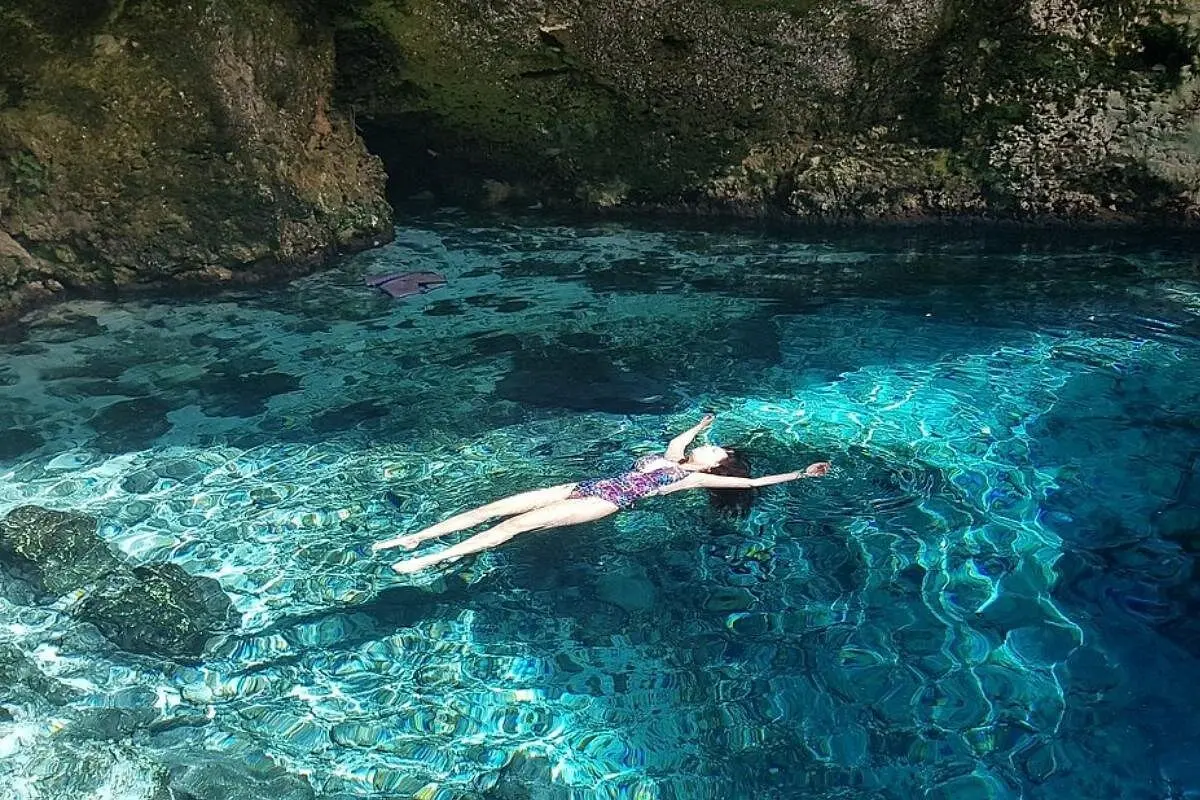
The limestone drops away like a curtain and then, suddenly, there’s that color — an impossible, saturated turquoise pooled at the base of a cliff. You pick your way down a switchback of damp roots and wooden steps, the jungle closing in until the sky is a bright coin above the hollow. The sound changes from birdsong to the soft slap of swimmers; the air smells faintly of salt and crushed earth. That’s Hoyo Azul Lagoon: a compact, luminous cenote tucked inside Scape Park at Cap Cana, a place where the Caribbean’s palette goes inland and the water dares you to jump.
Hoyo Azul reads like a natural highlight reel. It’s not a wide beach or a long trail but an intimate, almost theatrical encounter with karst geology — rainwater dissolved limestone over millennia until a chamber collapsed and a spring filled the void, producing a deep pool whose clarity and color make it a local magnet. Visitors come for the swim, yes, but also for the short, tactile approach: the humid trail through low forest, the rickety platforms that let you lean over the rim, and the sudden reveal of water so blue it seems unreal.
This is a Caribbean site with inland geology. The Dominican Republic’s eastern coast is ringed by reef and sand, but in Cap Cana the story includes subterranean rivers and sinkholes: the same karst processes that make the Yucatán famous also sculpted this pocket of the island. Hoyo Azul sits on private parkland at Scape Park, close to luxury resorts and the white swath of Macao Beach, but the lagoon’s character is democratic — families, snorkelers, and day-trippers all find themselves bobbing in the same translucent basin.
The lagoon’s human story is shorter than its geological one. The area around Cap Cana has been reshaped repeatedly — by indigenous Taíno people, European colonists, and modern development. Today, managed access and simple visitor infrastructure mean you can pair nature with a curated set of activities: eco-trails, zip lines, caves, and even motorized excursions into the rural interior. For a compact day, consider pairing a morning at Hoyo Azul with an afternoon on an adventurous quadricycle tour from Punta Cana that threads forest tracks, organic farms, a mysterious cave, and ends at Macao Beach — two flavors of Dominican adventure in one day.
Practicalities are part of the joy here. The approach is short — expect a 10–20 minute walk from the park entrance down a well-marked trail and a descent of wooden steps to the water’s edge — but the path is uneven and can be slippery after rain. The water is cool and deep; life jackets are commonly provided and often required depending on park rules. The lagoon isn’t a long swim; it’s the clarity and color that make it remarkable, and the platforms and cliffs give you multiple jumping and viewing options. Plan for about 1–2 hours to experience the lagoon comfortably plus time for changing, photos, and a snack.
Timing matters. Early morning light slices through the trees and crowds are thinner; midday brings the most saturated color in photos but the most people in the water. Weekdays outside holiday seasons offer the best balance of light and solitude. Bring reef-safe sunscreen, a water shoe for the ledges, a lightweight towel, and a small dry bag for your phone — the shot from the rim across the pool is worth protecting your gear for.
Safety is straightforward but non-negotiable: use the life jacket if you’re not a confident swimmer, avoid diving from heights without assessing depth, and stick to marked swimming areas. Respect the fragile karst environment — no litter, no soaps or oils in the water, and stay on constructed trails.
Coupling Hoyo Azul with an ATV or quadricycle adventure amplifies the day. A half-day quad ride from Punta Cana threads rural landscapes, an organic farm visit for coffee, chocolate, and rum tastings, and an exploration of caves and underground rivers before a cool-down at Macao Beach. It’s an active, sensory contrast: the close, clear calm of Hoyo Azul and then the open, windswept shoreline of Macao. Logistically, it’s an easy pairing — many operators run combined itineraries or will arrange transfers between sites.
If you go: hydrate well in the tropical heat, carry cash for park fees and small purchases, and leave jewelry and valuables locked in a car or locker. Keep an eye on weather; heavy rain can cloud trails and make platforms slick. Lastly, remember that Hoyo Azul’s beauty is delicate. Treat it as you would any karst and coastal environment — attentive, light-footed, and grateful.
Why visit? It’s simple: Hoyo Azul condenses the Dominican Republic’s geological and coastal stories into one swim. It’s approachable for families, soulful for solo travelers, photogenic for enthusiasts, and easily paired with more rambunctious adventures like quad tours. Whether you’re chasing a blue lagoon for your camera or a cool swim after a day of sun, Hoyo Azul delivers a vivid, compact encounter with nature that feels both wild and well-managed — the kind of place you can experience in a few hours but remember for a long time.
Trail wisdom
Small choices, better day.
Go early for light and fewer people
Morning visits offer cleaner water, softer light for photos, and smaller crowds; aim to arrive right after park opening.
Wear water shoes
The descent includes wooden steps and rocky ledges at the waterline — slip-resistant shoes protect feet and improve footing when entering and exiting.
Use provided life jackets
Life jackets are often available and sometimes required — use them if you’re not a strong swimmer or when water is deep.
Bring reef-safe sunscreen and a dry bag
Protect the water by using biodegradable sunscreen, and keep electronics safe in a small dry bag while you swim.
Local knowledge
Read the place, not just the route.
Watch for native species including Caribbean iguanas (occasionally on the cliffs), Tropical birds such as kingfishers and parrots in the surrounding forest.
Keep an eye out for wildlife during the transition between areas and habitats. Respect distance guidelines.
Visitors are encouraged to use reef-safe sunscreen, avoid littering, and stay on marked trails to protect fragile karst and freshwater ecosystems.
Follow the guide's instructions on size limits, ethical handling, and leave-no-trace practices.
The viewpoint platform above the lagoon — quieter early or late in the day for photos. Pairing Hoyo Azul with a nearby organic farm tasting on a quad tour for a local food-and-nature combo
Locally recommended viewpoints and quiet spots known best to local operators.
The lagoon is part of Cap Cana’s karst landscape; the collapse of limestone and spring emergence created the cenote-like pool now managed within Scape Park.
Maritime roots and regional tradition shape the waterways and working coasts.
Seasonal guide
Four versions of the same landscape.
Spring
Best forfewer crowds · lush greenery · comfortable temps
Challengessporadic tropical showers · slippery trails after rain
Spring brings warm water and green trails; expect occasional showers that can make the path slick and change water clarity briefly.
Summer
Best forwarmest water · longer days · combining with beach time
Challengesheat and humidity · peak tourist season · strong midday sun
Summer is ideal for warm swims and long days but plan for heat, sunscreen, and higher visitor numbers.
Fall
Best forcalmer crowds · golden light for photos · pairing with outdoor excursions
Challengesshorter days · hurricane season risk window
Fall often delivers pleasant light and thinner crowds, though you should monitor storm forecasts during hurricane season.
Winter
Best forclear skies · slightly cooler trails · holiday travel
Challengeshigher resort traffic · cooler mornings
Winter offers clear weather and strong visibility in the water, but resorts and tour operators may be busiest around holidays.
Pack with intention
What to bring.
Good to know
Common questions.
Scape Park often requires tickets which can sell out during high season; pre-booking through the park or a reputable operator is recommended for peak times.
Plan the edges
The details that make the day easier.
Hoyo Azul sits inside Scape Park at Cap Cana and formed where karst limestone collapsed to reveal a spring-fed pool — a common geological process on the island’s eastern karst plain.
Cap Cana blends upscale resort life with local flavors — nearby organic farms offer coffee, chocolate and rum tastings often included on adventure tours, and small beach-side kiosks serve fresh fish and cold drinks.
- Location
- Scape Park, Cap Cana (near Punta Cana). Access: paid park entrance; short 10–20 minute walk and steps to the lagoon. Best time: morning. Essentials: life jacket, water shoes, reef-safe sunscreen.
Stick to marked paths, avoid chemical sunscreens, and choose local guides — small actions help protect freshwater and karst systems crucial to the region.
Explore by topic
Follow the threads.
Keep exploring
Make the story part of the trip.
 Related story
Cobblestone streets, punk-era haunts, and neighborhood bakeries: the West Village compresses New York history into walkable, delicious experiences. Here’s how to make the most of it—what to book, eat, and remember.
 Related story
Stand in City Hall Park and feel the city breathe around an 1812 Federal-style landmark. This is a walking experience that pairs architecture, history, and Lower Manhattan’s lived-in streets—ideal for curious travelers who love stories with their sidewalks.
 Related story
Step beyond Canal Street and into a dense, sensory world where food, language, and history overlap. This is Chinatown: compact, storied, and urgently alive. Learn how to move through it like a neighbor — and why every corner tells a story.